
Blog Posts Tagged Technical Content
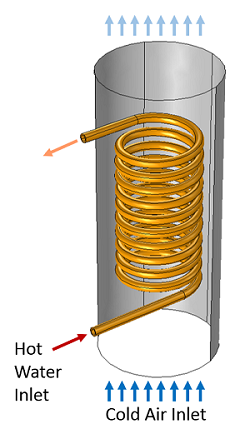
Modeling a Coil Heat Exchanger
Coil heat exchangers are simple and easy to manufacture — but what about modeling them? Adding expressions to compute the temperature drop between coil turns simplifies the modeling process.
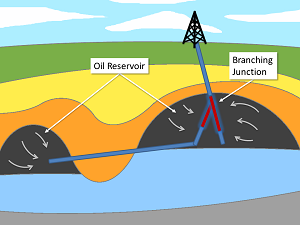
How to Obtain Oil Cost-Effectively with Multilateral Wells
1 example of how numerical simulation benefits the oil & gas industry: You can predict the stability of a multilateral well to determine if it will need expensive mechanical stabilization.

Phase Change: Cooling and Solidification of Metal
Phase change: A transformation of material from one state of matter to another due to a change in temperature. Learn how to model phase change in a continuous casting process.
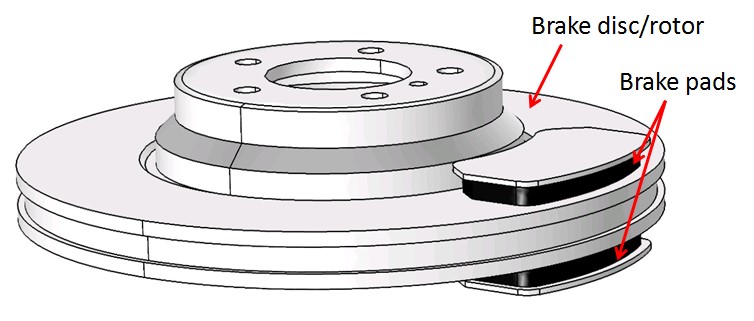
Simulating Wear in COMSOL Multiphysics
A guest blogger from Veryst Engineering, a COMSOL Certified Consultant, shares how he implemented a wear model in COMSOL Multiphysics® and validated it by simulating a pin-on-disc wear test.

Electron Energy Distribution Function
The electron energy distribution function (EEDF) strongly influences the results of a plasma model. But what are some ways we can numerically describe the EEDF in the COMSOL® software?

Understanding Traffic Congestion via Equation-Based Modeling
Boring, frustrating, extremely inconvenient: We’ve all experienced a traffic jam when trying to get from Point A to Point B. Researchers used equation-based modeling to study traffic congestion.
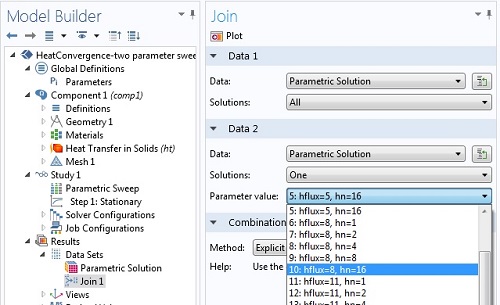
Solution Joining for Parametric, Eigenfrequency, and Time-Dependent Problems
In a follow-up to a previous blog post, we demonstrate how to use the Join feature in the context of 4 types of problems: parametric, eigenfrequency, frequency domain, and time dependent.

Exploiting Symmetry to Simplify Magnetic Field Modeling
Get an introduction to the types of symmetry boundary conditions that you can exploit in your EM models.


