Corrosion & Corrosion Protection Blog Posts

A Guide to Generic Electrochemical Interfaces in COMSOL Multiphysics®
Wondering which electrochemistry add-on product is right for your modeling needs? Read this blog post to find the best fit for your applications.

Modeling Acoustic–Structure Interaction in Kaplan Turbine Blades Using COMSOL®
Learn how surrounding media can affect structural vibrations and see an alternative to the traditional “added mass” approach for accounting for these effects in simulations.

The Science Behind Preserving Museum Ships
Managing corrosion and decay are just 2 of the challenges associated with preserving historic vessels. Learn about the approaches that are being used to help keep these ships true to their best-known design.

Modeling Stray Currents from a Light Rail Transit System
The rails in LRT systems can induce stray currents, which may corrode nearby underground metallic structures. Learn how modeling can be used to help.
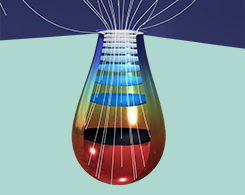
Modeling Pitting Corrosion in COMSOL Multiphysics®
When the process of generalized corrosion is allowed to continue, the initialization of a pit may occur on the metal surface, which is also referred to as the Evans drop experiment.
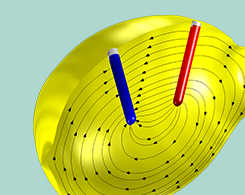
Approaching an Electrochemical Model from Scratch: Lemon Battery
The lemon battery: A high school chemistry experiment, and a great example when learning the general process for how to set up electrochemistry and battery models from scratch.
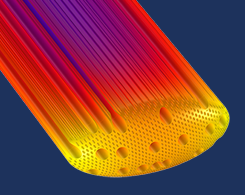
6 Ways Engineers Are Using Simulation to Help the Environment
Energy-efficient buildings and appliances. Safe nuclear waste storage. Well-preserved freshwater lakes. These are just a few examples of how simulation is being used to help the environment.
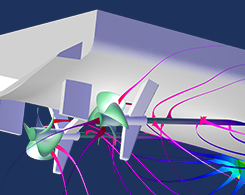
How to Simulate Impressed Current Cathodic Protection
2 common methods for protecting metal structures against galvanic corrosion are sacrificial anode cathodic protection (SACP) and impressed current cathodic protection (ICCP).