
Blog Posts Tagged Structural Mechanics Module
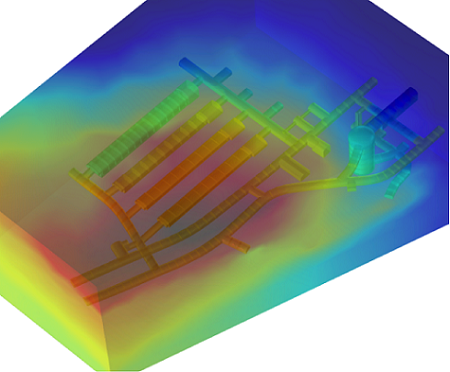
Amphos 21: Modeling Coupled Thermo-Hydro-Mechanical-Chemical Phenomena
A guest blogger from Amphos 21, a COMSOL Certified Consultant, discusses the company’s iCP technology for modeling coupled thermo-hydro-mechanical-chemical phenomena.

Computing and Controlling the Volume of a Cavity
See a method for modeling enclosed volumes containing incompressible fluids (under the additional assumption that the momentum and energy transfer via the fluid is small) in COMSOL Multiphysics®.
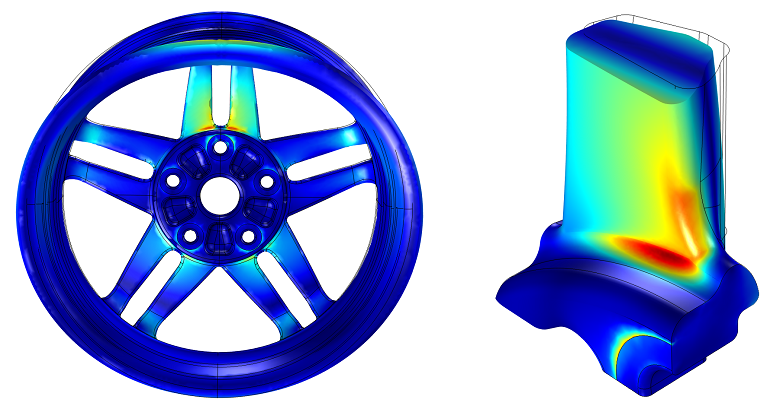
Submodeling: How to Analyze Local Effects in Large Models
Modeling a particularly large structure with a lot of boundary conditions? Learn how to use submodeling, a technique for analyzing local effects in large models in COMSOL Multiphysics®.
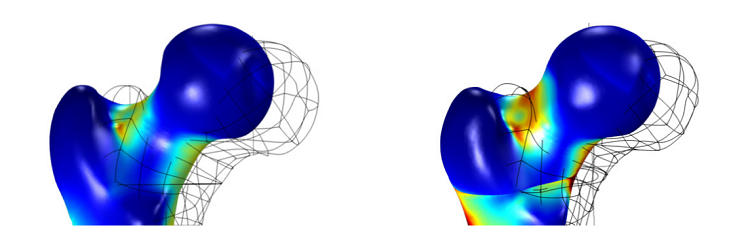
Modeling Bone Strength Using Isotropic and Anisotropic Materials
The question of exactly how strong living bones are poses many important considerations for the medical industry. There is not currently a single-purpose device in the field to test bone strength. However, it is possible for researchers to get measurements of bone strength by modeling the entire makeup of the bone and using multiphysics simulation to perform stress and strain analyses. Simulating bone strength starts with a simple map of the external topology of the bone and then delves into […]

Why All These Stresses and Strains?
In structural mechanics you will come across a plethora of stress and strain definitions. It may be a Second Piola-Kirchhoff Stress or a Logarithmic Strain. In this blog post we will investigate these quantities, discuss why there is a need for so many variations of stresses and strains, and illuminate the consequences for you as a finite element analyst. The defining tensor expressions and transformations can be found in many textbooks, as well as through some web links at the […]
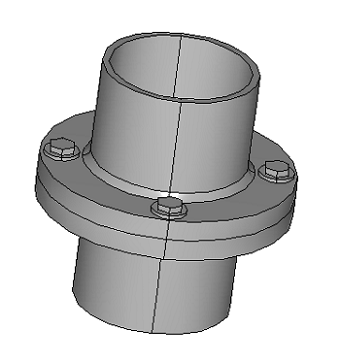
Simulating Tensile Stress in a Tube Connection with Prestressed Bolts
When analyzing a bolted joint, one thing to consider for an accurate analysis is the bolt pretension. With COMSOL Multiphysics, the effects of prestressing a bolt can be easily computed using the Bolt Pre-tension feature available in the Structural Mechanics Module. After modeling prestressed bolts, a further analysis can then be conducted on an external load applied to the structure. Here, we will explore how to include prestressed bolts in a tube connection model, and then carry out a stress […]
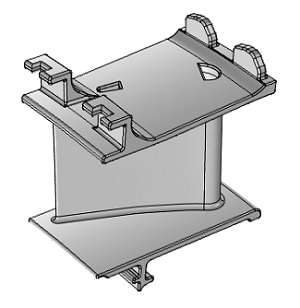
Simulating Thermal Stress in a Turbine Stator Blade
We can leverage simulation software to understand and optimize component design. Every simulation relies on a model that is a representation of the reality that the application finds itself in. Modeling enables us to represent this reality with enough detail to receive relevant information about the particular application or component. Let’s have a look at a thermal stress analysis of the turbine stator blade model from our Model Gallery and investigate the effects of heat transfer and thermal stress that […]
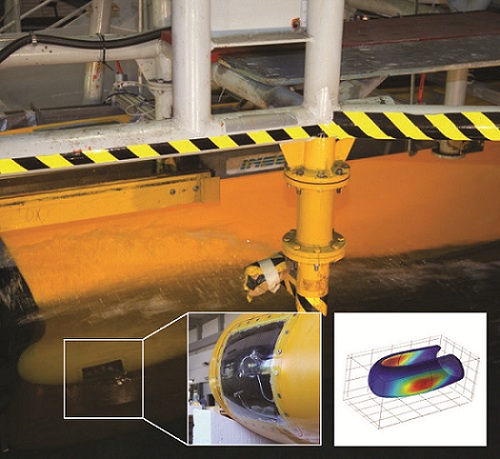
Starting Small with Sonar Dome Design
Starting the design process by testing on a small scale is often the best way to tackle issues affecting large objects, like a ship. Detailed in COMSOL News 2013, researchers at INSEAN, The Italian Ship Model Basin, used small-scale testing and then simulation to analyze the effect of placing a sonar system within the bulbous bow at the hull of a ship. Using a small-scale model of a bulbous bow, the researchers at INSEAN performed fluid-structure interaction experiments, and subsequently […]

Modeling Magnetostriction Using COMSOL Multiphysics®
If you have ever stood next to a transformer, you have probably heard a humming sound coming from it and wondered if there were bees close by. When you hear that sound the next time, you can rest assured that it’s not bees but the magnetostriction of the transformer core that is making that humming sound.
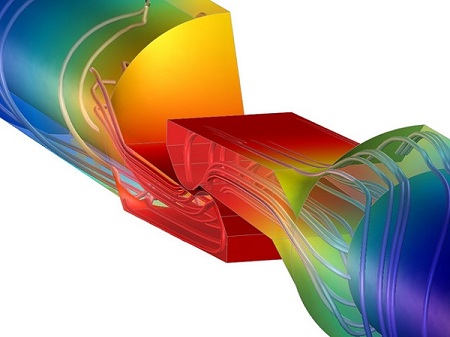
Analyzing Electrical and Thermal Conductance in a Contact Switch
A contact switch is used to regulate whether or not an electrical current is passing from a power source and into an electrical device. These switches are found in many types of equipment and they are used to control, for example, the power output from a wall socket into a device when it is plugged in; the currents passing across the circuit board of a computer; or the electricity powering a light bulb when the switch is flipped on. Because of their […]
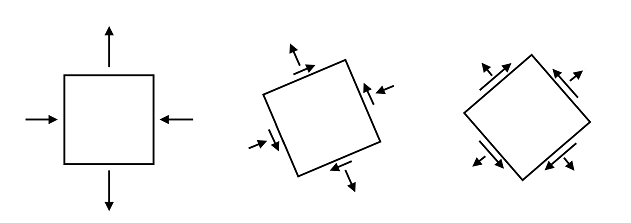
Fatigue Prediction Using Critical Plane Methods
Research on fatigue started in the 19th century, initiated following failing railroad axles that caused train accidents. In a rotating axle, stress varies from tension to compression and back to tension in one revolution. The load history is simple because it is uniaxial and proportional. Fatigue can then be evaluated with the S-N curve, also known as the Wöhler curve, which relates stress amplitude to a component’s life. In many applications we deal with multiaxiality and non-proportional loading. In this […]
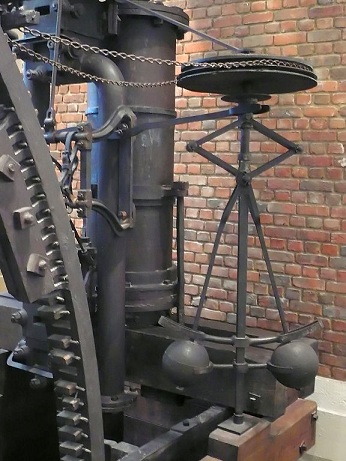
Simulating an Engine Governor, the Spring Loaded Centrifugal Governor
We’ve probably all seen centrifugal force in action in one way or another, whether it be riding on a merry-go-round as a child, spinning a bucket of water upside and observing as the contents hug the insides of the bucket, or watching mud spinning off of a turning tire. In addition to making dizzying carnival rides, this force can be used in the design of many mechanical applications, where it is harnessed to control a variety of effects. One such […]
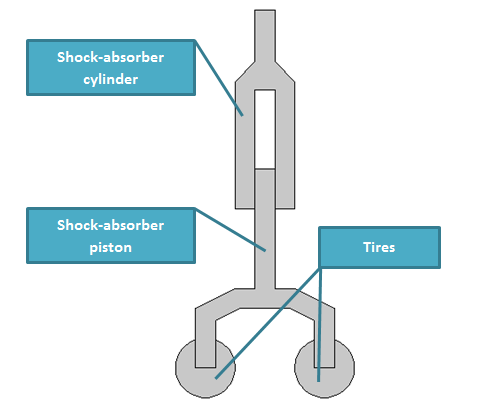
Aircraft Landing Gear Mechanism Analysis
Aircraft rely on landing gear in order to taxi, take off, and land. The landing gear of your average commercial airplane consists of a shock-absorber cylinder and piston, and a pair of tires. Intuitively, the shock-absorber experiences stresses as the landing gear touches the ground — but how much? In order to design a landing gear mechanism that can withstand many landings, and to determine when it’s time to swap out an old one, we can perform a multibody dynamics […]
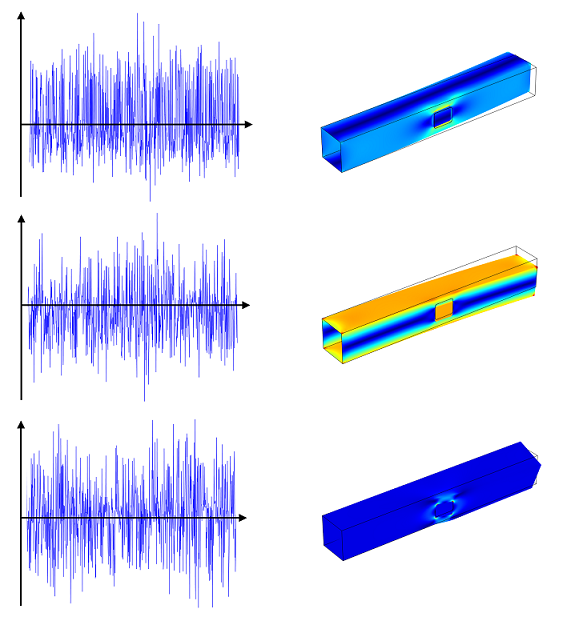
Random Load Fatigue
In many applications, loads applied to structures are random in nature. The sampling results of the structural response will differ depending on the data collection time. Although the stress experienced is not always high, the repeated loading and unloading can lead to fatigue. The engineering challenges in these types of applications are defining the stress response to the random load history in the critical points, and predicting fatigue damage. This is simulated with the Cumulative Damage feature in the Fatigue […]
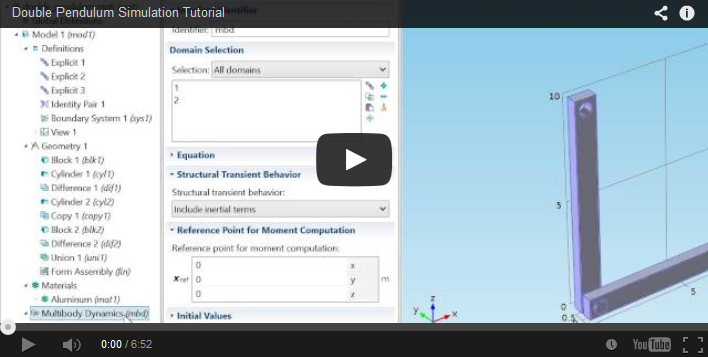
Double Pendulum Simulation Tutorial
Dynamic simulation of a double pendulum system can easily be performed using the Multibody Dynamics Module available in COMSOL Multiphysics. This module enables the mechanical simulations of assemblies of flexible and rigid bodies, often coupled with other phenomena such as from heat, electrical, and others.
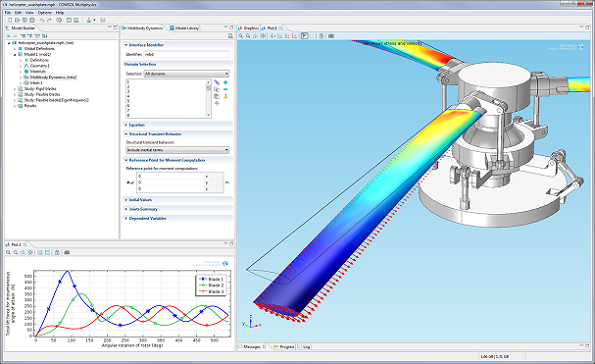
Simulate Mechanical Systems with the Multibody Dynamics Module
The new Multibody Dynamics Module provides engineers with an advanced set of tools to design and optimize mechanical systems to reduce product development costs. This module enables simulation of an assembly of flexible and rigid bodies, along with physical phenomena like structural, heat, electrical, and others. One of the key capabilities included in this module is an easier and faster way of building connections between different bodies using various types of predefined Joints. The objective of multibody analysis is to […]
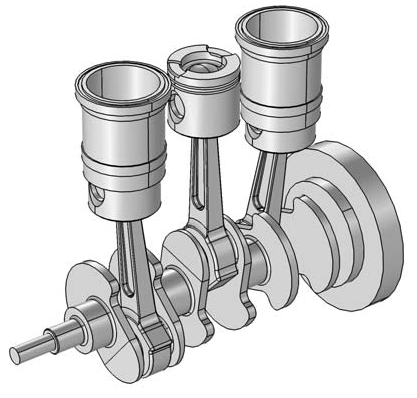
Multibody Dynamics
The dynamic analysis of interconnected bodies or links is called a multibody analysis. These bodies are connected by joints that constrain their relative motion. The simplest element of a multibody system is a single particle, which can be considered using Newton’s laws of motion. Multibody Dynamics has a long and storied background.
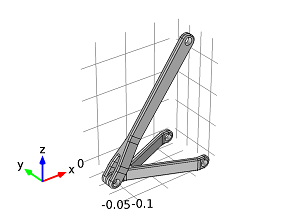
Barrel Hinge Analysis
We’ve all encountered hinges before; they are frequently used to connect different parts of mechanical assemblies in a way that allows them to move freely relative to one another, in a single degree of freedom. There are several different types of hinges, including everything from barrel hinges to friction hinges, with lots in between. Before incorporating a hinge into a mechanical assembly, you might want to get a sense of how it will hold up by performing a hinge analysis.
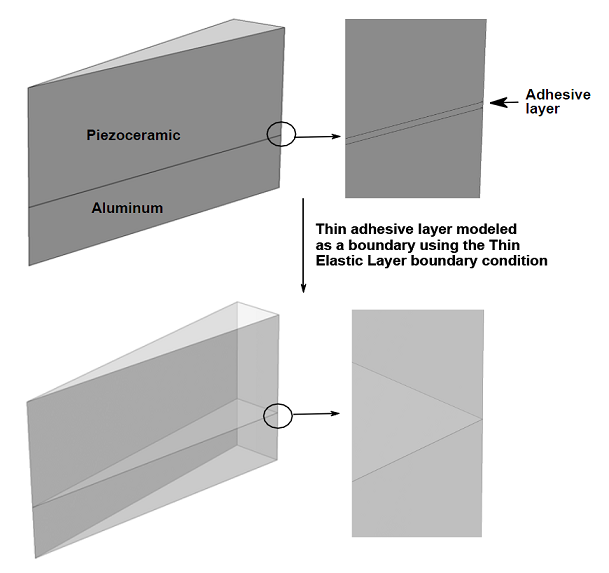
Structural Analysis with Thin Elastic Layers
Some structural applications involve thin or high aspect ratio structures sandwiched between other relatively low aspect ratio structures. For example, if a piezoelectric transducer is glued on the surface of a mechanical system, the thickness of the adhesive layer is very small in comparison to the two structures it glues together. Numerical modeling of such a thin layer in two or three dimensions requires resolving it with an appropriate finite element mesh. This can result in a large concentration of […]

The Graphene Revolution: Part 2
In a previous blog entry I discussed some of the exotic properties of graphene. The fact that graphene consists of a single layer of atoms means the aspect ratio of any graphene-based structure may be very high. High aspect geometries present their own array of modeling challenges.
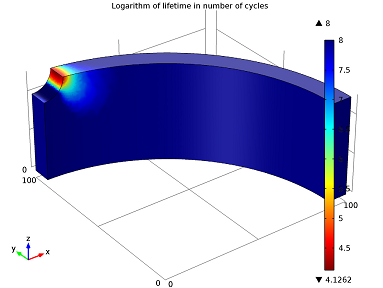
Infamous Failures of Fatigue
If you’ve studied structural mechanics you’re probably familiar with stories of planes falling out of the sky due to fatigue (no one wants to be the engineer who designed an airplane that crashed…). Jimmy Stewart made a famous movie about that, but different from the usual horror stories of fatigue is the accident in 1919 of a storage tank that burst in Boston, spilling molasses onto the streets at 35 mph (56 km/h). The Boston Molasses Disaster, as it’s referred […]
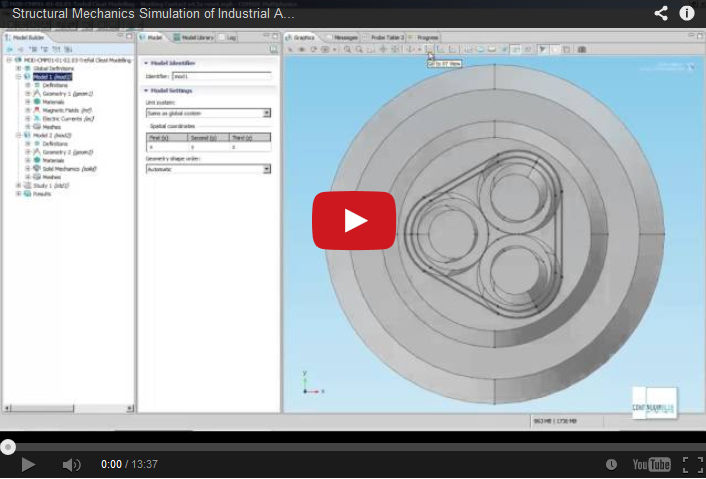
Industry: Continuum Blue Simulates Structural Mechanics
On January 10th, hundreds of people tuned in to hear COMSOL and Continuum Blue discuss Structural Mechanics simulations in certain industry applications. As promised in my previous blog post on multiphysics modeling webinars happening in 2013, here is a round-up of the event — including a video excerpt detailing three structural analysis examples presented by Continuum Blue.
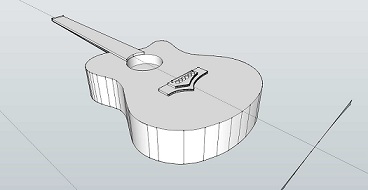
Researching Carbon Fiber Reinforced Plastic Acoustic Guitars
There are traditional acoustic guitars made of wood, and now there are also those made entirely out of carbon fiber reinforced plastic (CFRP). Do these plastic guitars sound like their wooden forbearers? Guess what, you can use computer modeling to find out.
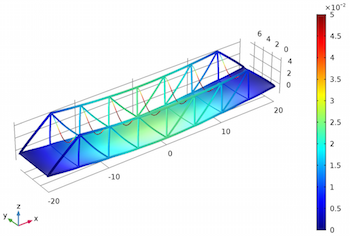
Modeling a Pratt Truss Bridge
The simple design of a Pratt truss bridge makes it useful to hold everything from pedestrians to trains. While this type of bridge is easy to construct, engineers must make sure that it lasts and is safe to use. A bridge needs to hold its own weight, support the load placed upon it, and withstand frequencies generated by wind and earthquakes. To determine whether a Pratt truss bridge design can handle these factors, we turn to simulation.


