
Blog Posts Tagged Technical Content
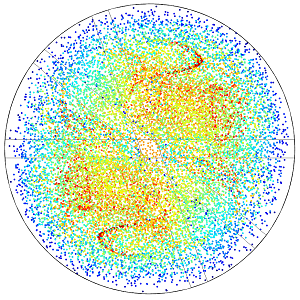
Application-Specific: Polar, Far-Field, and Particle Tracing Plots
When postprocessing your electromagnetics models, you can use polar, far-field, and particle tracing plots to effectively display your results. Learn how to use these 3 plot types here.
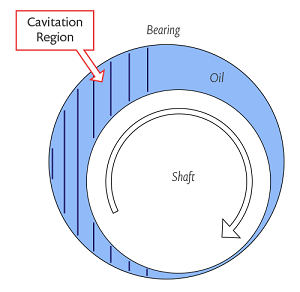
Predicting Cavitation in Journal Bearings
When designing journal bearings for use in a rotating shaft, the effect of cavitation needs to be considered, because it can affect the performance of these components.
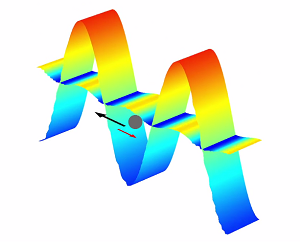
How to Compute the Acoustic Radiation Force
Did you know that objects can actually be moved by sound? This effect is called acoustic radiation, and it is an acoustophoretic phenomenon that can be analyzed in the COMSOL® software.
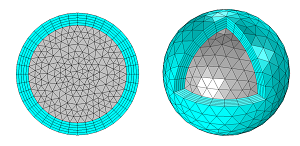
Using Perfectly Matched Layers and Scattering Boundary Conditions for Wave Electromagnetics Problems
Learn how to use scattering boundary conditions and perfectly matched layers to truncate domains for your wave electromagnetics problem — and which technique is best for your modeling scenario.
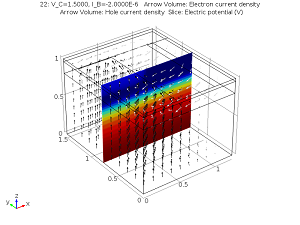
How to Perform a 3D Analysis of a Semiconductor Device
Open for a comprehensive introduction to performing 3D analyses of semiconductor devices in COMSOL Multiphysics®. We demonstrate with a bipolar transistor example.
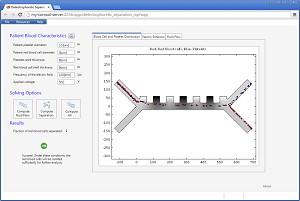
Dielectrophoretic Separation
Dielectrophoresis is a phenomenon in which an electric field is used to control the movement of electrically neutral particles. Learn about how to model this effect in both DC and AC fields.
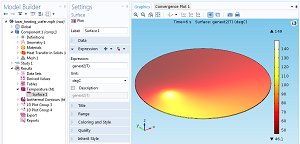
Using General Extrusion Operators to Model Rotation
You can use the General Extrusion operators in COMSOL Multiphysics® to simulate rotating objects exposed to loads. A common real-world example of this is rotisserie-style foods.
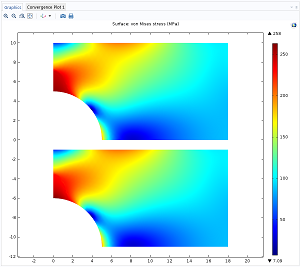
Introducing Nonlinear Elastic Materials
Examples of nonlinear elastic material models: Ramberg-Osgood, Duncan-Chang, Hardin-Drnevich, Power law, and more. We discuss how to apply nonlinear elastic materials in your analyses.


