
Blog Posts Tagged Technical Content

How to Use Model Methods to Accelerate Your COMSOL® Workflow
Methods aren’t just for enhancing simulation applications built in the Application Builder. In fact, you can create methods to streamline and automate repetitive modeling operations.
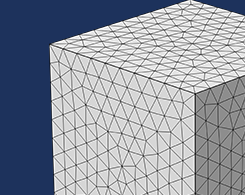
How to Generate Randomized Inhomogeneous Material Data
Did you know there is a way to take randomized material data with specified statistical properties determined by a spectral density distribution and use it to generate and visualize results?
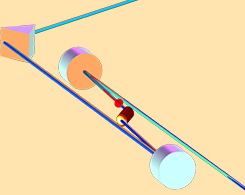
How to Analyze Laser Cavity Stability with Multiphysics Ray Tracing
If you’re looking for an in-depth example of multiphysics ray tracing, then check out this blog post about analyzing and predicting laser cavity stability in the COMSOL® software.

How to Model Heat and Moisture Transport in Porous Media with COMSOL®
Modeling the transport of heat and moisture in porous media, like building envelopes and other construction materials, is a simple process with a predefined Heat and Moisture Transport interface.
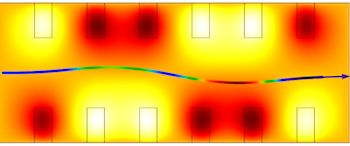
How Does the Choice of Ray-Tracing Algorithm Affect the Solution?
When performing a high-frequency optics simulation, do you use a sequential, nonsequential, or exact ray tracing algorithm? Learn how to choose to make the most of your solution.
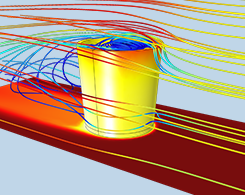
How to Model Heat and Moisture Transport in Air with COMSOL®
First, we discuss how to model heat transport in moist air. Then, we add complexity by demonstrating how to couple heat and moisture transport in air in your simulation.
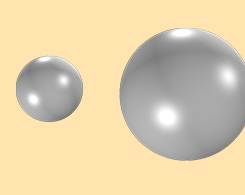
How to Calculate a Capacitance Matrix in COMSOL Multiphysics®
Calculating the capacitance between two conductors is simple, but adding more conductors to the mix (as is the case with touchscreens, transmission lines, and capacitive sensors) adds complexity.
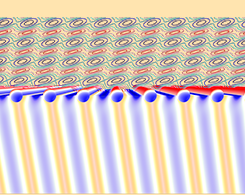
How to Model the Optical Properties of Rough Surfaces
We develop a computational model for calculating the optical properties of rough surfaces, such as incident light on a dielectric material with random variations in height and thickness.


