
Blog Posts Tagged RF Module
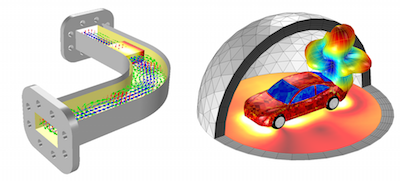
Simulation Tools for Solving Wave Electromagnetics Problems
Take a look at the various modeling, meshing, solving, and postprocessing options available for solving wave electromagnetics problems in COMSOL Multiphysics®.
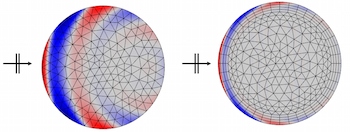
Modeling of Materials in Wave Electromagnetics Problems
Get an introduction to the various material models that are relevant to modeling wave electromagnetics problems in COMSOL Multiphysics®.
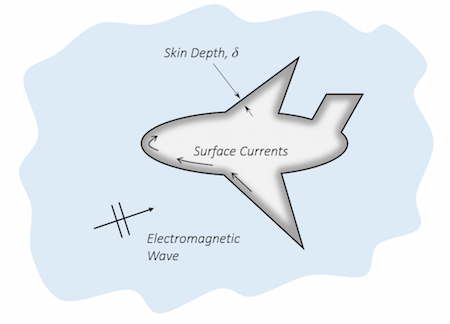
Modeling Metallic Objects in Wave Electromagnetics Problems
What is a metal, anyway? These materials are highly conductive and very good at reflecting incident electromagnetic waves, including light, microwaves, and radio waves.
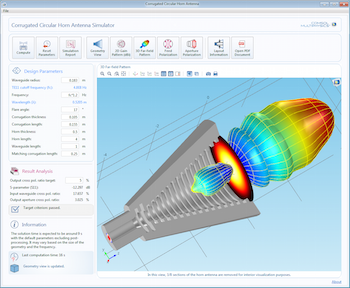
How to Create a Simulation App: Horn Antenna Demo
Get a comprehensive overview of what a simulation app is. We use the Corrugated Circular Horn Antenna Simulator demo app to demonstrate some of apps’ many benefits.
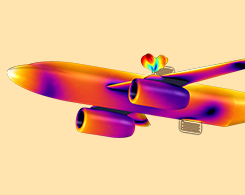
Simulating Antenna Crosstalk on an Airplane
The last airplane you flew aboard most likely had multiple antennas on its fuselage. This creates crosstalk between antennas that can disturb the operation of the aircraft. RF simulation can help.
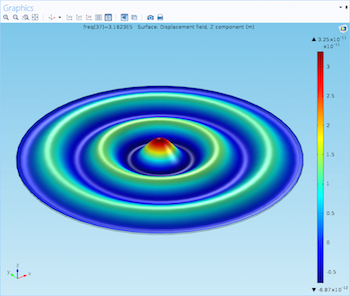
Using Deformations to Visualize Physical Motion
Postprocessing and visualization can help enhance your understanding of simulation results, and using plots to illustrate physical motion allows you to put everything into perspective.
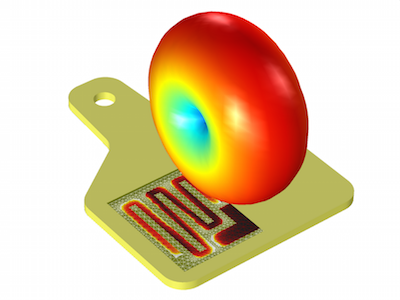
Evaluating a UHF RFID Tag Design with Simulation
Did you know that ultrahigh-frequency (UHF) RFID tags have a wider range than other types of RFID tags? This is why they are often used to identify animals.
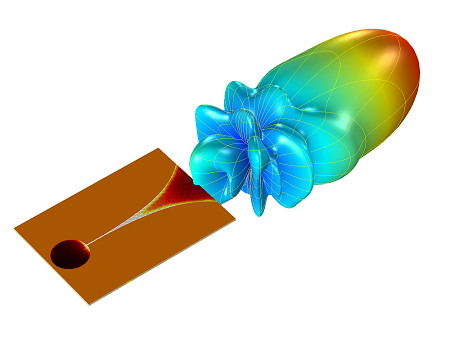
Vivaldi Antenna Design Analysis
Did you know the Vivaldi antenna was invented by someone named Peter Gibson? As the story goes, he had a passion for music and chose to name the antenna after Antonio Vivaldi, a Baroque composer.
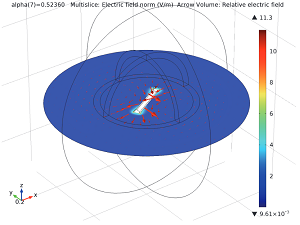
Modeling with Linearly Polarized Plane Waves
We use the Detecting the Orientation of a Metallic Cylinder Embedded in a Dielectric Shell model to demonstrate a specialized background field feature designed for linearly polarized plane waves.
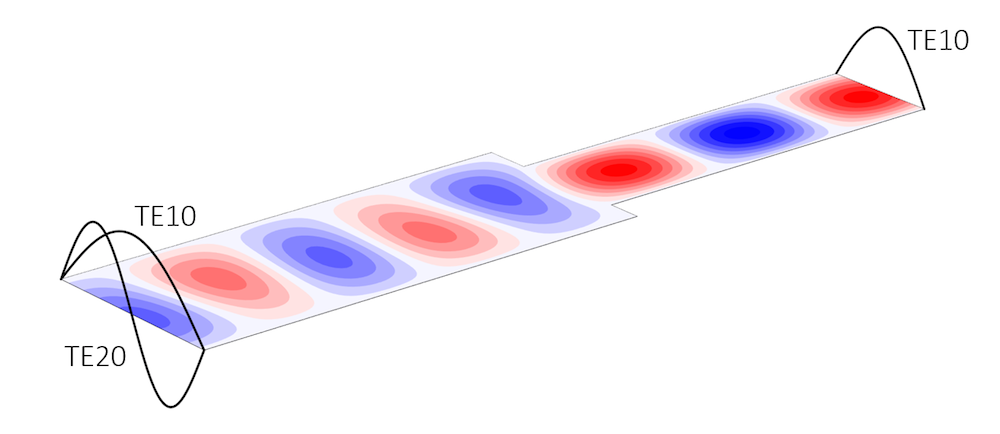
Ports and Lumped Ports for Wave Electromagnetics Problems
The Lumped Port boundary condition can be used to model boundaries through which a propagating electromagnetic wave will pass without reflection. Learn how to use this feature in your EM models.
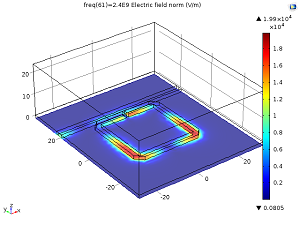
Using Numeric TEM Ports in Your Modeling Processes
In this blog post, get an introduction to the Numeric TEM Ports feature for modeling transmission lines, with an example of a notch filter with a split ring resonator.
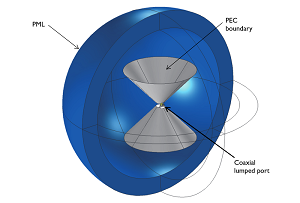
Enhancing the Design of Biconical Antennas with Simulation
Biconical antennas are an important component when conducting electromagnetic compatibility (EMC) testing for consumer electronics. RF simulation can be used to enhance their design.


