
Blog Posts Tagged MEMS Module
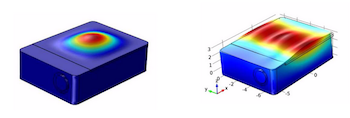
Designing a Sensor Package for a High-G Accelerometer via Simulation
To design a piezoresistive sensor package for a high-G accelerometer, researchers turned to multiphysics analysis. They then verified the simulation results with experimental data.

Keynote Video: Solving 2 Transport Process Problems with Simulation
In a keynote presentation from the COMSOL Conference 2016 Boston, Carl Meinhart from the University of California, Santa Barbara and Numerical Design discusses simulating transport processes.
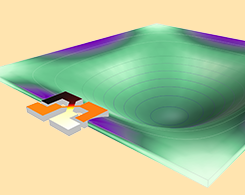
Simulation Delivers Reliable Results for Piezoresistive Pressure Sensors
With COMSOL Multiphysics®, you can easily couple multiphysics simulations to test MEMS device performance. Take a look at one example that showcases such capabilities.
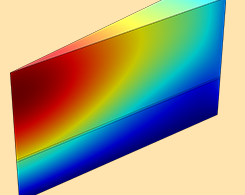
Benchmark Shows Valid Results for a Piezoelectric Transducer Design
We walk you through the Composite Piezoelectric Transducer tutorial model: a benchmark model for ultrasonic transducer simulation and good starting point for simulations of SAW and BAW filters.
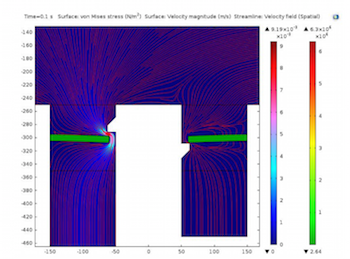
Evaluating an Insulin Micropump Design for Treating Diabetes
Researchers from the University of Ontario Institute of Technology used simulation to develop a MEMS-based micropump that could administer insulin injections in a safe and painless way.
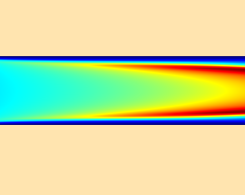
Using the Application Builder as a Tool for Teaching Students
Making the learning process more efficient? Maximizing student engagement? Take a look at some of the innovative ways that university professors are using simulation apps within the classroom.
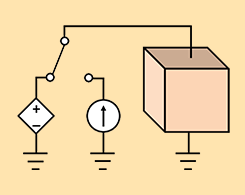
Control Current and Voltage Sources with the AC/DC Module
Did you know that you can use the Terminal boundary condition to dynamically switch between excitation types during a transient simulation? This is useful for modeling power supply, for example.
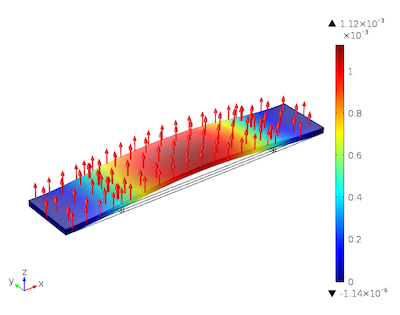
Simulation Improves Range of Motion in Piezoelectric Actuators
We highlight 1.) some of the fundamental elements of piezoelectric theory and basic simulations and 2.) a novel design for improving the range of motion for piezoelectric actuators.
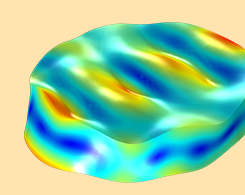
Piezoelectric Materials: Applying the Standards
Learn how to set up the orientation of a piezoelectric crystal, specifically an AT cut quartz plate, within both the IRE 1949 standard and the IEEE 1978 standard.
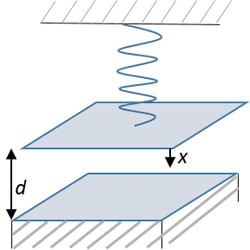
Modeling Microresonators with Electrostatic Actuation
Learn how to model electrostatically actuated MEMS resonators and get an intro to terms such as equilibrium point, pull-in, pull-in voltage, and time harmonic response of a biased resonator.
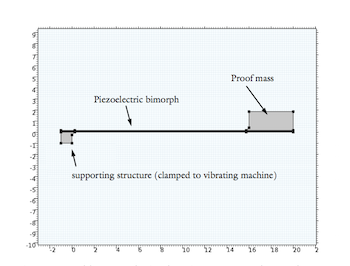
Optimizing the Power of a Piezoelectric Energy Harvester
When it comes to a piezoelectric energy harvester, the design configuration should maximize the level of power transfer. How can simulation be used to improve the design of an energy harvester?

Simulating a MEMS-Based Pressure Sensor Inspired by a Cave Fish
Oceanic inspiration: Researchers from the PSG College of Technology in India used numerical simulation to investigate a pressure sensor design inspired by the blind Mexican cave fish.
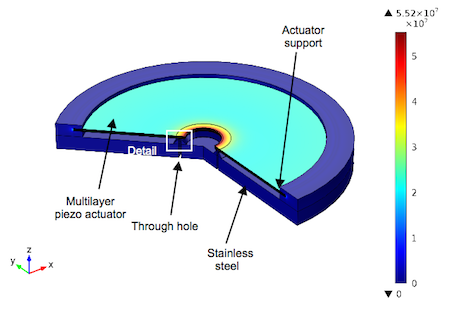
Modeling a Stacked Piezoelectric Actuator in a Valve
Piezoelectric valves are energy efficient, durable, and fast. You can model a key component of this device responsible for opening and closing the valve: a stacked piezoelectric actuator.
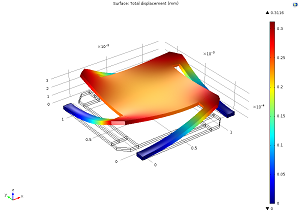
Improving the Power of Optical Systems via Component Design
Adaptive optics are used to improve the power of optical systems — beyond the obstacles imposed by the optical medium. See examples and learn how to model adaptive optics systems.
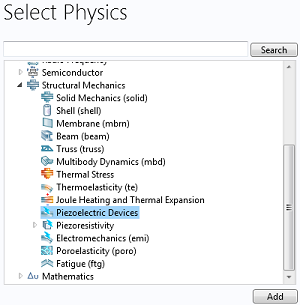
New Piezoelectric Modeling Interface in COMSOL 5.0
As of version 5.0 of COMSOL Multiphysics®, there is a new interface for simulating piezoelectric devices; it has predefined features that make it easy to set up and run a piezoelectric model.
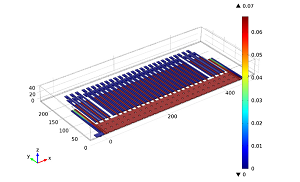
Modeling a Surface Micromachined Accelerometer
There are plenty of MEMS manufacturing techniques, but surface micromachining is preferred because it can merge electronic components and freely moving mechanical parts onto one substrate.
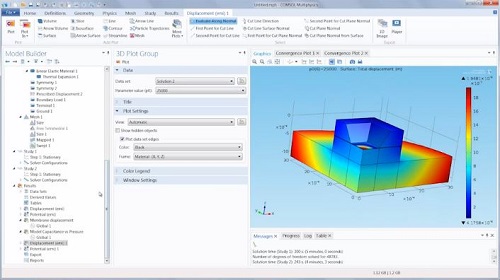
Video Tutorial: Capacitive Pressure Sensor
Looking for a visual explanation of how to model a miniaturized 3D electromechanics problem? Read this blog post for a quick overview and an embedded tutorial video.
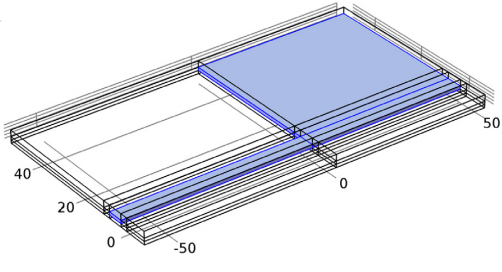
Simulating an RF MEMS Switch
An RF MEMS switch is typically made up of a micromechanical bridge or cantilever, a substrate, and an electrode or dielectric layer. You can design such a device using RF simulation.
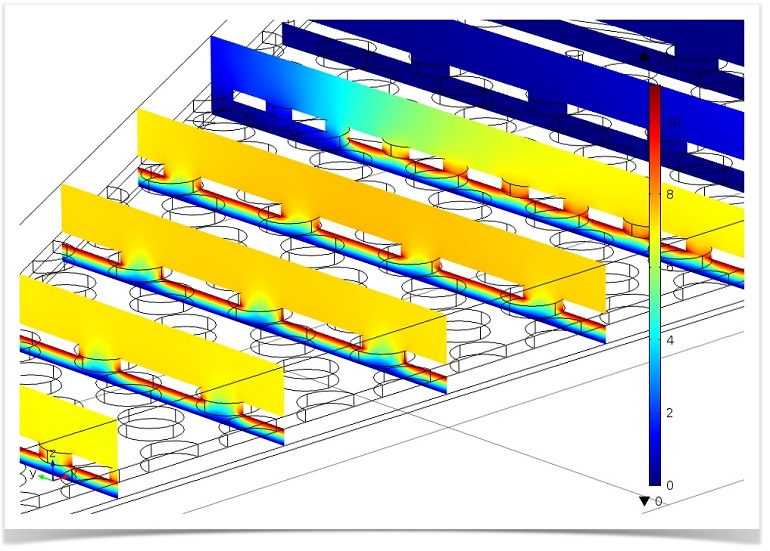
MEMS Microphone Model Presented at ASA 166 in San Francisco
What is a MEMS microphone? Learn about this versatile device, as well as how to model it using COMSOL Multiphysics® with the add-on MEMS Module and Acoustics Module.
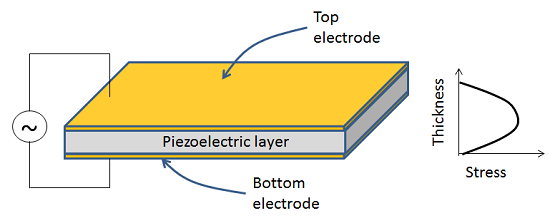
Intro to Piezoelectric BAW Resonator Modeling
If you are using a cell phone, GPS, Bluetooth, or WiFi, chances are that they all have BAW resonators working inside them. All wireless electronic equipment use RF filters to help narrow down the frequency range they should operate within. With thousands of devices working within closely-packed radio frequencies, it is becoming increasingly important to design filters that would be able to reduce interference from unwanted frequencies, boost the signal-to-noise ratio, and lower insertion loss. Doing so may lead to […]
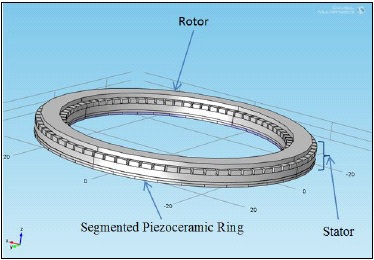
Ultrasonic Micro Motors, It’s all in the Shape
A while back, I wrote about permanent magnet generators and how they generate electricity upon being set in motion. When browsing the papers from our conference in Bangalore, one on the topic of ultrasonic micro motors caught my eye. These motors are electromechanical in nature and instead initiate motion with the application of an electric voltage. Furthermore, these motors are miniaturized to fit a micro-scale environment.


