Blog Posts Tagged Corrosion Module
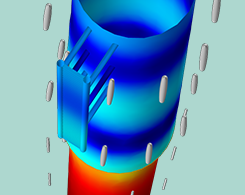
Model Electrodes with Nonideal Connectivity in Corrosion Analyses
Learn the appropriate boundary conditions for performing a corrosion analysis in which an electrode is connected to an external short circuit.
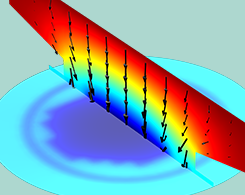
How to Model Electrochemical Resistance and Capacitance
Get an overview of the theory and modeling considerations for resistive and capacitive effects, which are fundamental to the understanding of electrochemical systems.
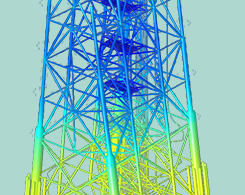
The Boundary Element Method Simplifies Corrosion Simulation
The boundary element method can be used when simulating corrosion to avoid needing a finite element mesh to resolve the whole 3D structure, saving time for large problems with slender components.
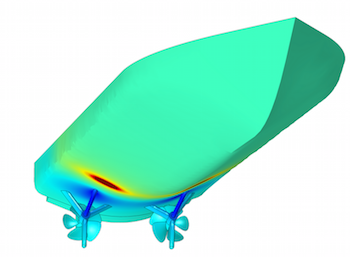
Avoiding Ship Hull Corrosion with ICCP and Simulation
Did you know that the ocean is an electrolyte? Corrosion commonly seen on ship hulls occurs when there are areas with different potentials within such an electrolyte — saltwater, in this case.

Modeling Corrosion for Automotive Applications
Simulation is a way to address the different types of corrosion that commonly occur in automobiles, saving car manufacturers time, money, and resources.
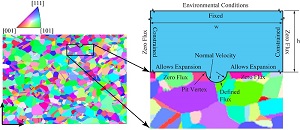
A Strategy for Designing Corrosion-Resistant Materials
Engineers at the Naval Research Laboratory in Washington, D.C., turned to multiphysics simulation to better understand the fundamental mechanisms behind corrosion damage. Get the full story >>
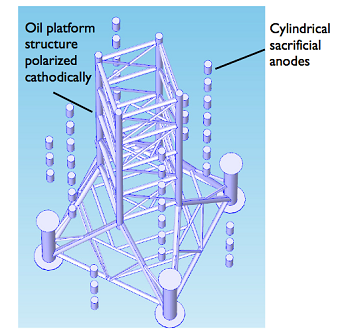
Intro to Corrosion Modeling for the Oil and Gas Industry
From impressed cathodic current and anodic protection to sacrificial anodes, there are several ways you can protect structures from corrosion. We discuss some modeling considerations here.
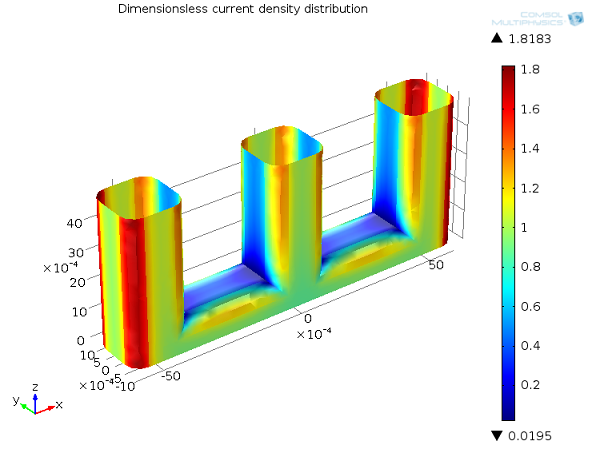
Which Current Distribution Interface Do I Use?
See the different current distributions with a wire electrode example to help you choose between the current distribution interfaces in COMSOL Multiphysics® for your electrochemical simulations.