
Search Results
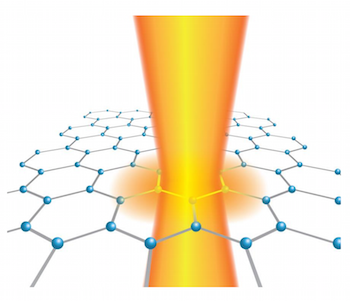
Should We Model Graphene as a 2D Sheet or Thin 3D Volume?
Graphene is a 2D sheet of carbon atoms that is 1 atomic layer thick. However, is graphene actually 2D or is it just incredibly thin, like a very fine piece of paper? How should it be modeled?

Simulation-Led Design Is Better and More Accessible than Ever
In the early days of simulation, it was only used by a small handful of R&D specialists. Thanks to recent developments in hardware and simulation software, this handy tool is more accessible.

New Simple Mechanical Cloaking Technique
Researchers from the Karlsruhe Institute of Technology developed a simple mathematical technique for designing mechanical cloaks using numerical modeling. Get details here.
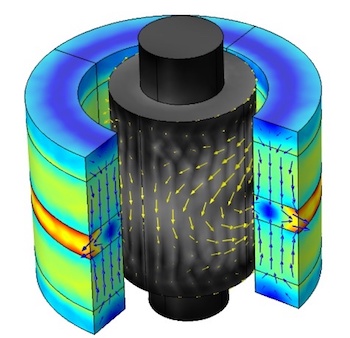
How to Model Magnetic Bearings in COMSOL Multiphysics®
Get an in-depth introduction to the different types of magnetic bearings and then learn how to compute their magnetic force, torque, magnetic stiffness, and more.
Verify Simulations with the Method of Manufactured Solutions
The Method of Manufactured Solutions involves assuming a solution, obtaining source terms, solving the problem, and comparing the results with the assumed solution. Use it to verify your models.

Modeling Corrosion for Automotive Applications
Simulation is a way to address the different types of corrosion that commonly occur in automobiles, saving car manufacturers time, money, and resources.
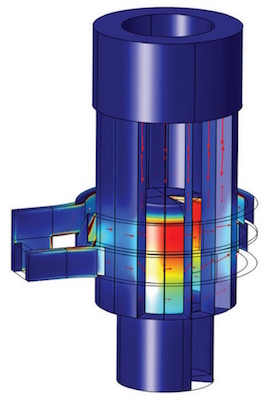
Optimizing the Production Process for Solar Energy Cells
EMIX used simulation to optimize their cold crucible continuous casting process, an integral aspect of photovoltaic solar cell production. Get the full story >>
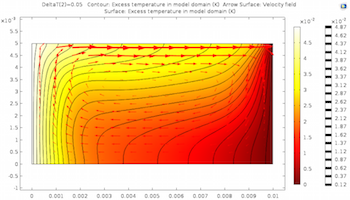
Modeling Marangoni Convection with COMSOL Multiphysics
When a surface gradient is temperature dependent, the Marangoni effect is called Marangoni convection. Learn how to analyze Marangoni convection in COMSOL Multiphysics®.