
Structural & Acoustics Blog Posts
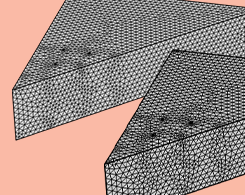
Characterizing Piezoelectric Sensors for Nondestructive Testing
Piezoelectric sensors must be carefully designed and calibrated. Simulation can help make this process more efficient…
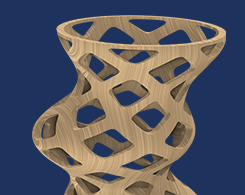
Forming New Ideas with Generative Design in COMSOL®
Pencils were invented in the 16th century and erasers in the 18th century. However, it wasn’t until the 19th century that erasers were attached to pencils in the typical design we know today.
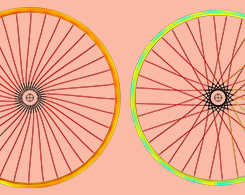
Why Do Road and Mountain Bikes Have Different Spoke Patterns?
Why do some bicycle rims come with warnings? Why do some bicyclists prefer rim brakes? To find answers, we model the forces in a bicycle rim for different brake types and spoke lacing patterns.
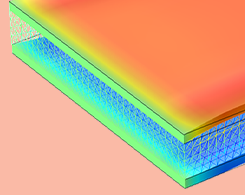
Modeling Piezoelectricity: Which Module to Use?
Acoustics Module, MEMS Module, Structural Mechanics Module: Which one should you use for your piezoelectric device modeling? Get a comprehensive overview of your options here.
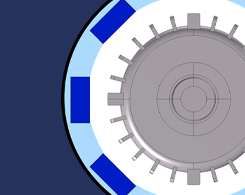
Designing the Sound Absorption of Microlattice Structures
Using numerical simulation, you can design microlattice structures with sound-absorbing properties, and then print them via additive manufacturing without traditional manufacturing constraints.

Micromagnetic Simulation with COMSOL Multiphysics®
A guest blogger from Fudan University in China used the Physics Builder in COMSOL Multiphysics to create a “Micromagnetics Module” for performing micromagnetic simulations.
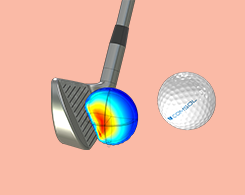
Fore! Analyzing the Performance of a Golf Ball with Simulation
Did you know that golf balls were originally made out of wood? We discuss the evolution of the golf ball and how simulation can be used to analyze modern golf ball designs.

The History and Science Behind Vinyl Records
As vinyl records explode in popularity, we take a look back at the history of records, as well as the interesting science behind how they are produced — and how they play music.


