
MEMS & Piezoelectric Devices Blog Posts
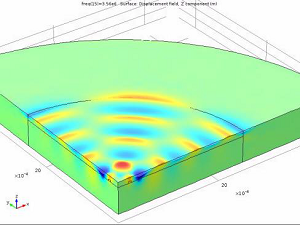
Using Degeneracy Breaking to Design a MEMS Biosensor
Researchers from Newcastle University in the U.K. used simulation to investigate the effects of material and geometric symmetry breaking in a degenerate mode sensor. Get the full story >>
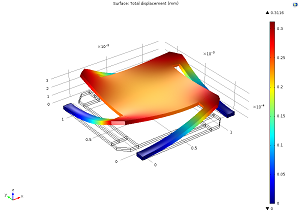
Improving the Power of Optical Systems via Component Design
Adaptive optics are used to improve the power of optical systems — beyond the obstacles imposed by the optical medium. See examples and learn how to model adaptive optics systems.
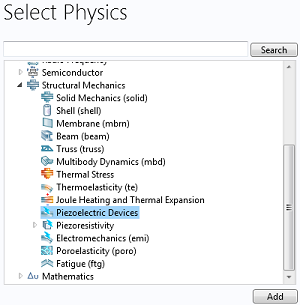
New Piezoelectric Modeling Interface in COMSOL 5.0
As of version 5.0 of COMSOL Multiphysics®, there is a new interface for simulating piezoelectric devices; it has predefined features that make it easy to set up and run a piezoelectric model.
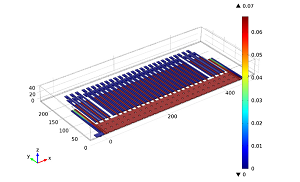
Modeling a Surface Micromachined Accelerometer
There are plenty of MEMS manufacturing techniques, but surface micromachining is preferred because it can merge electronic components and freely moving mechanical parts onto one substrate.
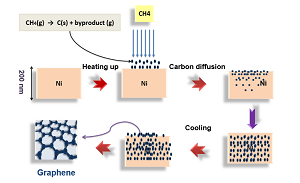
Synthesizing Graphene with Chemical Vapor Deposition
Chemical vapor deposition is an attractive method for producing graphene, an ultrastrong and light polymer material. Researchers from University of Arkansas used simulation to study this process.
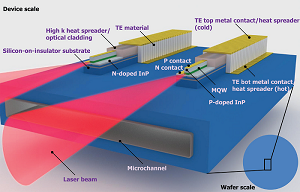
Green Energy Management for Communication Systems
Look inside a team at Bell Labs, the research arm of Alcatel-Lucent committed to designing technologies for significantly improving energy management for next-generation telecom products.
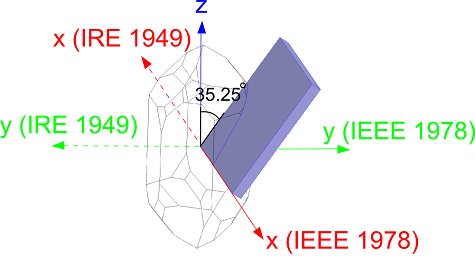
Piezoelectric Materials: Understanding the Standards
Get a comprehensive overview of the multiple standards used to describe piezoelectric materials in literature. The post particularly focuses on quartz but the standards can apply to any material.
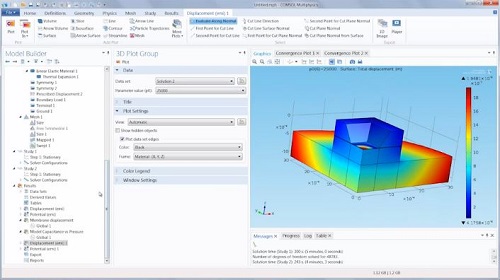
Video Tutorial: Capacitive Pressure Sensor
Looking for a visual explanation of how to model a miniaturized 3D electromechanics problem? Read this blog post for a quick overview and an embedded tutorial video.


