
General Blog Posts

Advancing Additive Manufacturing with Sequential Simulations
In some ways, additive manufacturing is like sewing or weaving. We talk to a professor of additive manufacturing about how sequential simulations can be used to analyze and optimize the process.

Acoustic Topology Optimization with Thermoviscous Losses
A guest blogger from GN Hearing discusses including thermoviscous losses in the topology optimization of microacoustic devices, such as hearing aids, mobile phones, and metamaterial geometries.
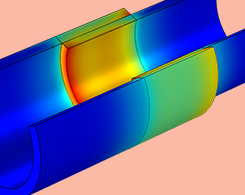
Optimizing the Interference Fit Between 2 Pipes with Structural Analyses
The interference fit between 2 pipes can’t be too tight or too loose. Like the porridge in the “Goldilocks and the Three Bears” story, it has to be just right.

Predicting Solute Transport in Groundwater Using Simulation
In order for groundwater to be useful for irrigation and drinking, we need to understand how its various solutes move through the water. The Subsurface Flow Module includes features for this.

Model Deforming Objects with the Arbitrary Lagrangian-Eulerian Method
The combined efforts of Leonhard Euler and Joseph-Louis Lagrange inspired the arbitrary Lagrangian-Eulerian (ALE) method, which we can use to model deforming objects.
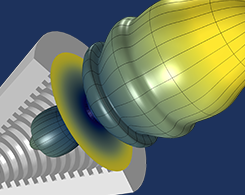
A Simulation Color Table for Engineers with Color Vision Deficiency
Simulation results often use color to present data and emphasize certain takeaways, but what about engineers with color vision deficiency? Cividis is a color table designed specially for this.

3 Examples of Equation-Based Modeling in COMSOL Multiphysics®
What are the benefits of using equation-based modeling in your simulations? Here are 3 examples that demonstrate the use of this functionality.
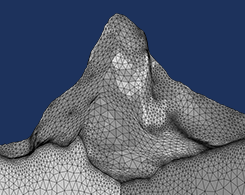
How to Build Geometries from Elevation Data to Model Irregular Shapes
Say you want to build an irregular geometry of a mountain. You can do so by creating a surface of an irregular shape based on elevation data stored formats such as text, image, or DEM files.

Keynote Video: Using COMSOL Server™ for Product Development
Watch an engineer in the materials science industry discuss the use of simulation applications and COMSOL Server™ to accelerate and optimize his company’s product development workflow.
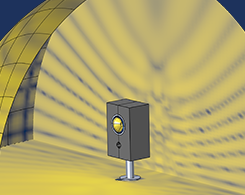
Introducing COMSOL® Software Version 5.3a
COMSOL Multiphysics® and COMSOL Server™ version 5.3a include updates to both the core functionality and add-on modules, including the Cividis color table and extended copy-paste capabilities.
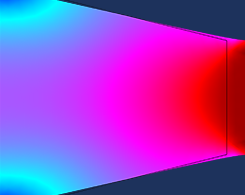
What Happens If I Use 2 Different Unit Systems in 1 Simulation?
Using 2 different unit systems for 1 project has led to historical disasters. Fortunately, you can use different unit systems in your simulation without issues by using the COMSOL® software.
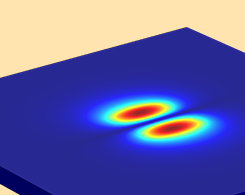
How to Model Optical Anisotropic Media with COMSOL Multiphysics®
Erasmus Bartholinus first observed the optical effect of birefringence in 1669. Today, you can observe this effect with a specialized modeling approach for optical anisotropic media.
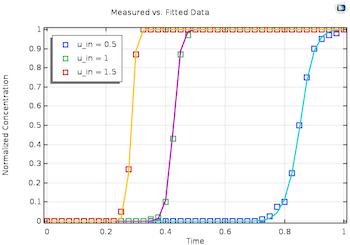
Multiparameter Optimization with a Least-Squares Objective
Learn how to estimate parameters using multiparameter optimization, which will automatically adjust your model based on an underlying data file of experimental parameters.
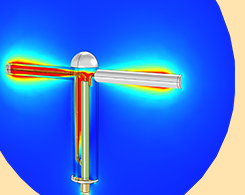
Optimizing the Geometry of Optical Antennas with Genetic Algorithms
What does antenna design have to do with the concept of natural selection? Although it may sound far-fetched, the basic principles of natural selection can be used to optimize antenna geometries.

Finding the Ideal Thickness for the Insulation of a Pipeline
Pipelines need to be properly insulated in order to transport products like petroleum and natural gas across long distances. Use COMSOL® to find the ideal thickness for a pipeline insulation.
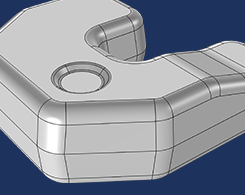
The Optimal Workflow for Complex Modeling Projects on a Deadline
You’re working on a complex modeling project under a tight deadline, and your computation is taking a long time to solve. You can breathe easier by using this optimized workflow for such scenarios.
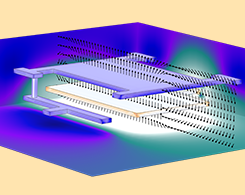
How to Create Electrostatics Models with Wires, Surfaces, and Solids
Here’s a guide to building models that combine wires, surfaces, and solids using the electrostatics features based on the boundary element method that are available with the AC/DC Module.
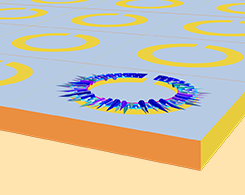
Streamlining the Design of Frequency-Selective Surfaces
If you want to improve the frequency response of a frequency-selective surface, you have many options for methods. 1 method streamlines what can be a complex process: simulation applications.
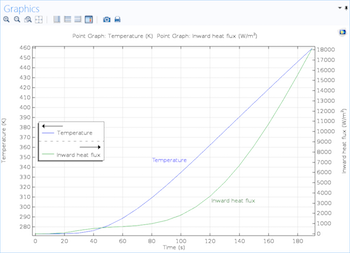
How to Create Graphs with Two Y-Axes in COMSOL Multiphysics®
Did you know that you can add a second y-axis to a 1D plot to include two scales of values in your simulation results? This blog post details how and also includes a video demonstration.
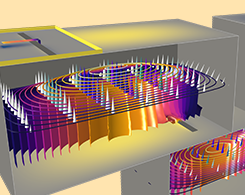
Introduction to Designing Microwave Circuits Using EM Simulation
When it comes to designing RF, microwave, and millimeter-wave circuits with electromagnetics simulation, the key is to start simple and gradually add complexity to your analyses.
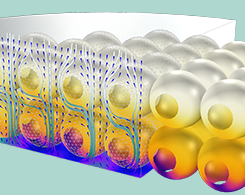
Introduction to Modeling Surface Reactions in COMSOL Multiphysics®
Bioengineers and electrochemists will appreciate this detailed introduction to modeling surface reactions with the COMSOL® software.
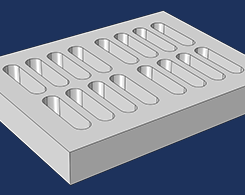
Creating a Model Geometry in COMSOL Multiphysics®
Learn how to create a geometry directly within COMSOL Multiphysics® using geometric primitives and geometry operations. Then, watch an introductory video series to see each step in detail.
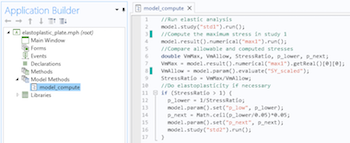
How to Automate Physics Choices and Studies Using Model Methods
The ability to create and use methods in COMSOL Multiphysics® is useful for automating your modeling processes, such as choosing physics and studies.
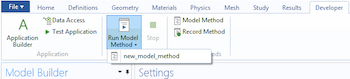
How to Use Model Methods to Accelerate Your COMSOL® Workflow
Methods aren’t just for enhancing simulation applications built in the Application Builder. In fact, you can create methods to streamline and automate repetitive modeling operations.


