
General Blog Posts
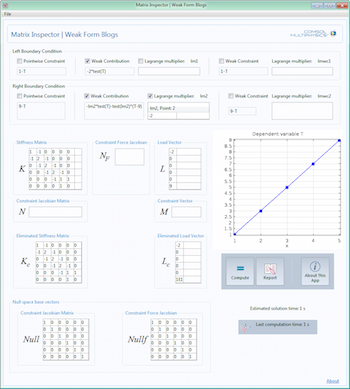
Implementing the Weak Form with a COMSOL App
First we implement the weak form equation and examine its matrices. Then we create a simulation app that displays all relevant matrices at once, arranged logically on one screen.

What to Expect from COMSOL Multiphysics Version 5.1
COMSOL Multiphysics® version 5.1 introduced 20 demo apps and many new features and functionality updates to numerous products. Get an overview of what’s new here.
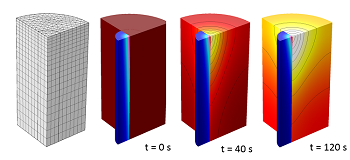
Modeling Laser-Material Interactions with the Beer-Lambert Law
Did you know that you can use the Beer–Lambert law to model laser–material interactions in COMSOL Multiphysics®? Learn how here.
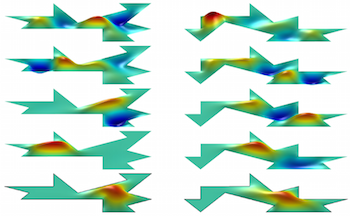
Can We Hear the Shape of a Drum?
Over half a century ago, Mark Kac gave an interesting lecture on a question that he had heard from Professor Bochner ten years earlier: “Can one hear the shape of a drum?”
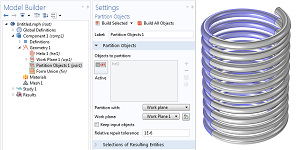
Improving Your Meshing with Partitioning
It can be tedious to subdivide your CAD geometry into a finite element mesh. In this blog post, we demonstrate how to use a manual meshing method called geometric partitioning to do so.
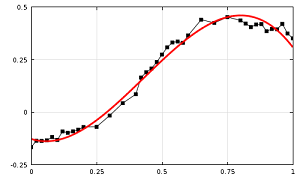
Curve Fitting of Experimental Data with COMSOL Multiphysics
Have you ever had to work with experimental data in a model? Learn how to fit smooth curves and surfaces to experimental data using the core functionality of COMSOL Multiphysics®.
Your Introduction to the COMSOL Server™ License
COMSOL Server™ is a deployment product that can be used to share your simulation apps with colleagues, customers, and design teams. Learn about what you can do with COMSOL Server™ here.

Running COMSOL Multiphysics® with Cloud Computing
You want to run some HPC simulations in COMSOL Multiphysics®, but don’t have access to a cluster. What can you do? One option is cloud computing. Learn more about it here >>
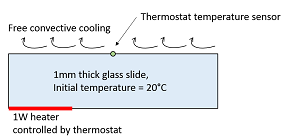
Implementing a Thermostat with the Events Interface
Hot or cold? You can use the Events interface in COMSOL Multiphysics® to implement a basic on-off thermostat in your model for controlling a heat load. Get a demonstration of how to do so here.

Modeling a Periodic Heat Load
Interested in modeling periodic, or pulsed, heat loads? Modeling such a situation accurately and efficiently in COMSOL Multiphysics® is simple with the Events interface. Learn more…
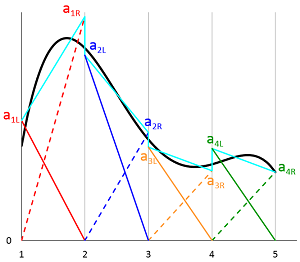
Discretizing the Weak Form Equations
In another installment of our blog series on the weak form equations, get an overview of how these equations are discretized and solved numerically in the COMSOL® software.
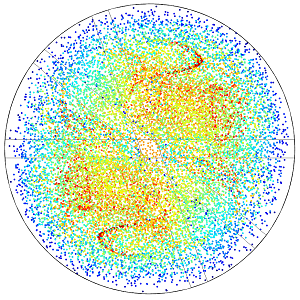
Application-Specific: Polar, Far-Field, and Particle Tracing Plots
When postprocessing your electromagnetics models, you can use polar, far-field, and particle tracing plots to effectively display your results. Learn how to use these 3 plot types here.


