
General Blog Posts
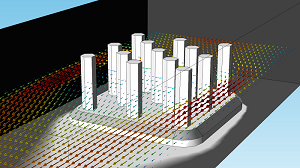
How to Get the Most out of Arrow Plots in COMSOL Multiphysics
What are arrow plots and why are they useful? We answer these questions and demonstrate how to use this feature in this installment of our postprocessing series.
Video Tutorial: Introduction to Modeling Structural Mechanics
Learn the fundamentals of simulating structural mechanics problems in the COMSOL® software: Get a quick overview in this blog post, with an embedded video tutorial included.
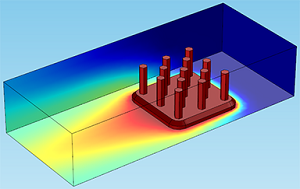
Surface, Volume, and Line Plots: Visualizing Results on a Heat Sink
3 of the most common plot types used in postprocessing: surface, volume, and line plots. Learn how to use these plot types for your simulation results and when to use each option.
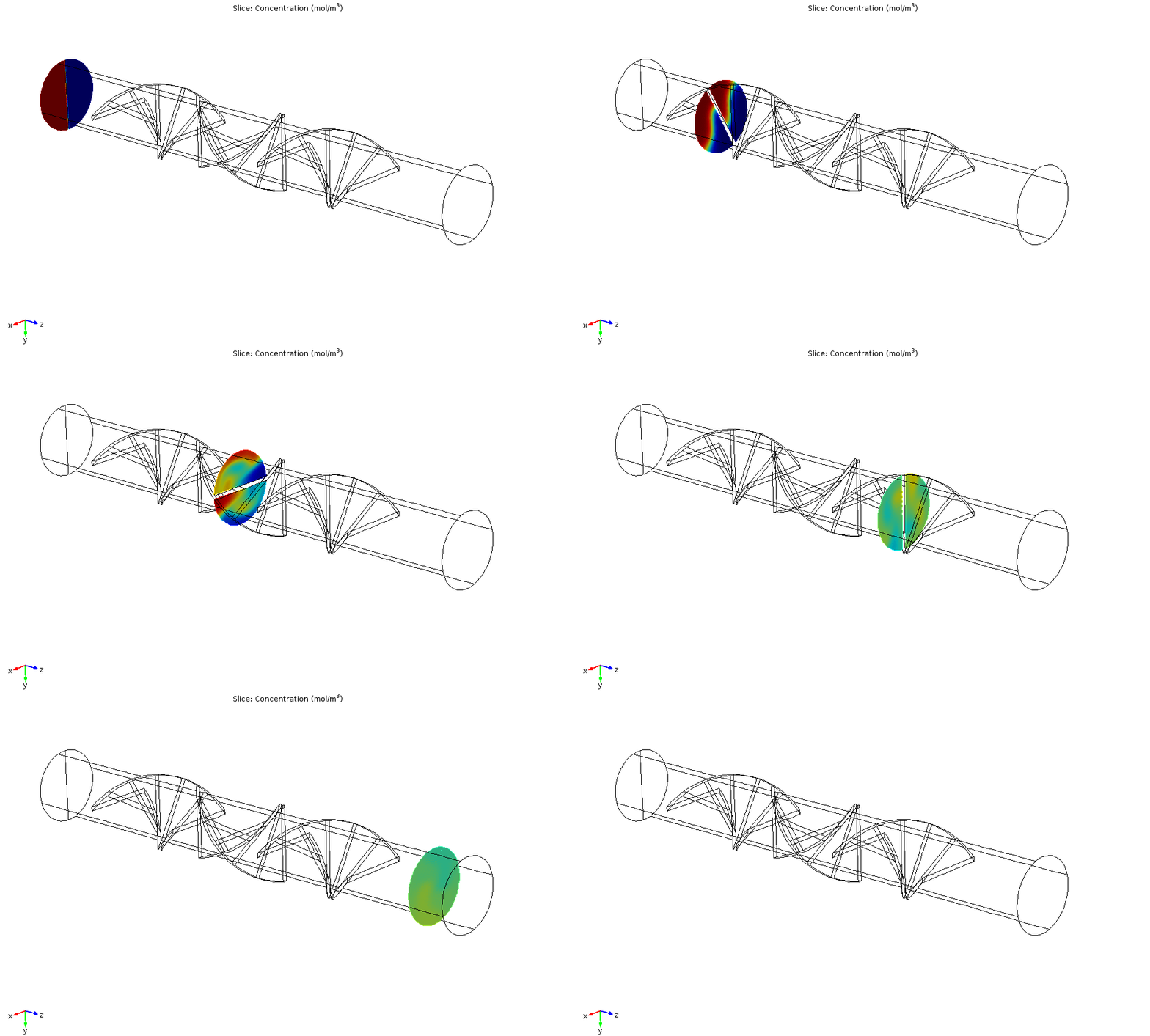
Combining Parallel Slices to Create an Animation
Want to animate how your 3D steady-state model’s solution is changing along a certain direction? You can do so by combining parallel slices. We demonstrate the 3-step process…
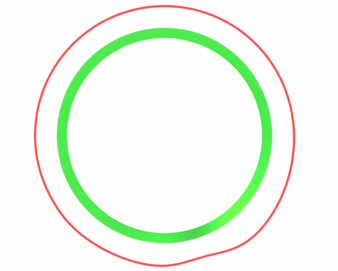
Understanding Traffic Congestion via Equation-Based Modeling
Boring, frustrating, extremely inconvenient: We’ve all experienced a traffic jam when trying to get from Point A to Point B. Researchers used equation-based modeling to study traffic congestion.
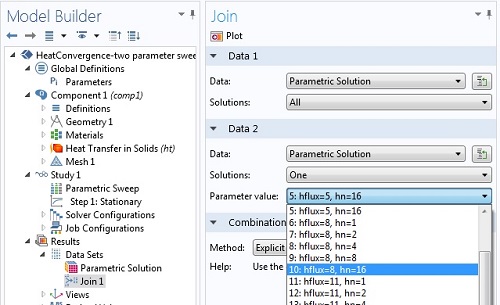
Solution Joining for Parametric, Eigenfrequency, and Time-Dependent Problems
In a follow-up to a previous blog post, we demonstrate how to use the Join feature in the context of 4 types of problems: parametric, eigenfrequency, frequency domain, and time dependent.

New Book on Topology Optimization for Electromagnetics
Whether you’re a student or an industry engineer, read Multiphysics Simulation: Electromechanical System Applications and Optimization, a reference guide on simulation and topology optimization.
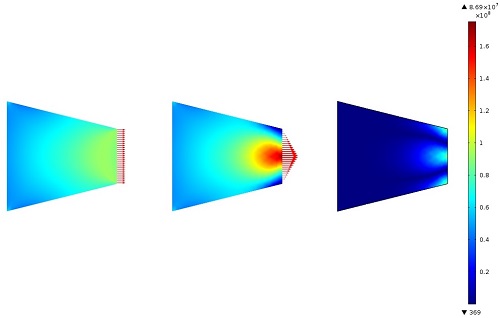
How to Join Solutions in COMSOL Multiphysics
In certain modeling scenarios, you will need access to more than one dataset. Read this blog post to see how to do so in COMSOL Multiphysics® by joining solutions.
Getting the Most out of Client-Server Mode
Learn how to use Client-Server mode when modeling in COMSOL Multiphysics® on a Floating Network License — and see why it is beneficial for you to do so.
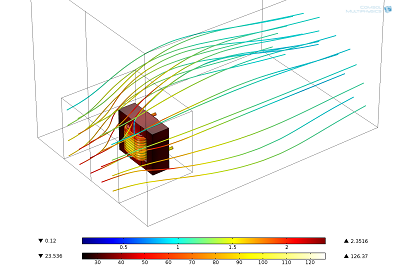
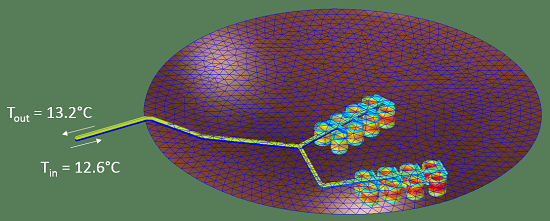
Modeling Convective Cooling of Electrical Devices
We developed a model that includes all of the important details of thermal management in a high-power electrical device. To do so, we needed to use high performance computing with hybrid modeling.
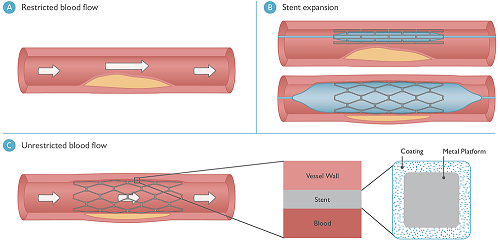
Understanding Drug-Eluting Stents at Boston Scientific
Stents open plaque-blocked arteries, but when an excessive amount of tissue grows over a bare metal arterial stent, it can cause the artery to narrow again in a process called restenosis.
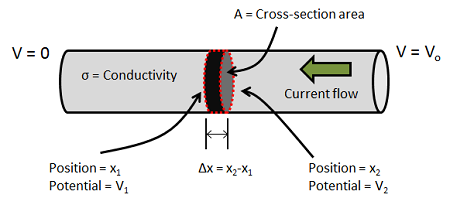
Computing Total Normal Flux on a Planar Surface
1 way to bridge the gap between simulation and experiment? Compute the total normal flux through a cross-sectional plane passing through your simulation geometry. Here’s how >>

Understanding Stabilization Methods
When modeling transport applications driven by convection, you need a stabilization method — whether you’re working with finite elements, finite volumes, or finite differences.
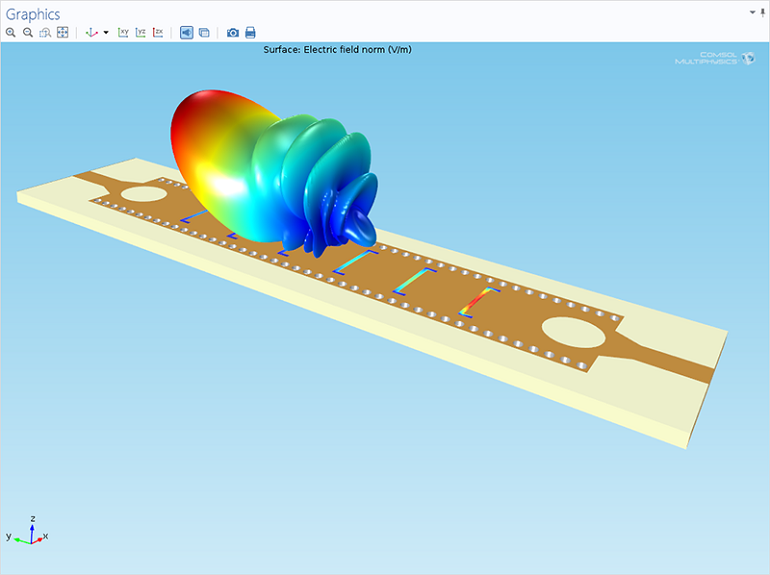
How to Include Geometry Surfaces with Solution Plots
You’ve solved your model. Now you want to include geometry surfaces with your solution plots. But how? We demonstrate the steps with an RF antenna example.
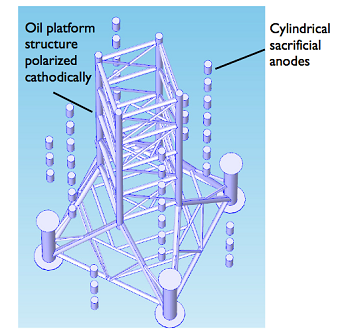
Intro to Corrosion Modeling for the Oil and Gas Industry
From impressed cathodic current and anodic protection to sacrificial anodes, there are several ways you can protect structures from corrosion. We discuss some modeling considerations here.
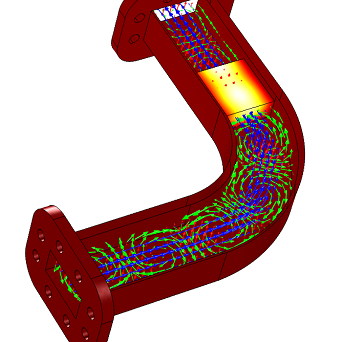
Quick Intro to Modeling RF and Microwave Heating
If you’ve attended a COMSOL webinar about an RF topic, you’ve probably seen our model of a waveguide with a bend. That’s because it illustrates microwave heating in an easy-to-understand way.

Intro Model: Studying the Signal Strength of RF Coils
Electronics designers need to ensure that RF coils contained within their devices can properly transmit information from a source to its destination. Electromagnetics simulation can help.
How to Integrate Functions Without Knowing the Limits of the Integral
Did you know that the COMSOL® software can solve integrals as well as partial differential equations? Learn how to integrate functions — even without knowing the limits of the integral.

The Strength of the Weak Form
Learn about the origins of the weak form equations, how to derive them from classic equations, how to express them in the COMSOL Multiphysics® syntax, and more >>
Geometric Kernels in COMSOL Multiphysics®
Do you know what a geometric kernel is? This software component is responsible for handling geometry in COMSOL Multiphysics®. Get a comprehensive background of what this means…
Building a Beowulf Cluster for Faster Multiphysics Simulations
In 1994, NASA researchers built a small cluster of normal workstations. They called this parallel workstation Beowulf. Today, “Beowulf cluster” describes clusters built from normal workstations.

How Do I Get the Most out of My Floating Network License (FNL)?
What’s the different between a COMSOL CPU-Locked Single User (CPU) and Floating Network License (FNL)? We discuss these differences and go over how to get the most out of your FNL.
Automate Your Modeling Tasks with the COMSOL API for use with Java®
You can automate your coffee-making process, so why shouldn’t you be able to automate your modeling tasks? You can, using the COMSOL API for use with Java®.
Added Value of Task Parallelism in Batch Sweeps
You can use batch sweeps to improve your modeling performance when you reach limitations in parallel computing. Learn how in this part of our Hybrid Modeling blog series.


