
Electromagnetics Blog Posts
Perfect Imaging, From Theory to Reality via Simulations
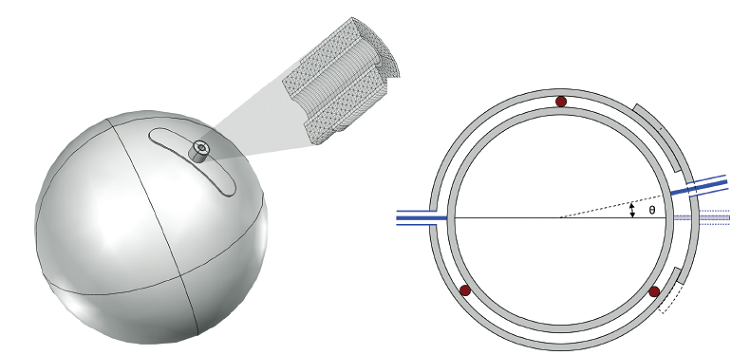
Perfect imaging refers to the idea of producing images with details below the diffraction limit, where even the smallest elements can be resolved to unlimited sharpness regardless of the wavelength of light being used. While just a theory 150 years ago, research has brought us closer to reality over the years. Now, by way of simulation, researchers at Cedint Polytechnic University of Madrid in Spain are taking it one step further.
Intro to Piezoelectric BAW Resonator Modeling
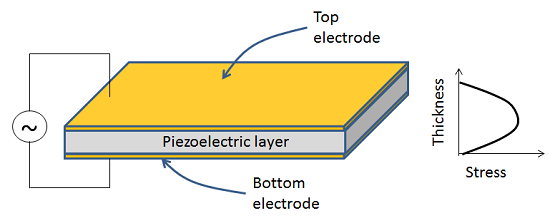
If you are using a cell phone, GPS, Bluetooth, or WiFi, chances are that they all have BAW resonators working inside them. All wireless electronic equipment use RF filters to help narrow down the frequency range they should operate within. With thousands of devices working within closely-packed radio frequencies, it is becoming increasingly important to design filters that would be able to reduce interference from unwanted frequencies, boost the signal-to-noise ratio, and lower insertion loss. Doing so may lead to […]
MEMS Energy Harvester for Reusing Waste Heat
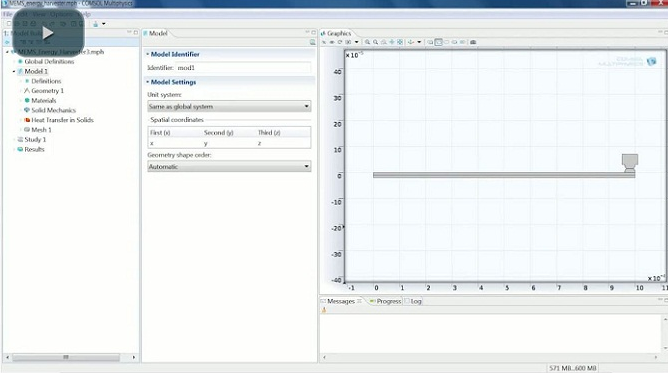
Today we welcome another guest post from Kyle Koppenhoefer of AltaSim Technologies, a COMSOL Certified Consultant. In this entry he will discuss modeling MEMS energy harvesting devices. During our recent webinar with COMSOL on thermal-structure interaction modeling, we at AltaSim Technologies demonstrated modeling of a MEMS energy harvester that scavenges waste heat. Examples of sources for waste heat range from microprocessor chips, to internal combustion engines, to chemical processing plants. If the waste heat generated from these cases could be […]
Hybrid Linac-MR for Real-Time Image-Guided Radiotherapy
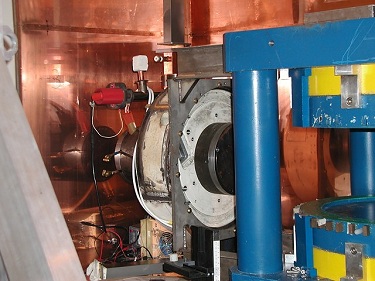
A team of medical physicists at the Cross Cancer Institute in Alberta, Canada has come up with an innovative approach to treat cancer. In affiliation with The Linac-MR Project, the team led by Gino Fallone aims to improve the accuracy of cancer treatment by reducing damage to healthy tissue surrounding a tumor site, while ensuring the tumor receives the intended radiation dose. They are accomplishing this through the development of a hybrid linear particle accelerator (Linac) integrated with magnetic resonance […]

Flying Under the Radar with Altran Group’s Stealth Antenna Design
The unique properties of radio frequency (RF) electromagnetic radiation enabled countless innovations in recent decades, including the development of radar systems. Depending on the frequency, RF radiation can travel through solid insulating structures, typical atmospheric conditions, clouds, and rain with only minimal losses allowing for its use over long ranges and in varied weather conditions. The aerospace and defense industries have expanded and progressed rapidly as a result of using radar systems for detection and classification tasks to determine if […]
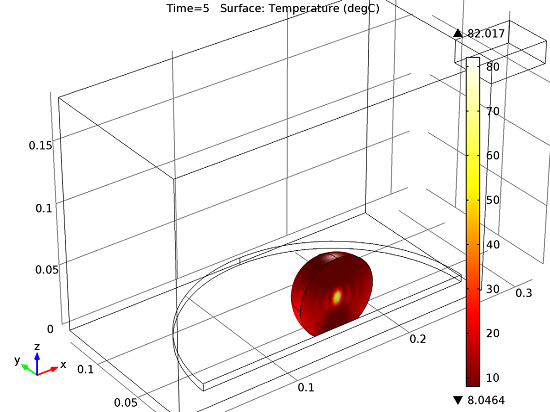
Why Does a Microwave Heat Food Unevenly?
It’s probably something we have all experienced. We get home, stick last night’s leftovers in the microwave, and sit down to have a nice meal — only to realize that the food is scalding hot one bite and freezing cold the next. This experience has prompted me on more than one occasion to wonder: Why does a microwave heat food so unevenly?
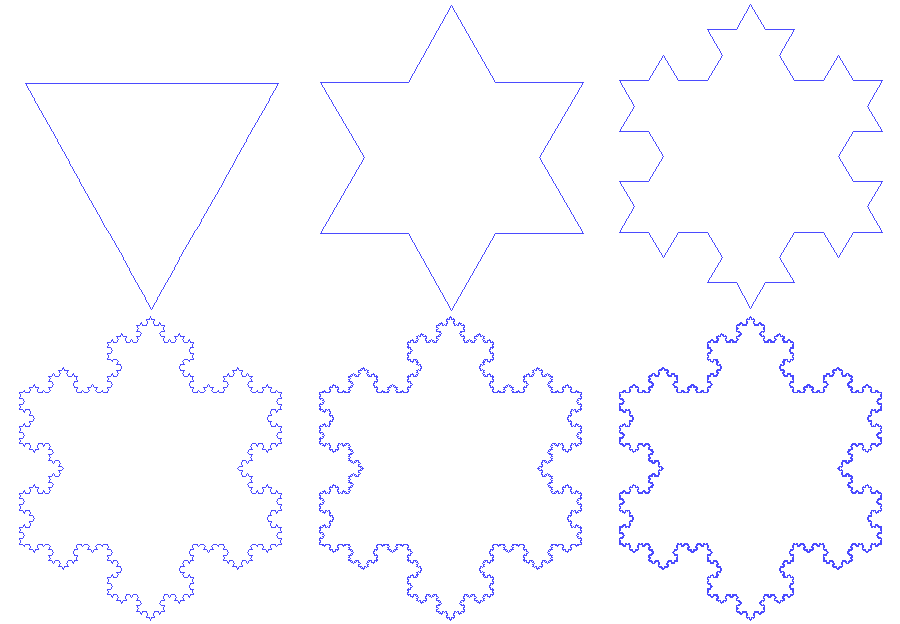
Fractals, Beyond Eye Candy
Fractals are those exotic mathematical entities whose geometric properties fall between integer dimensions (1D, 2D, 3D). Space-filling curves and bounded sets with infinite perimeters fall into this category.

Modeling Magnetostriction Using COMSOL Multiphysics®
If you have ever stood next to a transformer, you have probably heard a humming sound coming from it and wondered if there were bees close by. When you hear that sound the next time, you can rest assured that it’s not bees but the magnetostriction of the transformer core that is making that humming sound.


