
All posts by Andrew Griesmer
Thermometer Calibration: When Experimentation Falls Short
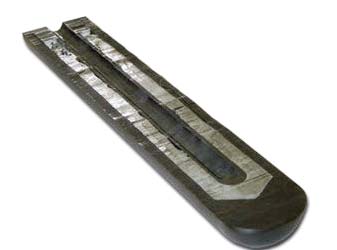
The International Temperature Scale of 1990 (ITS-90) is the industry calibration standard for measuring temperatures throughout the world. The National Physical Laboratory (NPL) works to establish and maintain the ITS-90 through experiments, most notably, thermometer calibration. To better understand and overcome the shortcomings of the experimental process, Jonathan Pearce, at the UK’s National Physics Laboratory, turned to simulation. His results yielded fascinating results about the microscopic behavior of the liquid-solid interface during the freezing process.
Exploring the Leidenfrost Effect
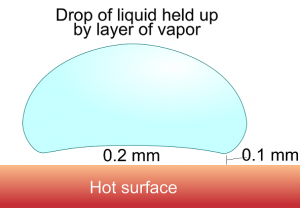
The Leidenfrost effect, also known as film boiling, occurs when a liquid comes into contact with a solid that is at a temperature well above the liquid’s boiling point. Upon contact, a layer of vapor forms between the liquid-solid interface, creating a barrier between the two. There are many examples of this phenomenon, ranging from something you may have seen in your kitchen (water “dancing” around in a pan) to things you shouldn’t try at home (dipping your hand into […]

Thermoacoustics Simulation for More Robust Microphone Analysis
When performing an analysis on small-scale audio equipment, such as hearing aids, cell phones, and microphones, the obvious physical phenomenon that’s analyzed is pressure acoustics. However, there are other physics interactions that significantly affect these small devices, including electromechanical interactions and viscothermal losses. Most notably, thermoacoustics (the detailed modeling of acoustics including thermal conduction and viscous losses) is an often overlooked effect that can alter the results of a model. These effects are important in all devices with small length […]
Starting Small with Sonar Dome Design
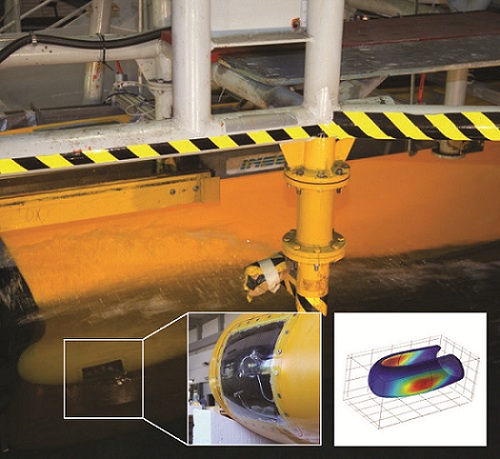
Starting the design process by testing on a small scale is often the best way to tackle issues affecting large objects, like a ship. Detailed in COMSOL News 2013, researchers at INSEAN, The Italian Ship Model Basin, used small-scale testing and then simulation to analyze the effect of placing a sonar system within the bulbous bow at the hull of a ship. Using a small-scale model of a bulbous bow, the researchers at INSEAN performed fluid-structure interaction experiments, and subsequently […]

A Multidisciplinary Approach to Electronics Design
Sharp is a powerhouse in the electronics industry, involved in televisions, liquid crystal displays, LED lighting systems, solar cells, multi-function business machines, and many other electronics-based products. One of a global network of Sharp R&D laboratories, Sharp Laboratories of Europe (located in Oxford, England), has been busy researching and developing LED lighting, display technology, microfluidic lab-on-a-chip, and energy systems for incorporation into Sharp’s products.
Video: 2D Models from Cross Sections of 3D Geometries
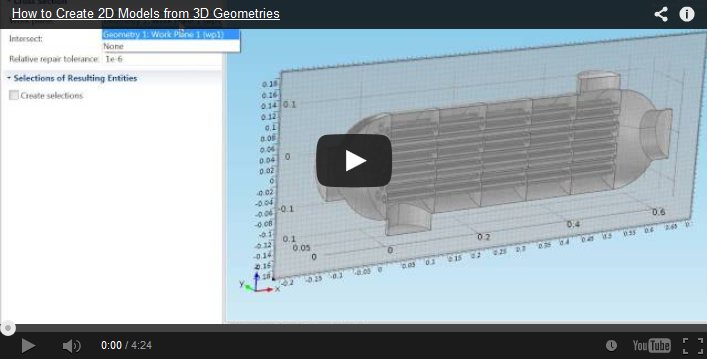
A while back, I blogged about a new feature made available in COMSOL Multiphysics 4.3b, the ability to create 2D models from the cross sections of 3D geometries. We are so excited for this new feature that we decided to make a video showing you how easy it is to use.
Sweep Your Meshes with Ease
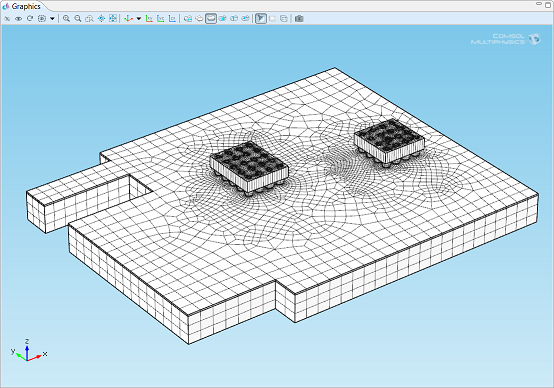
Swept meshing is a geometry discretization technique available in COMSOL Multiphysics for specific types of geometries, including thin geometries, geometries with bends, and models with little or no variation in a specific direction. A swept mesh starts at a source boundary and sweeps along to a specified destination boundary. In previous versions of COMSOL Multiphysics, the source and destination boundaries generally needed to be specified by the user. However, in the latest release, COMSOL Multiphysics version 4.3b, the swept mesh […]
Creating 2D Models from 3D Geometries in COMSOL Multiphysics
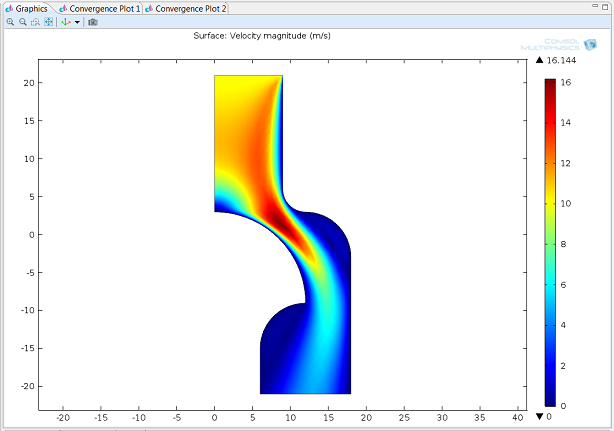
Our newest release, COMSOL Multiphysics version 4.3b, contains so many new modules and features, certain additions might get lost in the fray. One addition to the COMSOL Multiphysics base package we don’t want you to miss is the ability to create 2D models from cross sections of 3D geometries. This easy-to-use feature allows engineers to simplify the model, gain understanding of and fine-tune parameters, and dramatically reduce simulation time.
Digging into COMSOL’s Geomechanics Module
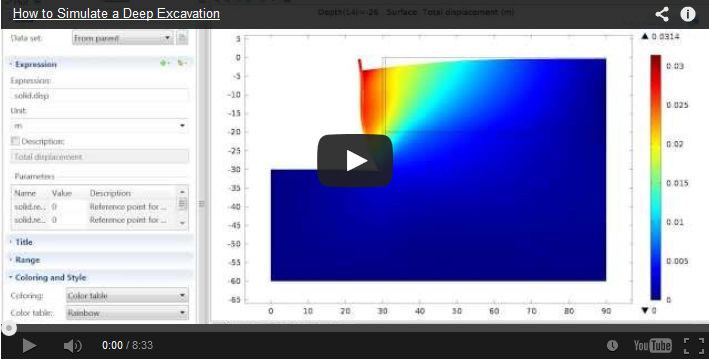
I will always remember a Geotechnical Engineering class I took during the pursuit of my Civil Engineering degree. It contained both the high and low points for that academic semester; the lab portion was a lot of fun, learning about (read: playing with) the different soils and clays existing in the state of Georgia. The final project, on the other hand, tasked us with designing a retaining wall to match certain specifications — a tough and lengthy assignment. A retaining […]
Meshing and Optimization in Engineering Magazines
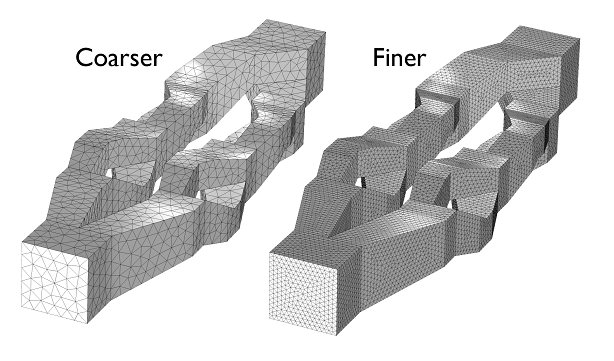
Online engineering magazines, like Design World and Desktop Engineering, are great for anyone out there interested in emerging technologies. I especially liked a few recent articles: two in Design World’s “CAE Solutions” section and one in Desktop Engineering’s simulation section, detailing a couple of major topics important to finite element analysis, or FEA. First there is meshing, the foundation of FEA software. Second, there is optimization, which is all about maximizing efficiency and improving results. The key for any production […]
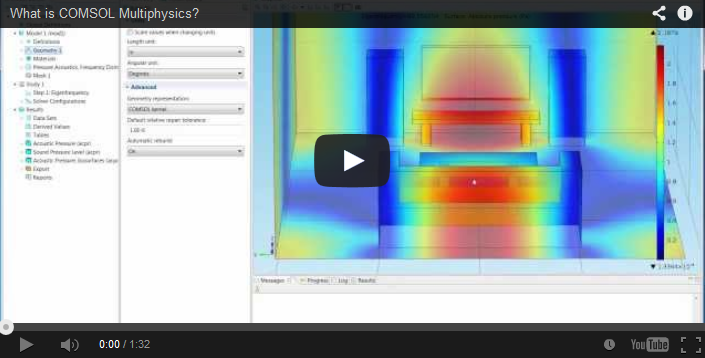
What Is COMSOL Multiphysics?
You may be wondering “What is COMSOL Multiphysics?” In short, COMSOL Multiphysics is a comprehensive simulation software environment for a wide array of applications, but structured and user-friendly for all to use. The best way to answer the question of what our software can do is to show you. This is why we have created a video that gives you a brief overview of the capabilities you can possess with the software in your hands.

Metamaterials Make Physics Seem Like Magic
Metamaterials are a new and emerging technology with vast potential to reshape our views on what is and isn’t possible in this physical world of ours. Unlocking the mysteries and overcoming the obstacles associated with metamaterials would lead to a host of technological advances once thought impossible by even the most imaginative of individuals. From making computer chips smaller and faster than the most advanced current ones, to protecting structures from earthquakes, to developing imaging technology that doesn’t harm tissue […]