

From October 7 to 9, COMSOL’s annual Boston conference convened some of the best minds in simulation for an inspiring three-day event that celebrated the future of modeling in scientific research and engineering. The event featured keynotes from industry leaders, a full slate of minicourses, a poster exhibition showcasing diverse simulation applications, a panel discussion, and several exciting announcements. Check out a summary of all the highlights below!
Driving Innovation with Multiphysics Simulation
COMSOL, the Official Multiphysics Partner of the ABB FIA Formula E World Championship
In the opening keynote talk, Dan Cherowbrier, CTO of Formula E, espoused the value of organizational partnerships in driving progress. Describing the opportunities for deploying modeling and simulation to address complex technical challenges across the all-electric racing series, he paused and turned to the audience to announce COMSOL as the Official Multiphysics Partner of the ABB FIA Formula E World Championship. The multiyear partnership will bring engineers from both organizations together to tackle several fronts for rapid innovation across efficiency, energy management, audience experience, and more.
Throughout his presentation, Cherowbrier described the premier Championship as a living laboratory and highlighted key points in its technological evolution. Specifically, he shared the considerations that went into innovation fronts such as Driver’s Eye, PIT BOOST supercharging, and the new Gen4 car. In Cherowbrier’s words, the Gen4 car is the “most advanced EV” with 600 kW of power compared to the previous generation’s 350 kW. But, he said, continuously innovating a sustainable motorsport Championship without compromising on race quality is a delicate balance, and multiphysics simulation has a lot to offer in this space. Celebrating the joint endeavor, Bjorn Sjodin of COMSOL offered a few words, “Formula E is a great environment for pushing the limits of EVs and simulation.”
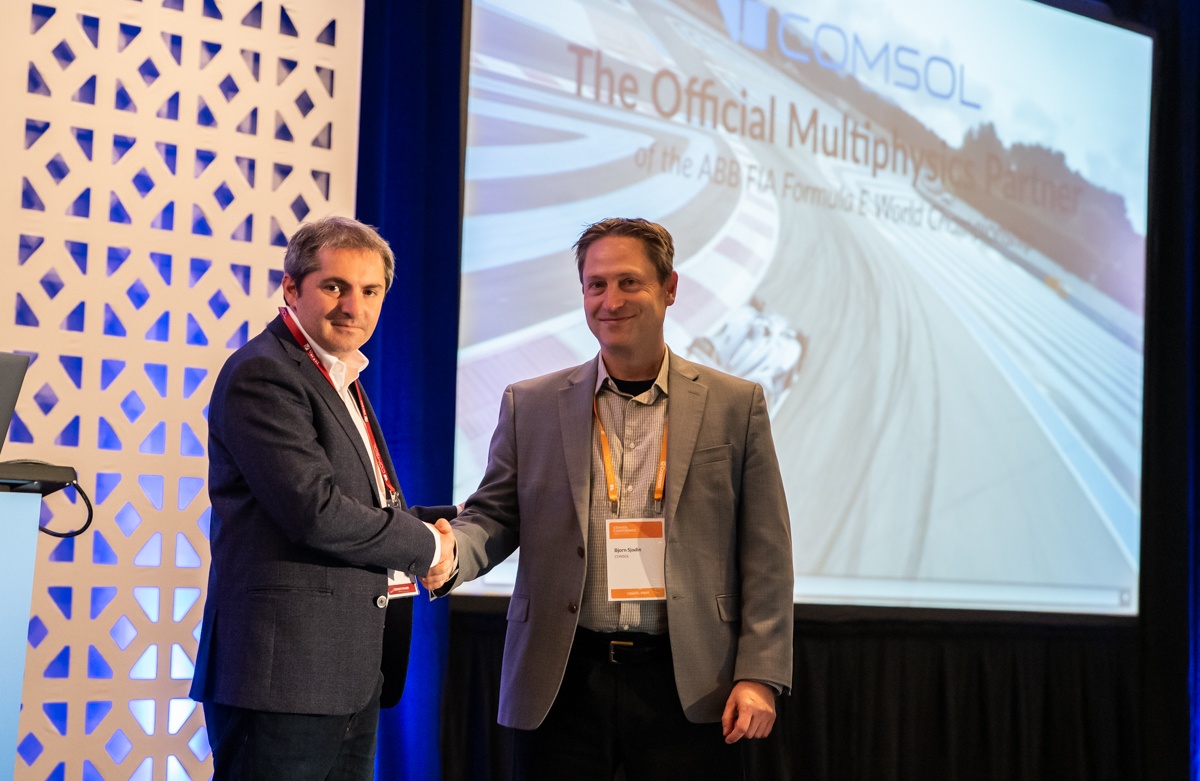
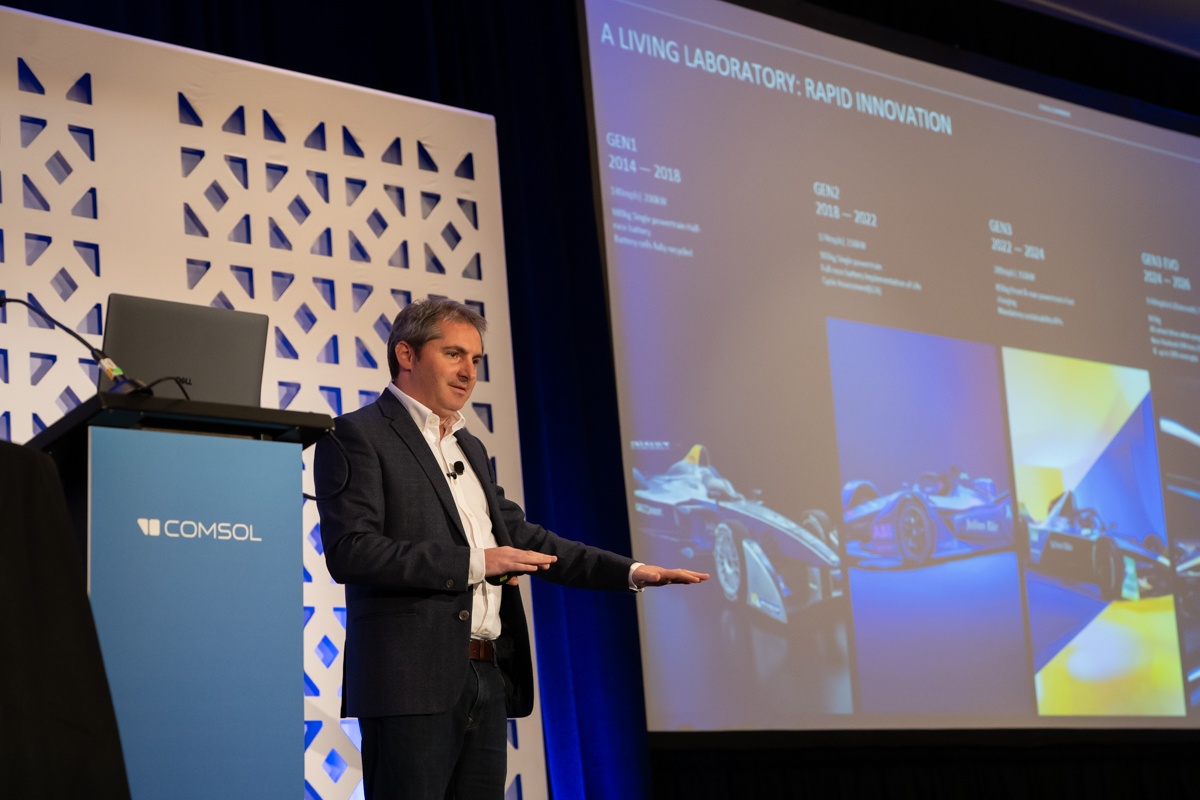
Dan Cherowbrier of Formula E and Bjorn Sjodin of COMSOL announce the new partnership (left). Cherowbrier presents on the technological evolution of Formula E (right).
Keynote Talks Highlight Industry Leaders’ Application of Modeling and Simulation
Fellow keynote speakers represented some of the most recognized institutions in the aerospace, automotive, semiconductor, and academic sectors. They discussed topics that included multiscale analysis, advanced technical use cases, and opportunities to leverage computational advances and AI-assisted capabilities to further accelerate innovation.
On the subject of acceleration, Selim Dogru of NVIDIA joined Bjorn Sjodin of COMSOL to discuss how advancements in GPUs and AI can support faster simulation and design exploration of semiconductors. Dogru offered an introduction to the NVIDIA CUDA-X™ libraries, including the accelerated NVIDIA CUDA® direct sparse solver (cuDSS), which delivers up to 10x speedups using the COMSOL Multiphysics software. The talk also covered the use of AI surrogates for enhancing computational efficiency and concluded with a discussion of the NVIDIA Nemotron™ Ultra, which will feature in the forthcoming COMSOL MCP Server (more on that below).
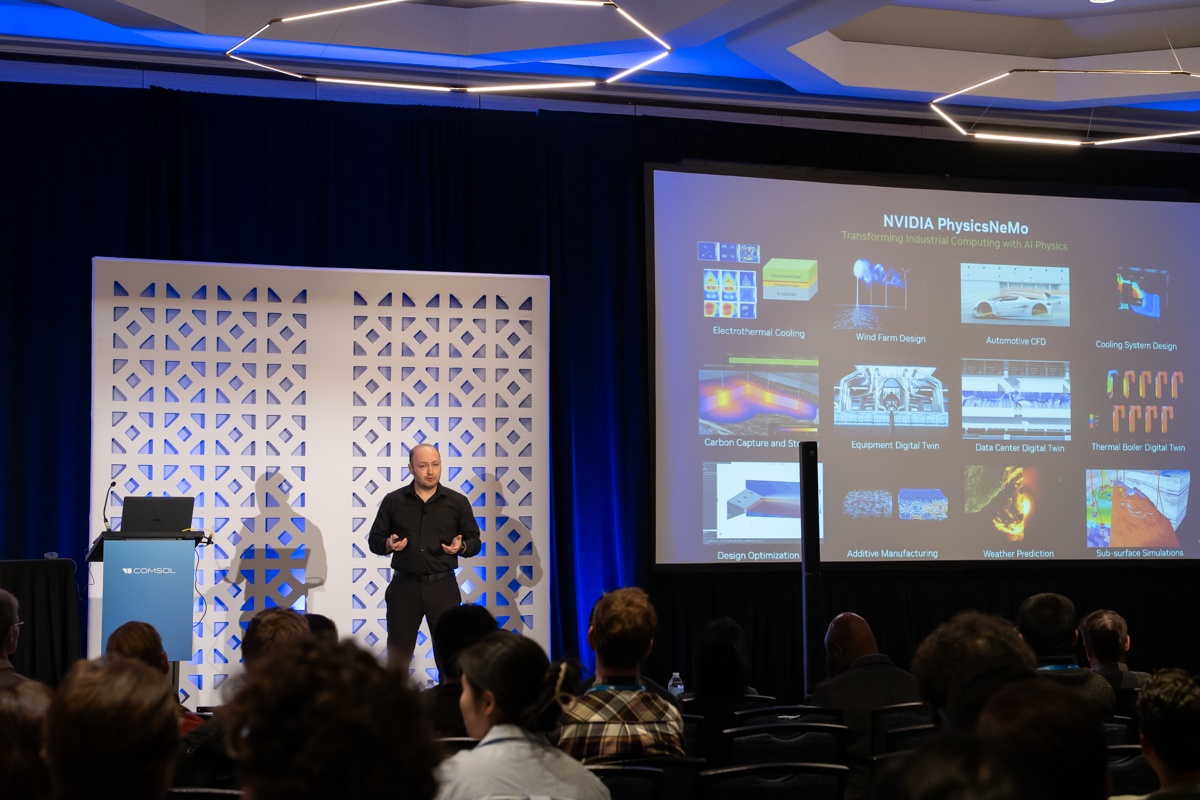 Selim Dogru of NVIDIA discusses GPU and AI-assisted acceleration.
On Wednesday morning, Hannah Alpert of NASA Ames Research Center shared her approach for reconstructing surface heating from an inflatable atmospheric reentry vehicle. Specifically, the aerospace engineer described an inverse analysis methodology implemented in the COMSOL Multiphysics software that used reentry temperature data taken from 82 thermocouples across the aeroshell of the reentry vehicle used in NASA’s Low-Earth Orbit Flight Test of an Inflatable Decelerator (LOFTID) mission. These aeroshells — deployable heatshields meant to protect spacecraft from burning up during reentry — are tasked with a great amount of work in a short time and under extreme conditions. Alpert’s simulation results will help improve thermal models and design tools for NASA’s future missions using Hypersonic Inflatable Aerodynamic Decelerator (HIAD) technology.
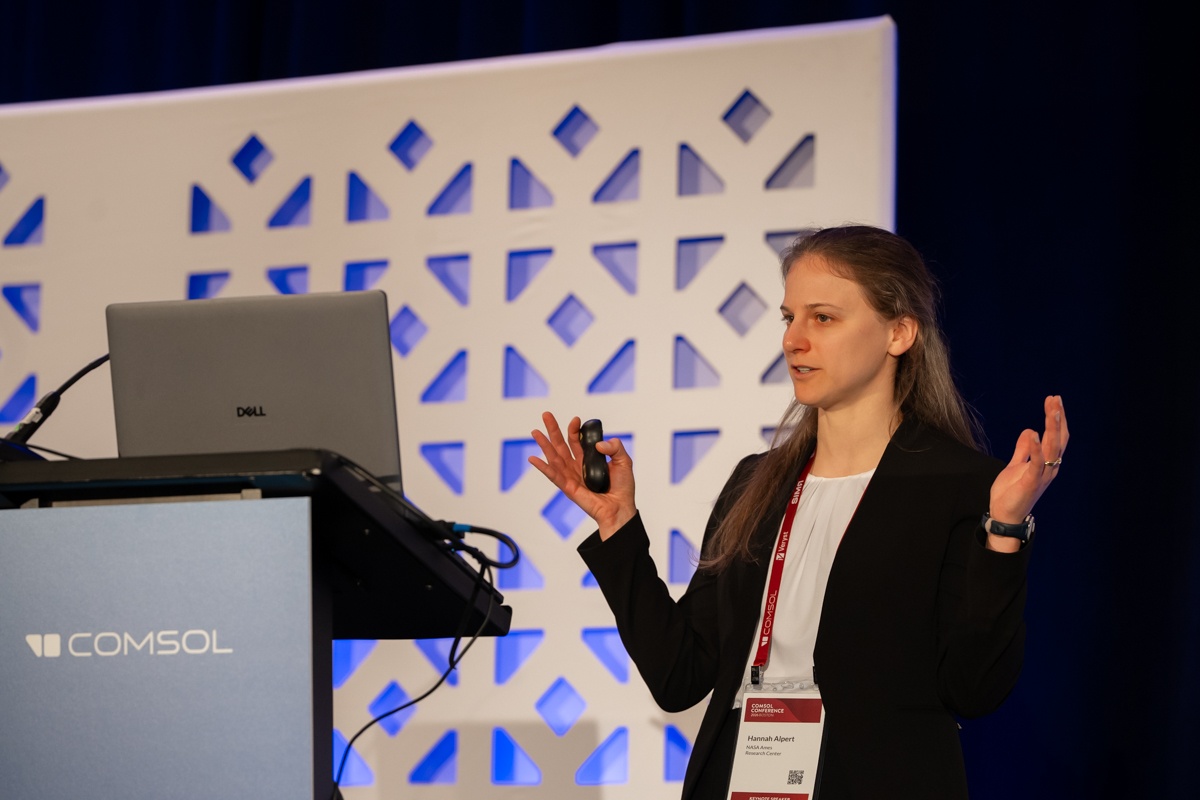
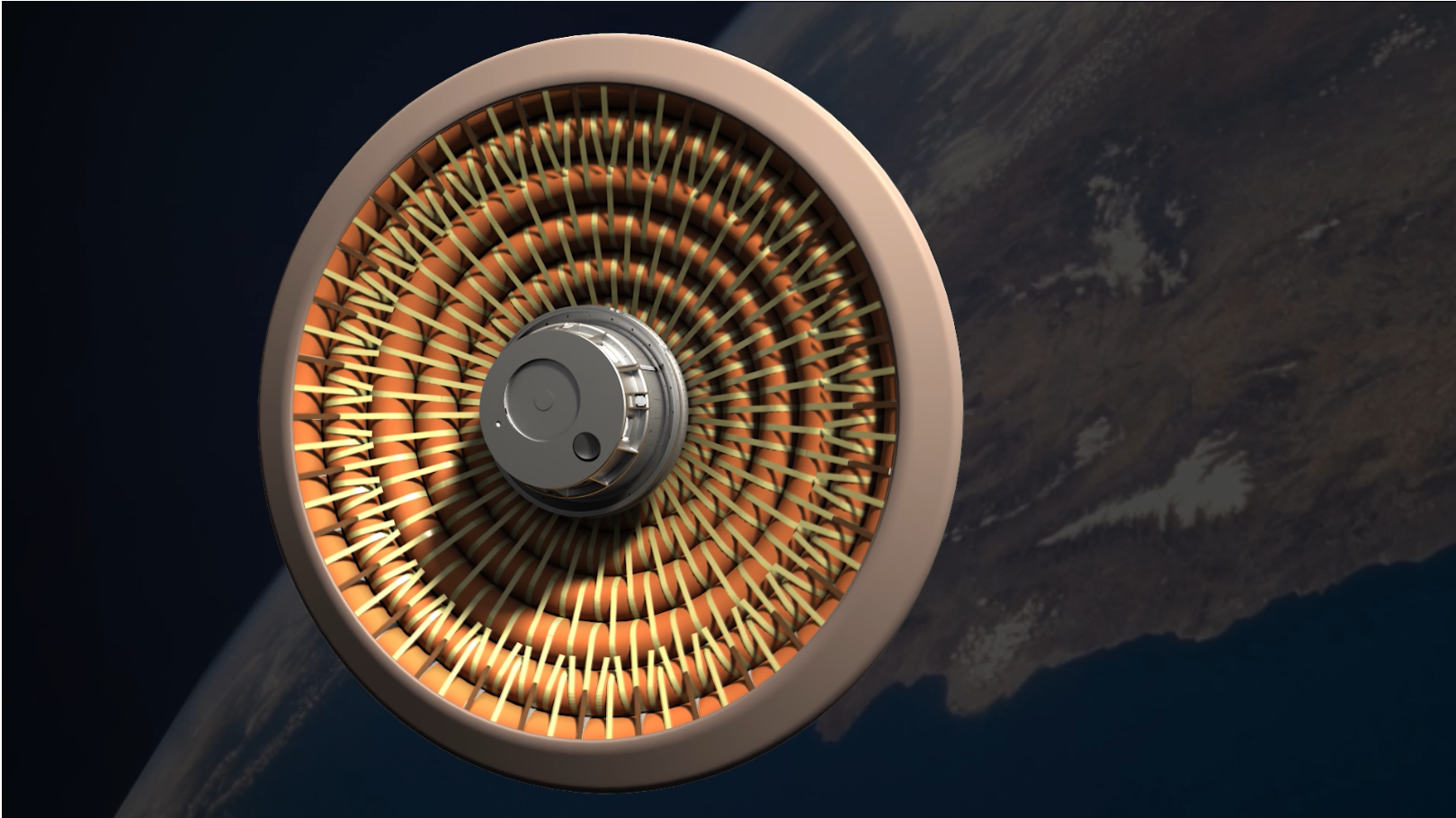
Hannah Alpert of NASA delivers her keynote (left). A still illustration of the LOFTID reentry vehicle’s aeroshell (right).
In his keynote, Taylor Garrick of General Motors described the value of multiscale modeling for the development of batteries and battery systems in electric vehicles. He shared that enhancing the fast-charging capabilities of EVs requires understanding and simulating physics at various length scales from the atomistic level to the continuum level. Garrick walked attendees through the typical model calibration process using a versatile reference electrode, which allows engineers to utilize models to virtually probe the impact of design changes. Using lithium plating as an example, Garrick described how atomic scale analysis can address lithium transport for overall system improvement. The talk also covered multiscale modeling opportunities for understanding thermal distribution and state-of-charge nonuniformity.
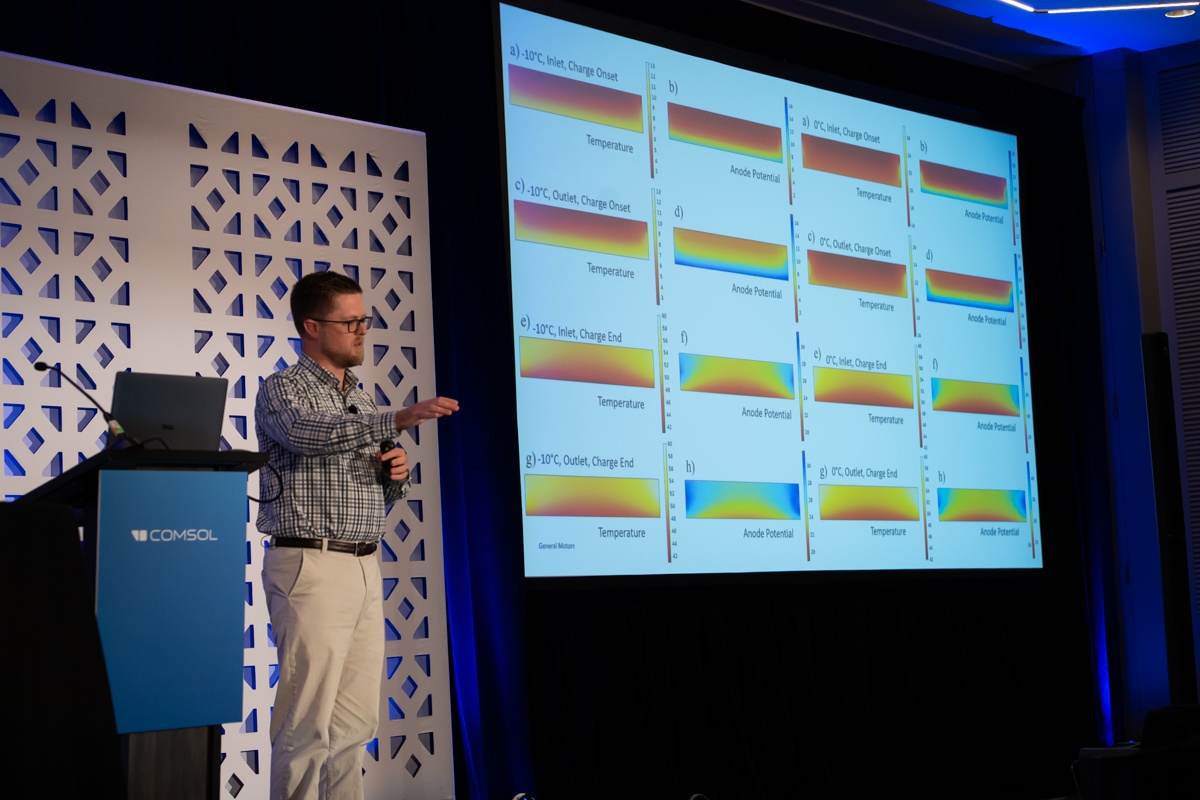
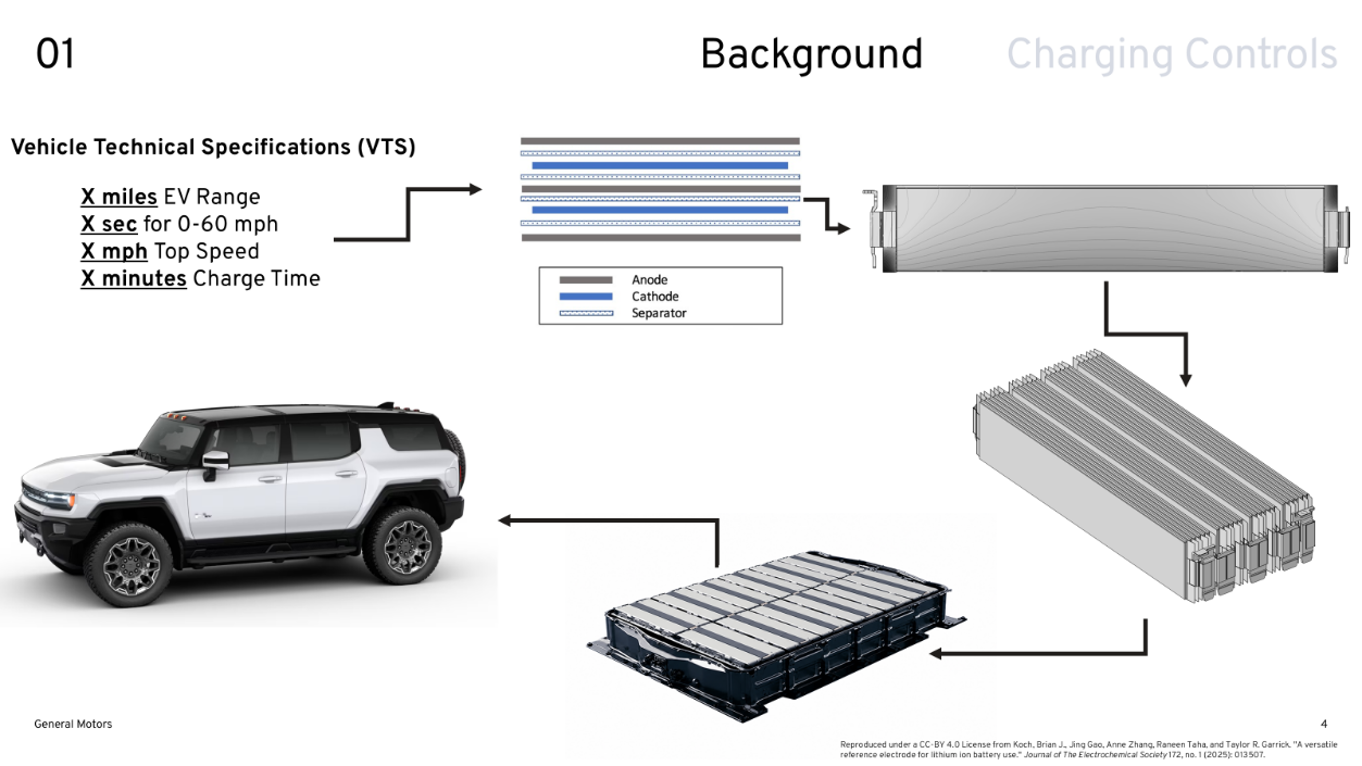
Taylor Garrick of General Motors presents on multiscale modeling (left). A slide from his presentation, showcasing his modeling workflow (right).
Next, CEO of Cosmon, Rui Aguiar, spoke about how agentic AI tools can help businesses meet their simulation needs by democratizing modeling tools for wider use. The developer of Argus, an agentic AI agent built to support mechanical engineering software, shared specific opportunities for implementing agentic AI into modeling workflows, from setup to evaluation and visualization of results. The tools, he said, are especially valuable for judgement assistance and results visualization steps. To maximize their value, however, businesses should implement a human-in-the-loop workflow.
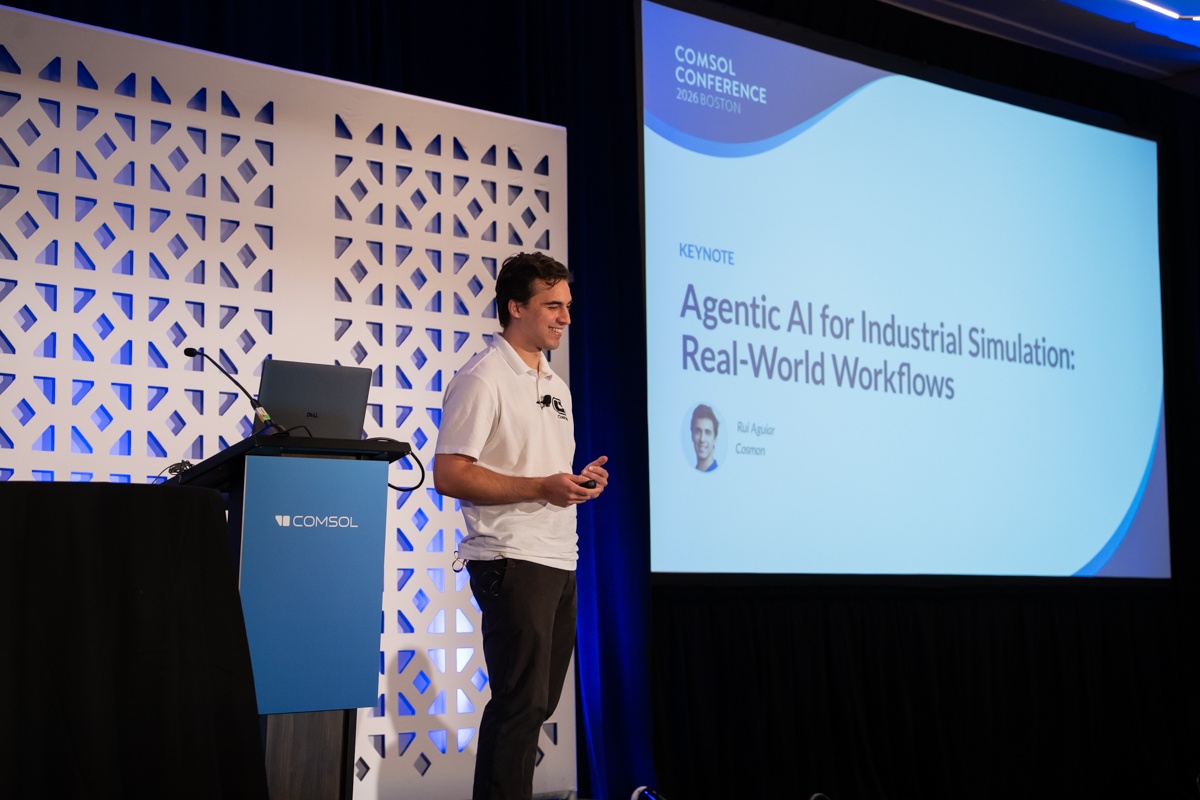
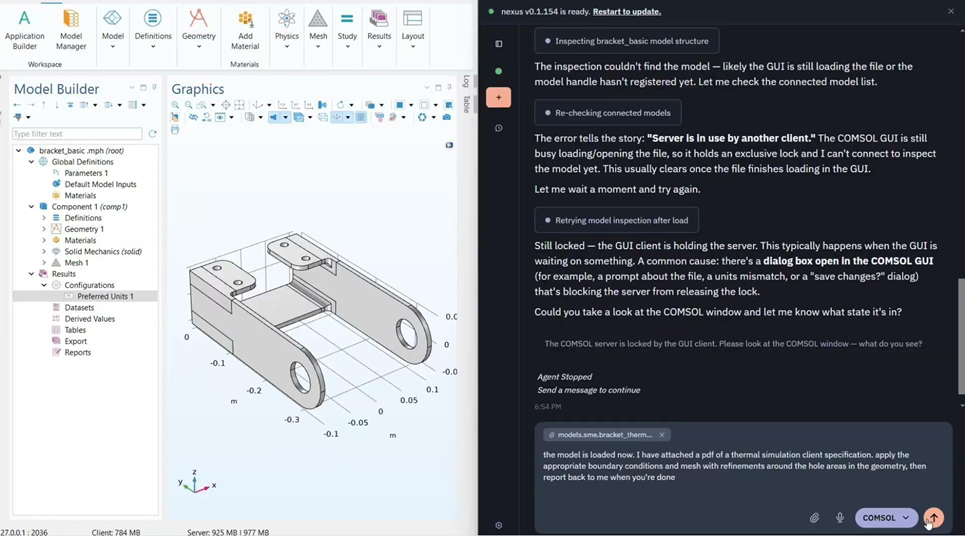
Rui Aguiar of Cosmon (left). A slide from his presentation (right).
On the final day of the conference, Edvin Cetegen of Intel® and Dr. Jongyoon Han of the Massachusetts Institute of Technology presented their work. Cetegen, an expert in semiconductor packaging, demonstrated a novel AI-based approach for computationally efficient prediction of substrate warpage at any given temperature. Advanced semiconductor packaging, he shared, requires high-fidelity models to understand and address challenges. The AI-enabled method offers significant speedups while delivering high-fidelity warpage predictions, thus supporting faster design optimization and next-generation advanced packaging development.
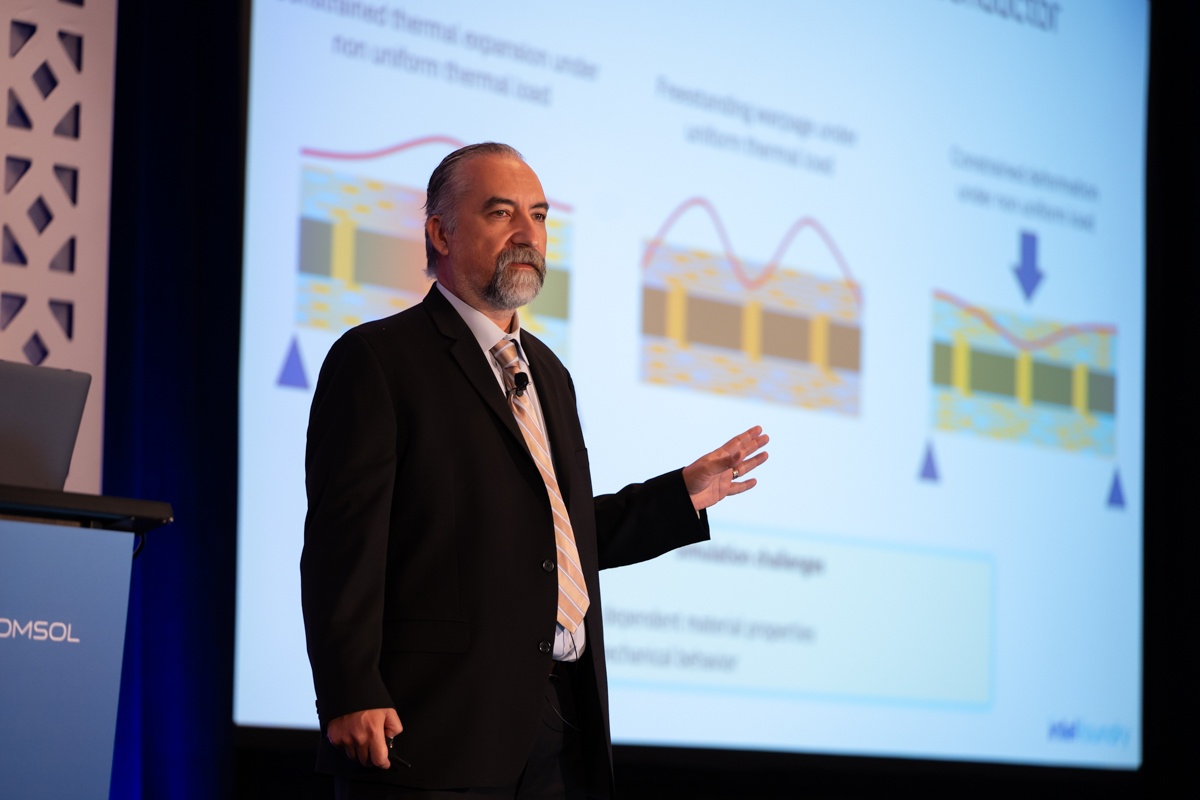
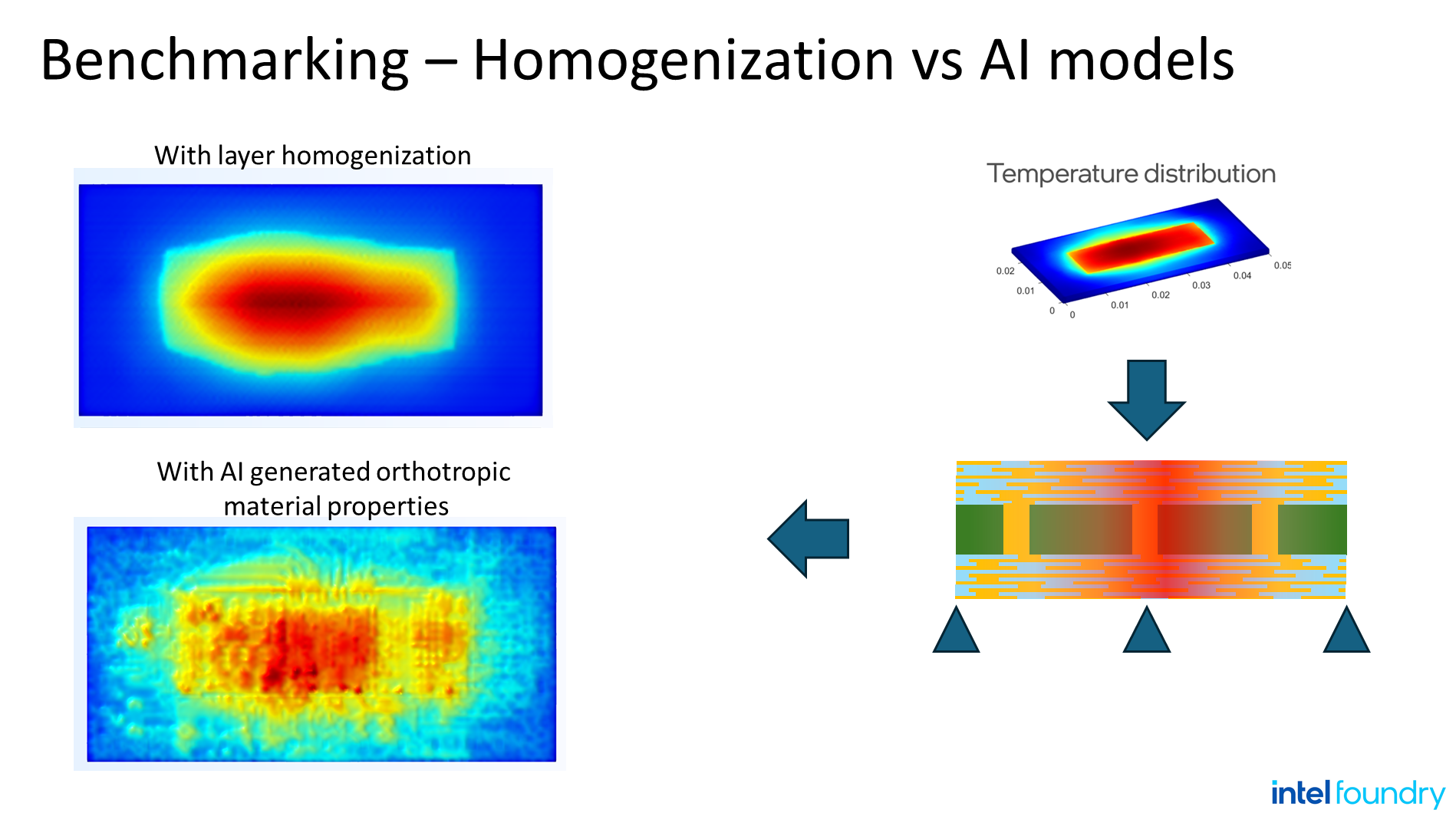
Edvin Cetegen of Intel describes his warpage prediction method (left). A slide from his presentation (right).
Finally, Dr. Han’s talk showcased ongoing efforts at MIT’s Research Laboratory of Electronics to implement system-level modeling of a multistage portable seawater desalination system that combines electrodialysis and ion concentration polarization. He detailed the modeling choices for audience members, including strategic simplification opportunities in the large-scale, system-level model. The results, he concluded, provide useful, actionable insights into making portable desalination systems better and more efficient.
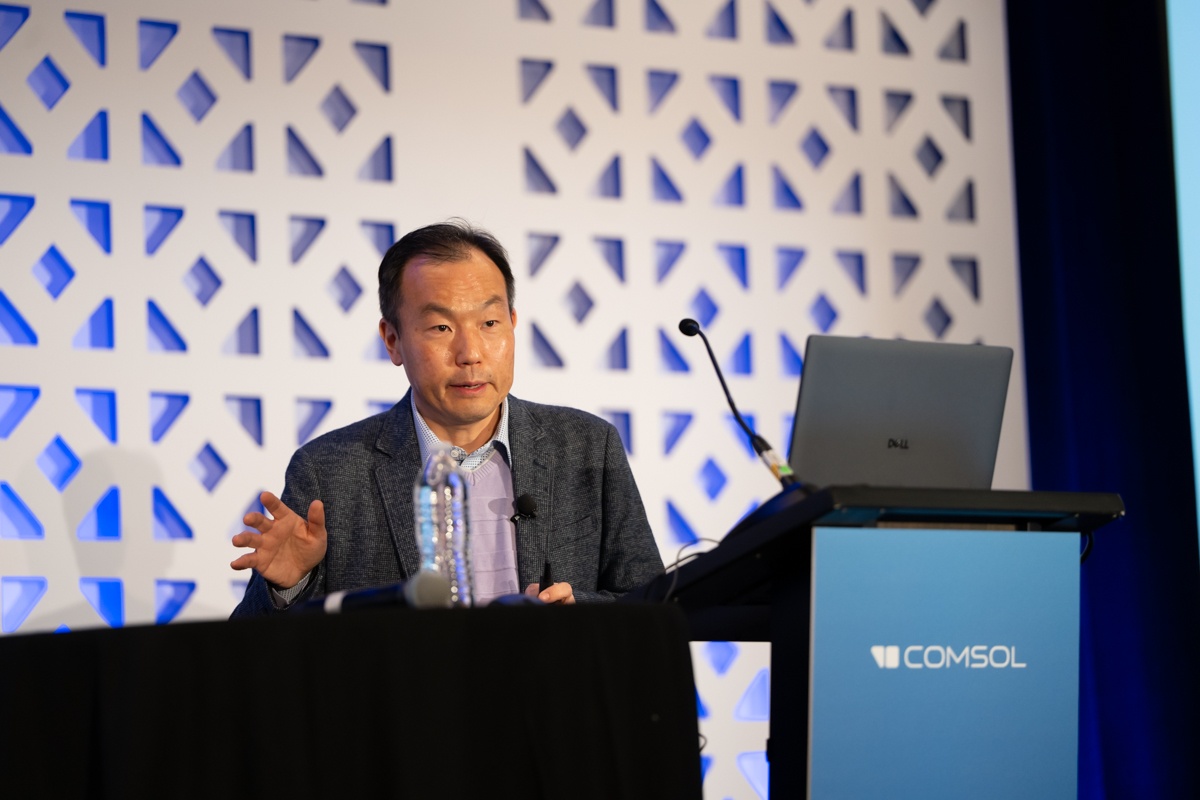
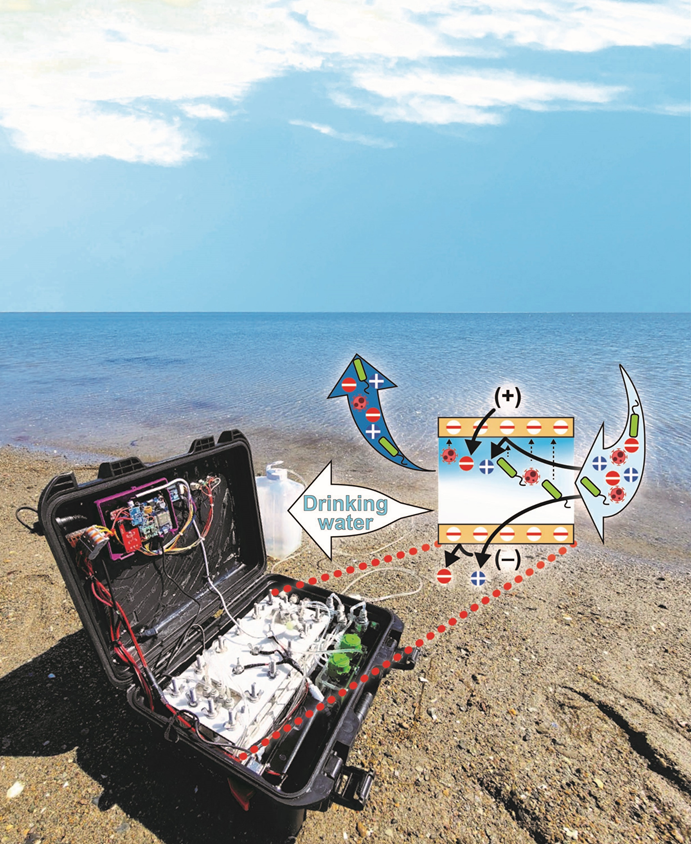
Dr. Jongyoon Han of MIT (left). An image from his presentation shows a portable seawater desalination system (right).
Preview of COMSOL Multiphysics Version 2027
In a moment highly anticipated by conference-goers every year, Andrew Strikwerda of COMSOL took to the stage to detail the upcoming release of COMSOL Multiphysics v2027. This included a look at the software’s biggest product launch in years: COMSOL Systems™. The new add-on product can be used to create system-level models that couple directly with 1D, 2D, and 3D multiphysics models.
When introducing the new COMSOL MCP Server, Strikwerda announced, “COMSOL is AI ready.” The server enables direct interaction with AI agents within the COMSOL API. Agentic AI, he shared, benefits from COMSOL’s vast library of open access data and documentation on the COMSOL Multiphysics software — which translates to a degree of training already existing in the majority of agents that users may choose from. In addition to a host of other updates, Strikwerda highlighted the new Electric Motor Module add-on product. To learn more about v2027, read our press release.
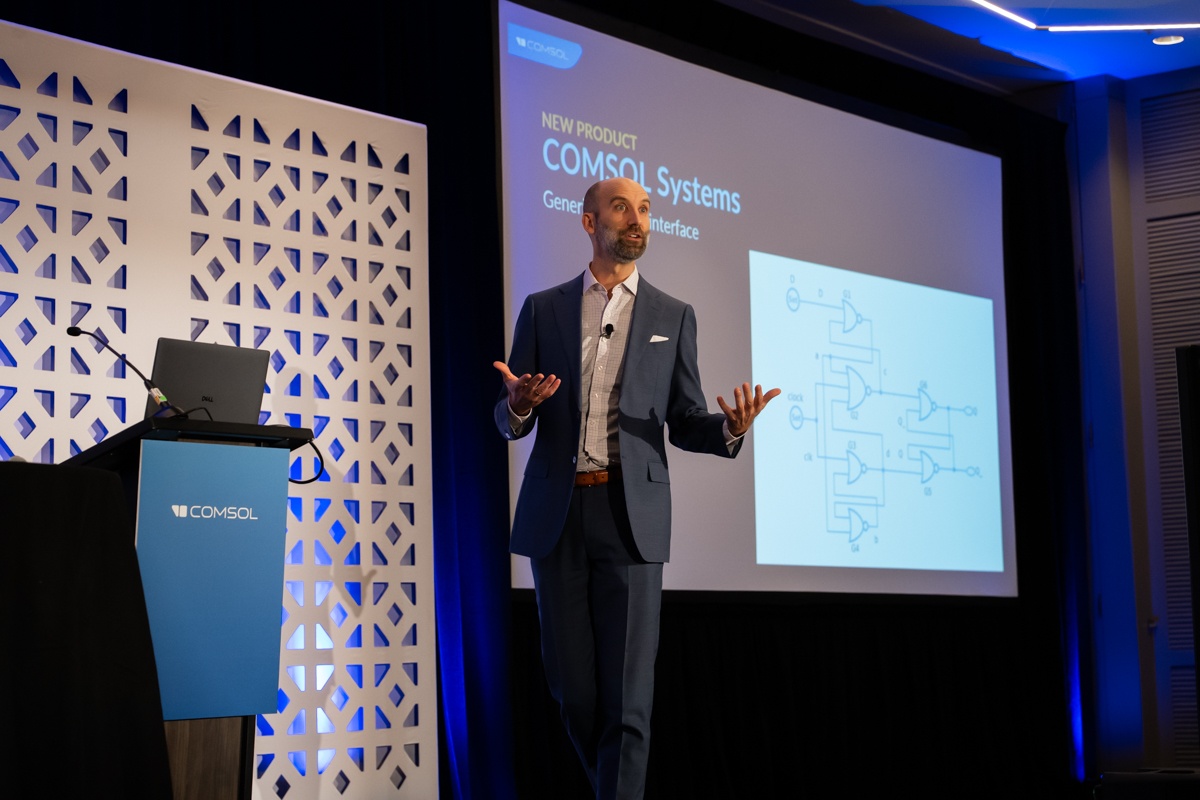
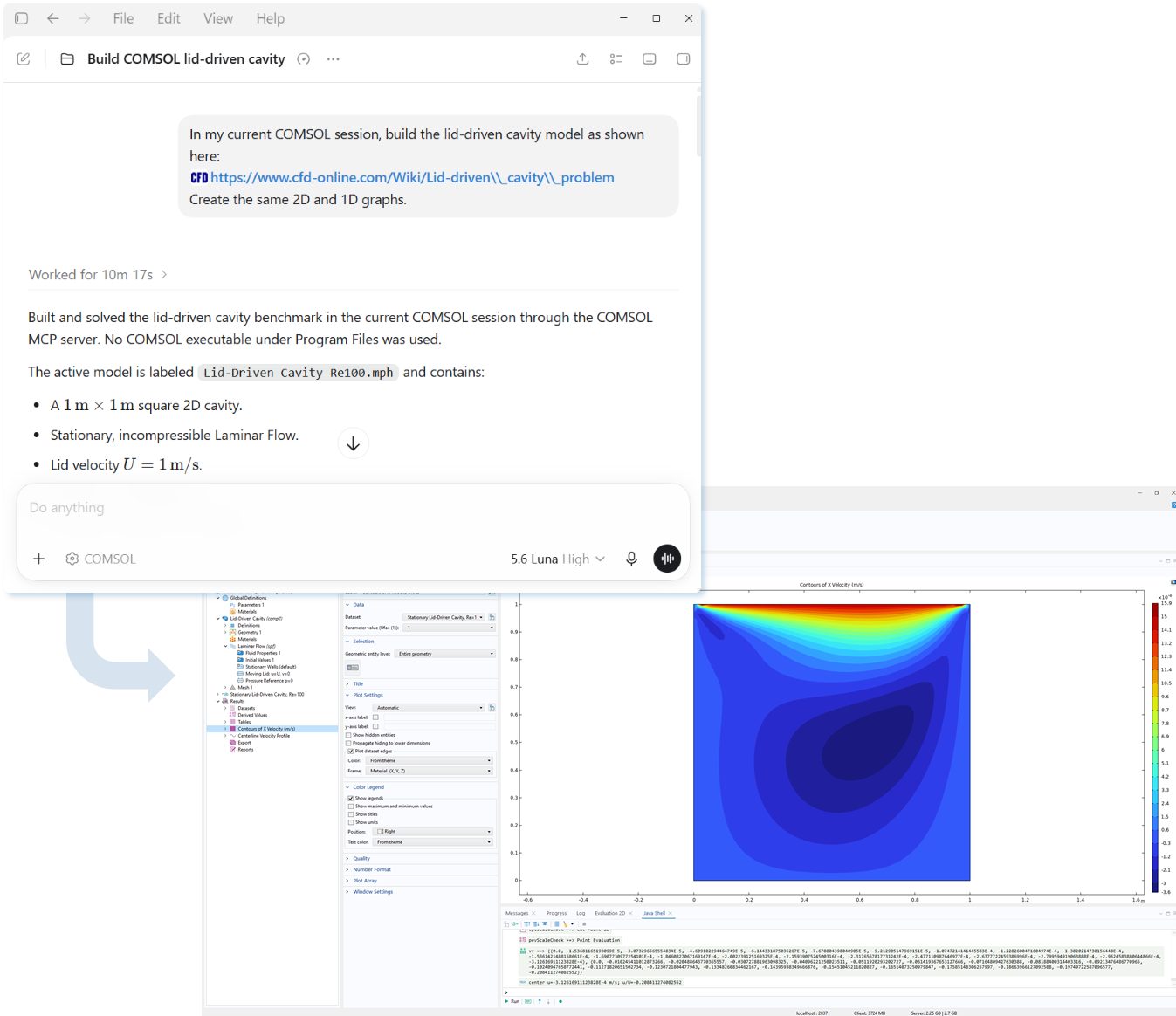
Andrew Strikwerda of COMSOL details new features in the upcoming release of COMSOL Multiphysics v2027.
In the Spotlight: COMSOL Innovation Contest
To kick off the inaugural COMSOL Innovation Contest, five finalists showcased their projects on the main stage as they competed for a grand prize of $50,000. First up was Matthew French of MIT, who shared his investigation of rub-induced ignition risk in oxygen-rich turbopumps, followed by Ahmad Gad of Thoth Solutions, LLC, who described the development of a nonintrusive stuck point indicator for drilling operations. Next, Abigail Huber and Matthew Hutchins of Florida A&M University and Florida State University (FAMU-FSU) College of Engineering shared their design of a year-long subdermal implant for endometriosis, while Mahdi Baniasadi of Arizona State University showcased a combination digital process–design platform for advanced foam manufacturing. Lastly, Jin Hong Joo of Cornell University demonstrated the optimization process of a microwave annealer prototype for enhanced dopant activation in semiconductors.
Ultimately earning both the grand-prize award and the Best Presentation by Popular Vote was Mahdi Baniasadi. The winning work, coauthored with Mostafa Yourdkhani, also of Arizona State University, crafted a 3D deposition-aware thermo-chemo-mechanical multiphysics model to enhance the design and application of a reaction-programmed direct foam writing process in manufacturing. “Simulation helps the experimentation move from predictive to prescriptive,” explained Baniasadi. Ultimately, he hopes this work will guide rapid, energy-efficient, and support-free manufacturing of lightweight thermoset foam architectures.
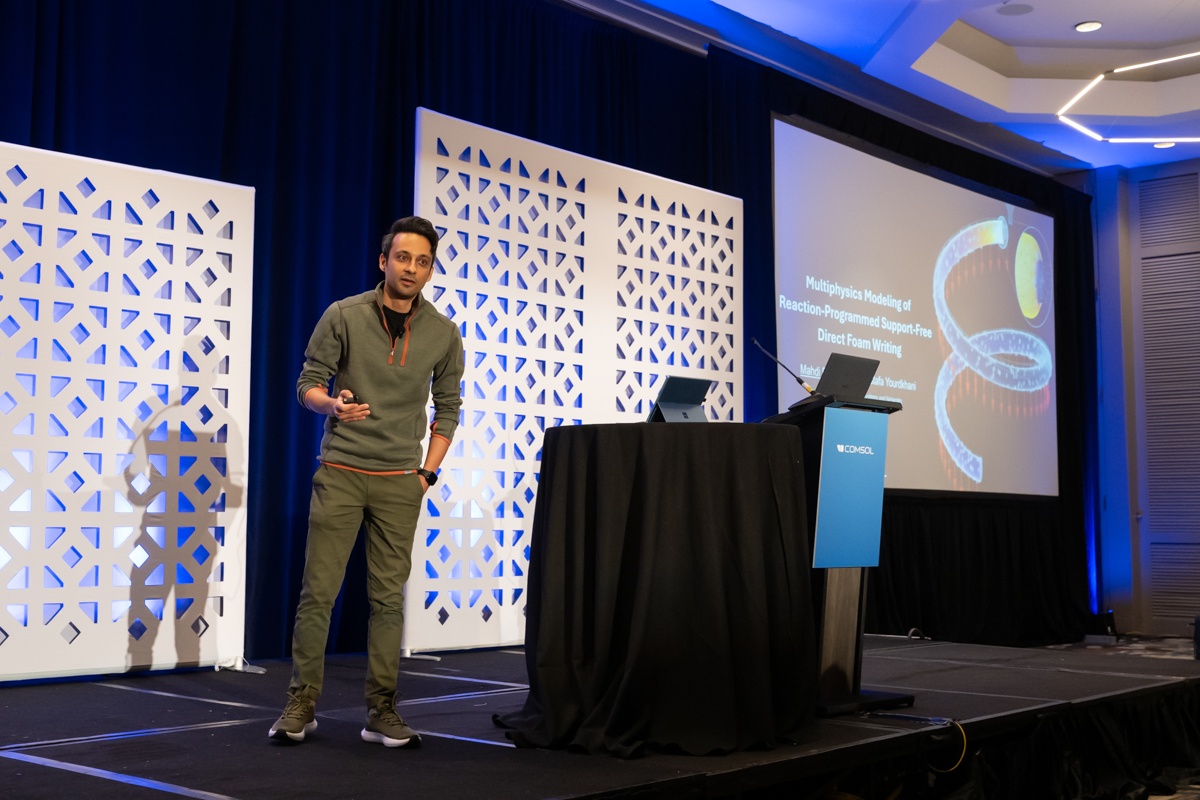
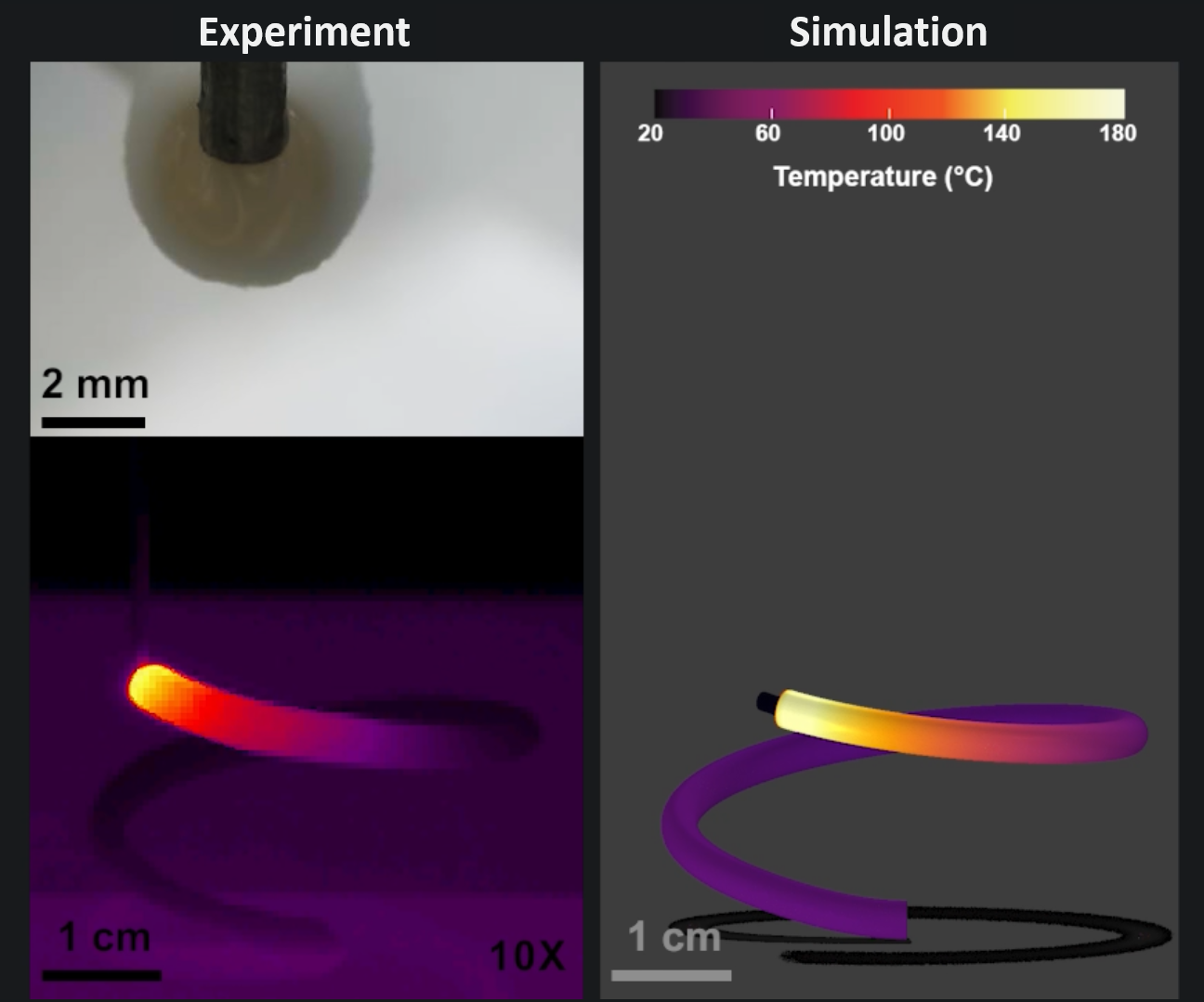
Mahdi Baniasadi delivers his grand-prize-winning presentation (left). A slide from his presentation (right).
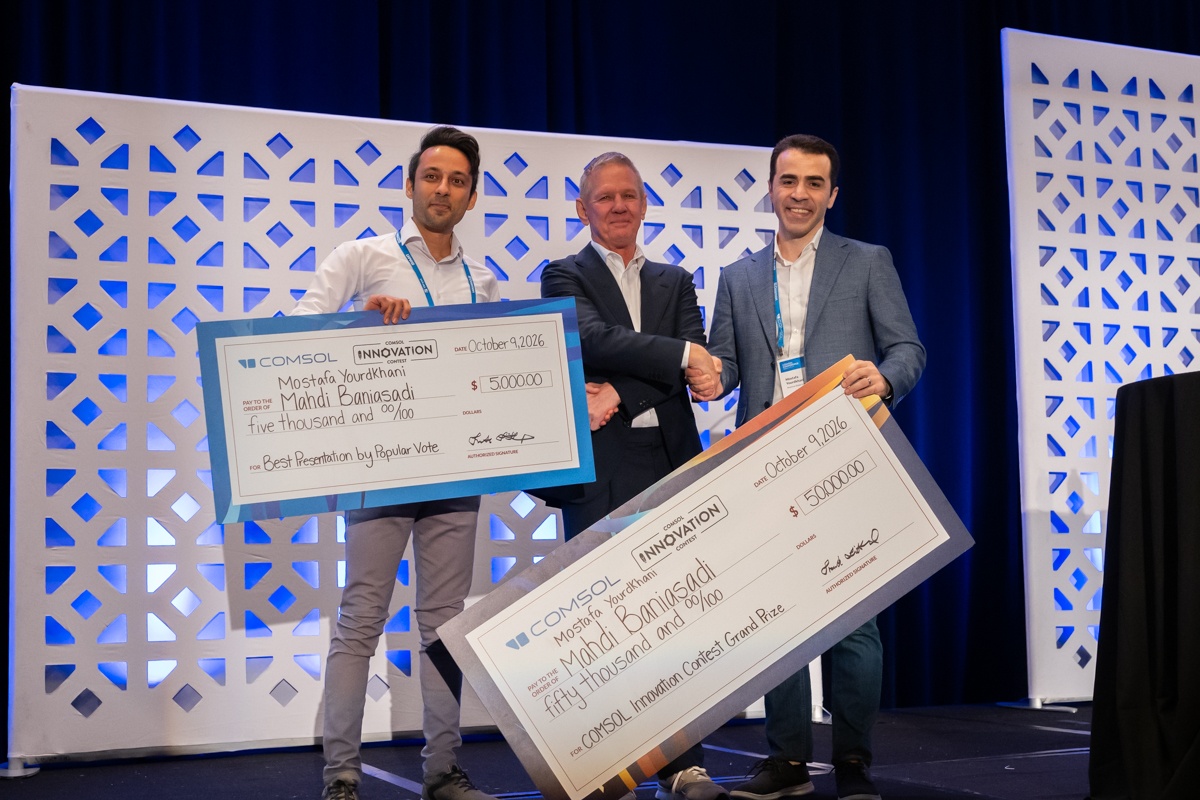 Baniasadi and coauthor, Mostafa Yourdkhani, accept their awards from COMSOL CEO, Svante Littmarck.
Geodynamics Takes the Best Poster Award
In addition to the Innovation Contest awardees, COMSOL CEO, Svante Littmarck, and COMSOL’s David Kan presented the Best Poster by Popular Vote award to geodynamicist Ilana Bromberg of Purdue University. Bromberg’s poster presented a unique model for large-scale geophysical analysis. Her work, which investigated the role of metamorphic core complexes in the formation of geological features like the Basin and Range Province in the American Southwest, used 3D, time-dependent reverse modeling to test geological theory. “Geological data tells us what happened but not why,” shared Bromberg. “While [tectonics] play a big role, gravity and a weak lower crust [in this region are also primary drivers], and that would have been difficult to study otherwise.”
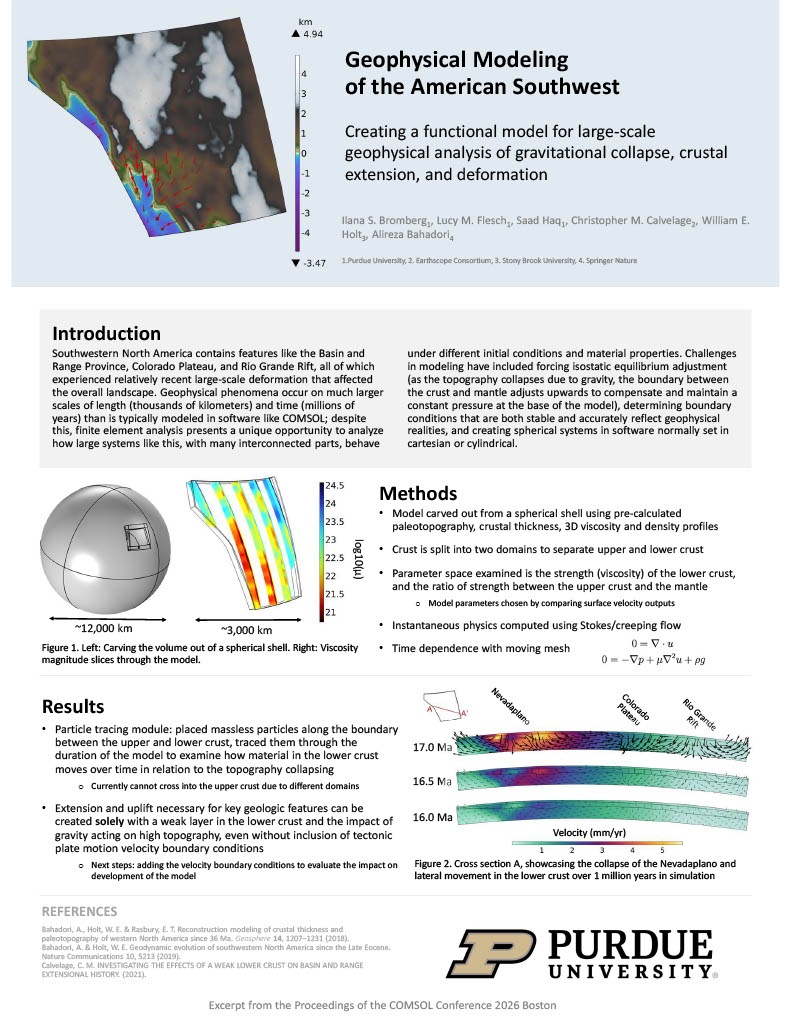
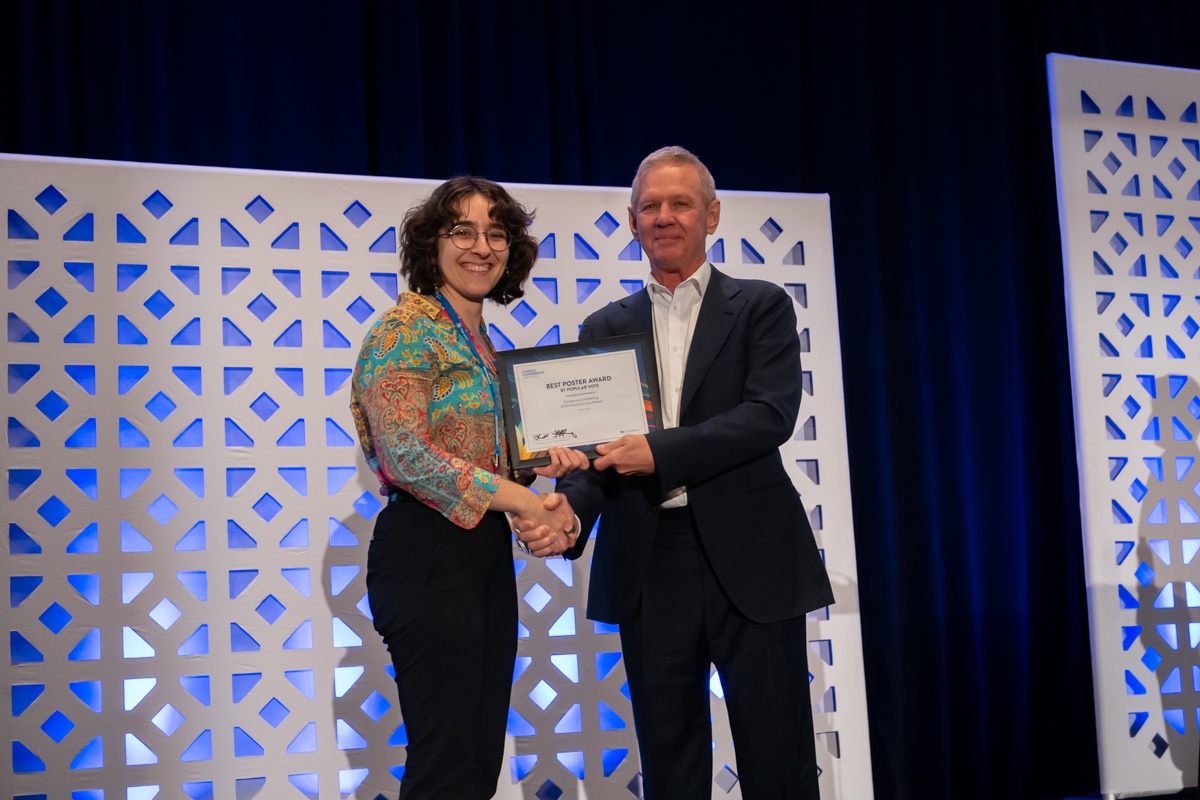
The award-winning poster (left). The author, Ilana Bromberg, accepts her award from Svante Littmarck (right).
Minicourses and Demo Stations
Additional opportunities to delve into subject-specific training and troubleshooting were available in the form of minicourses and demo stations throughout the event. Minicourse offerings varied from introductory to advanced modeling workflows across the spectrum of research and engineering areas. Select courses provided deeper insights into the upcoming software, such as the Electric Motor Module add-on product.
For 1-on-1, project-specific guidance, demo stations served as a dedicated avenue to connect with COMSOL applications engineers. The stations also featured hardware equipped with the soon-to-be-released COMSOL Multiphysics v2027 software and facilitated hands-on previews for attendees.
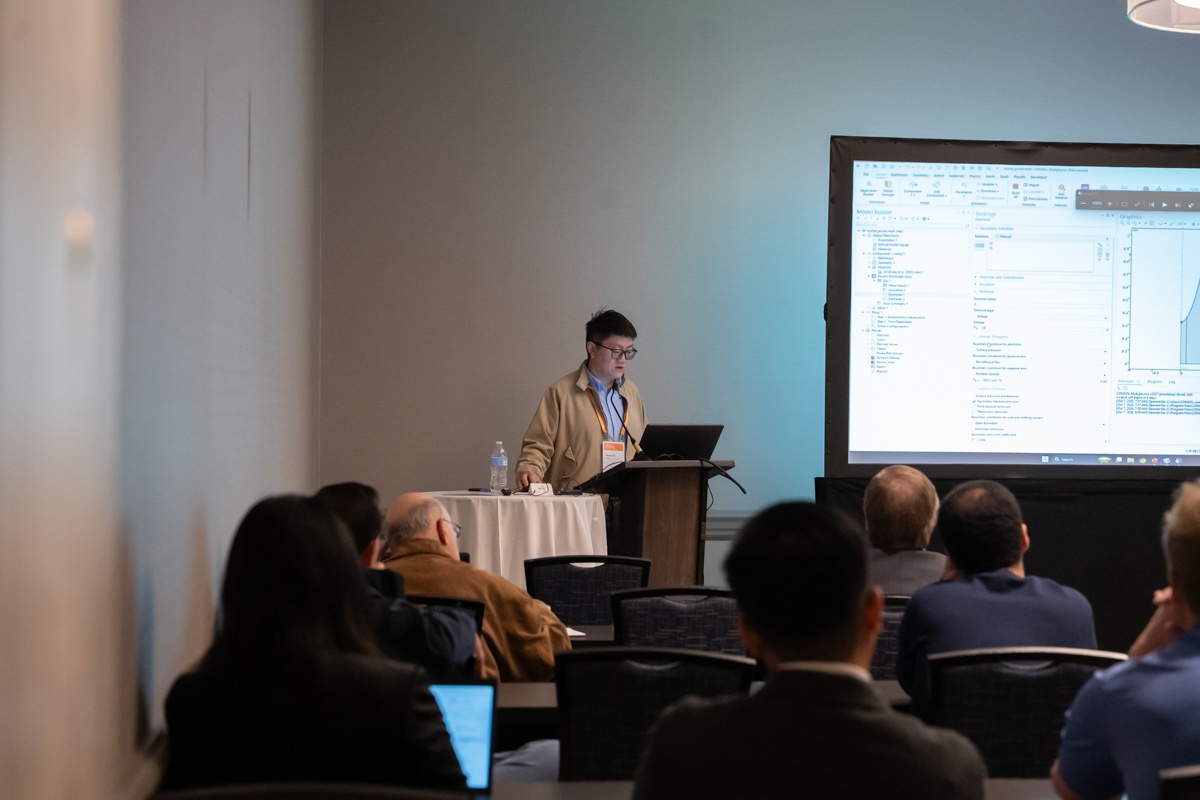
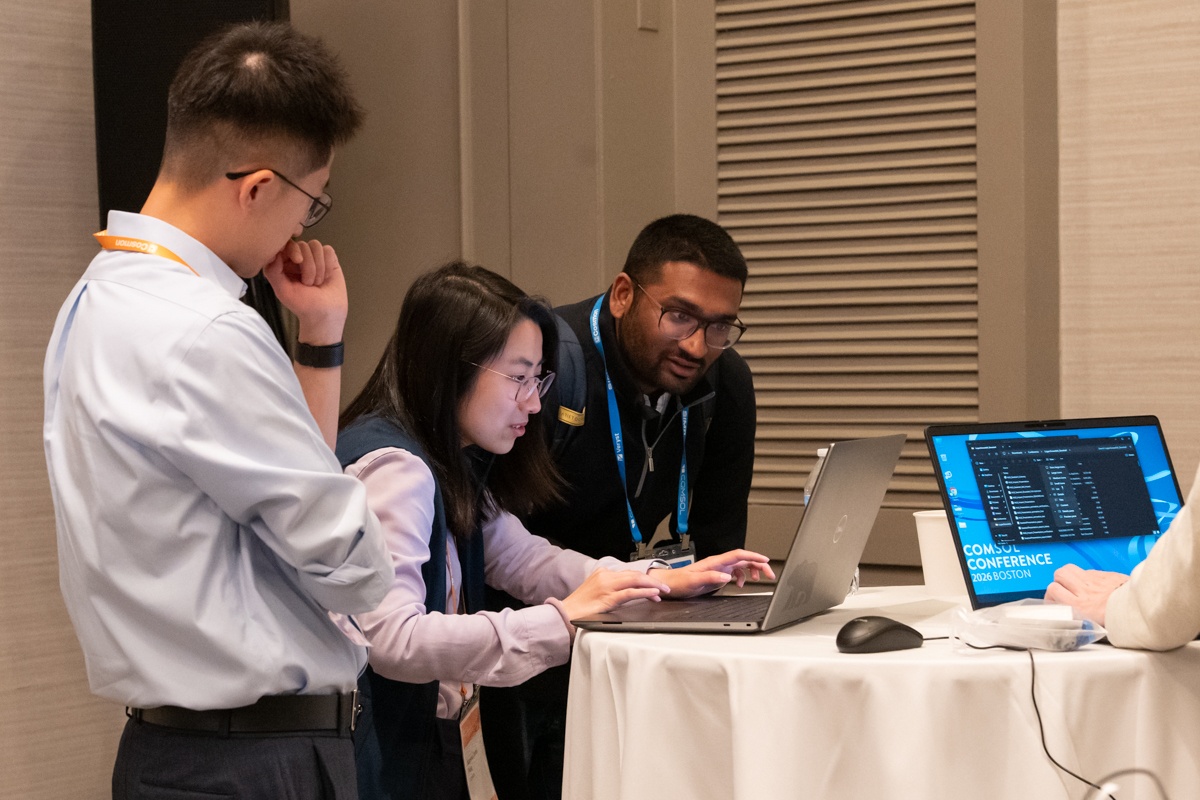
An applications engineer leads a minicourse (left). An attendee receives support at a demo station (right).
Photo Slideshow from the COMSOL Conference 2026 Boston
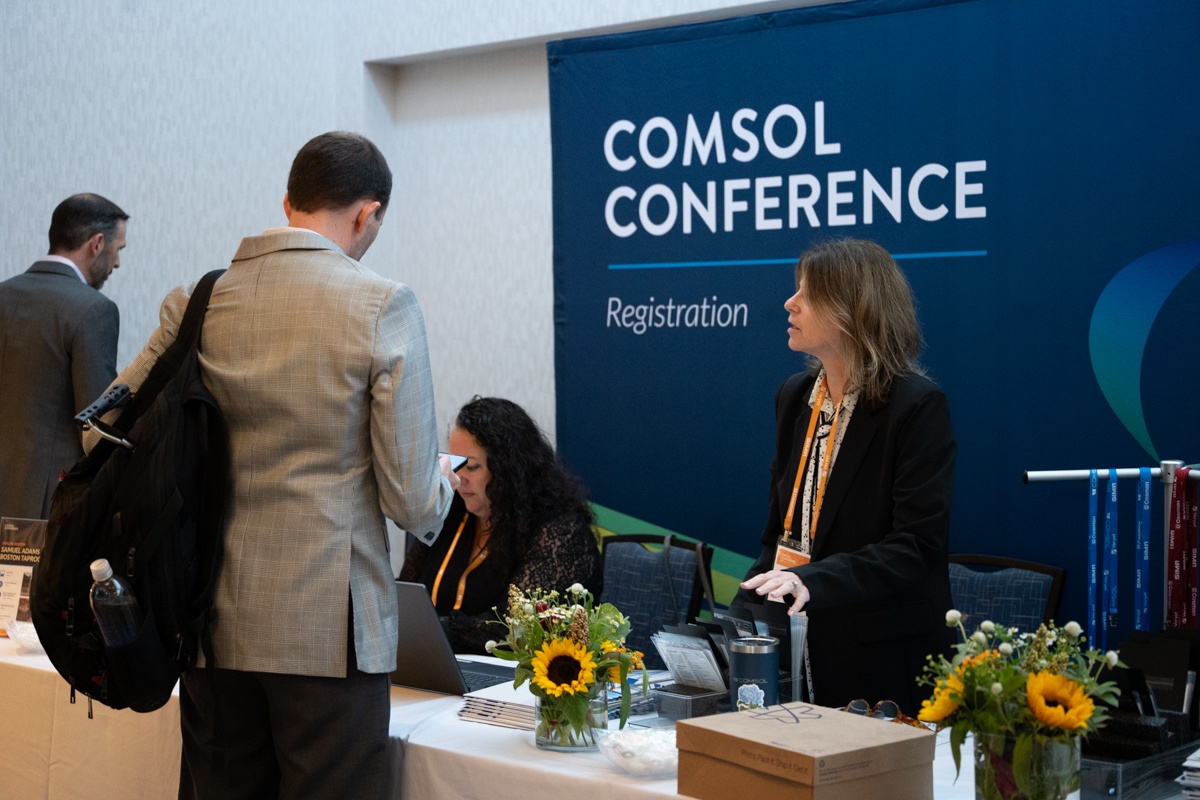 Attendees check in at the registration table.
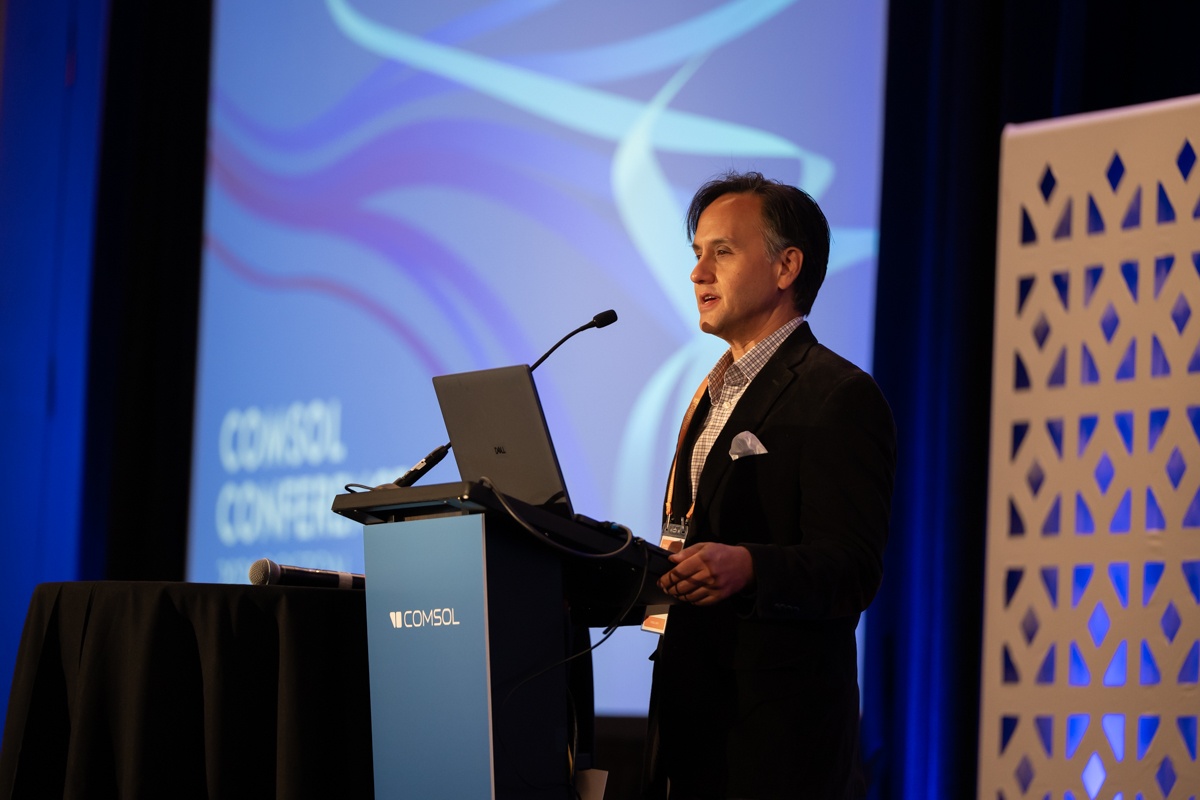 David Kan kicks off the conference with the Welcoming Remarks session.
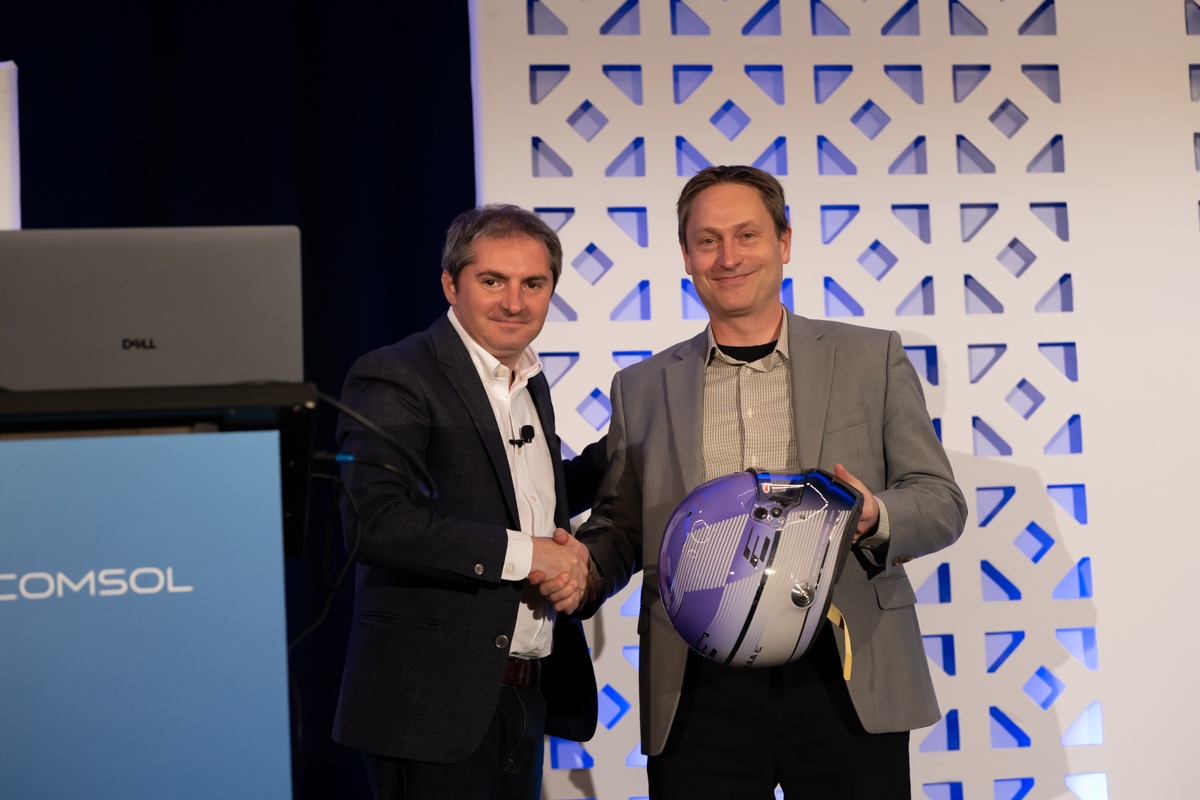 Dan Cherowbrier presents Bjorn Sjodin with an official Formula E helmet to celebrate the Formula E — COMSOL partnership.
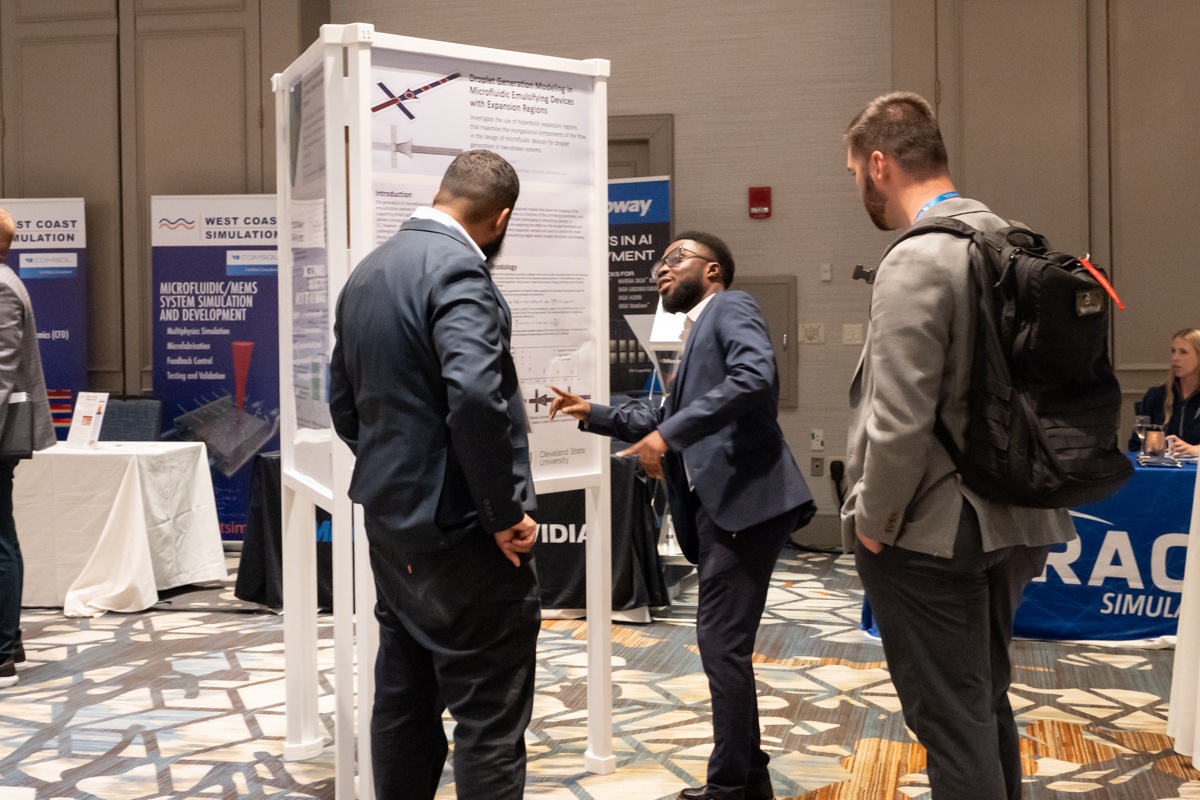 Poster author Samuel Osei of Cleveland State University discusses his research with fellow attendees.
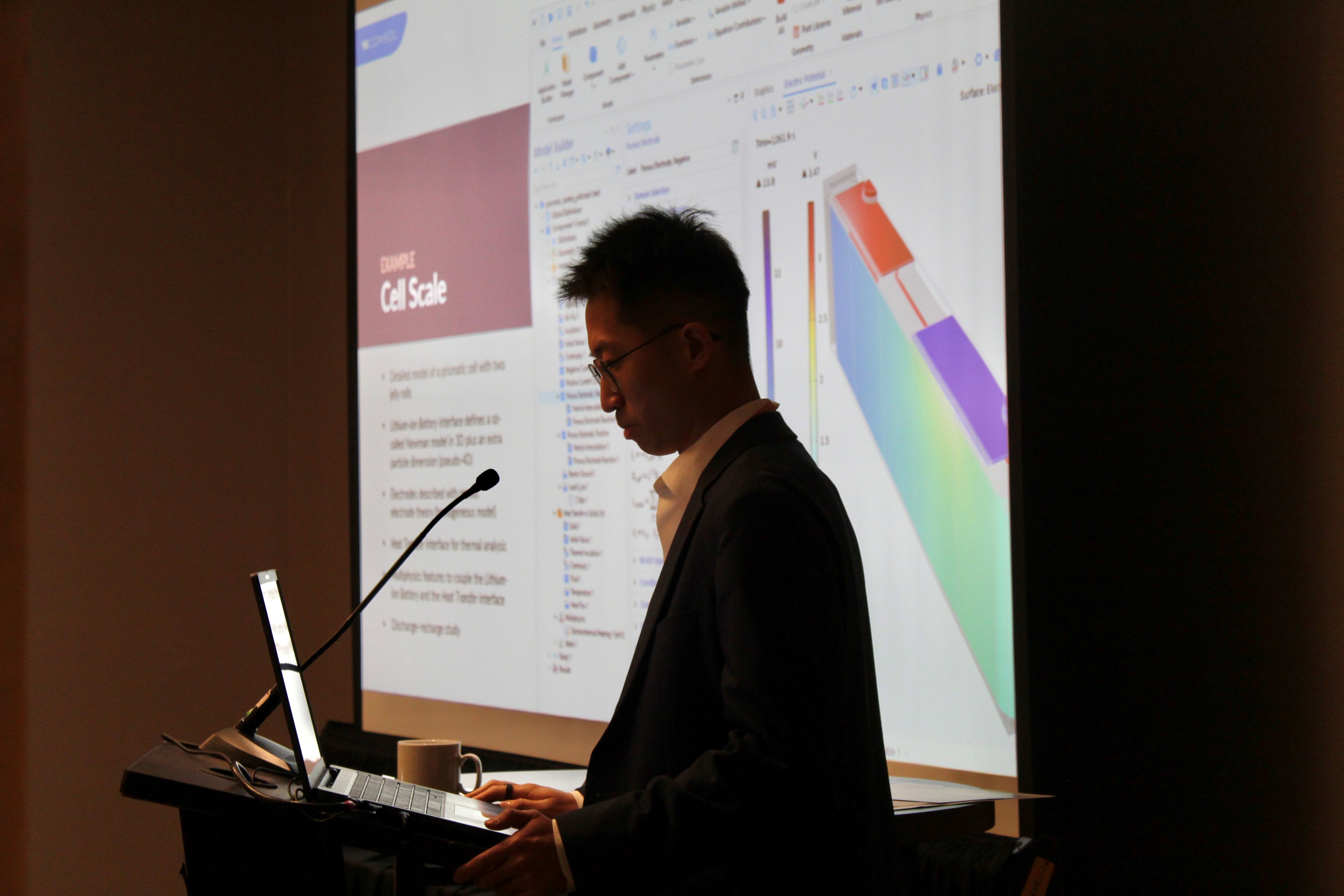 A COMSOL applications engineer leads a minicourse.
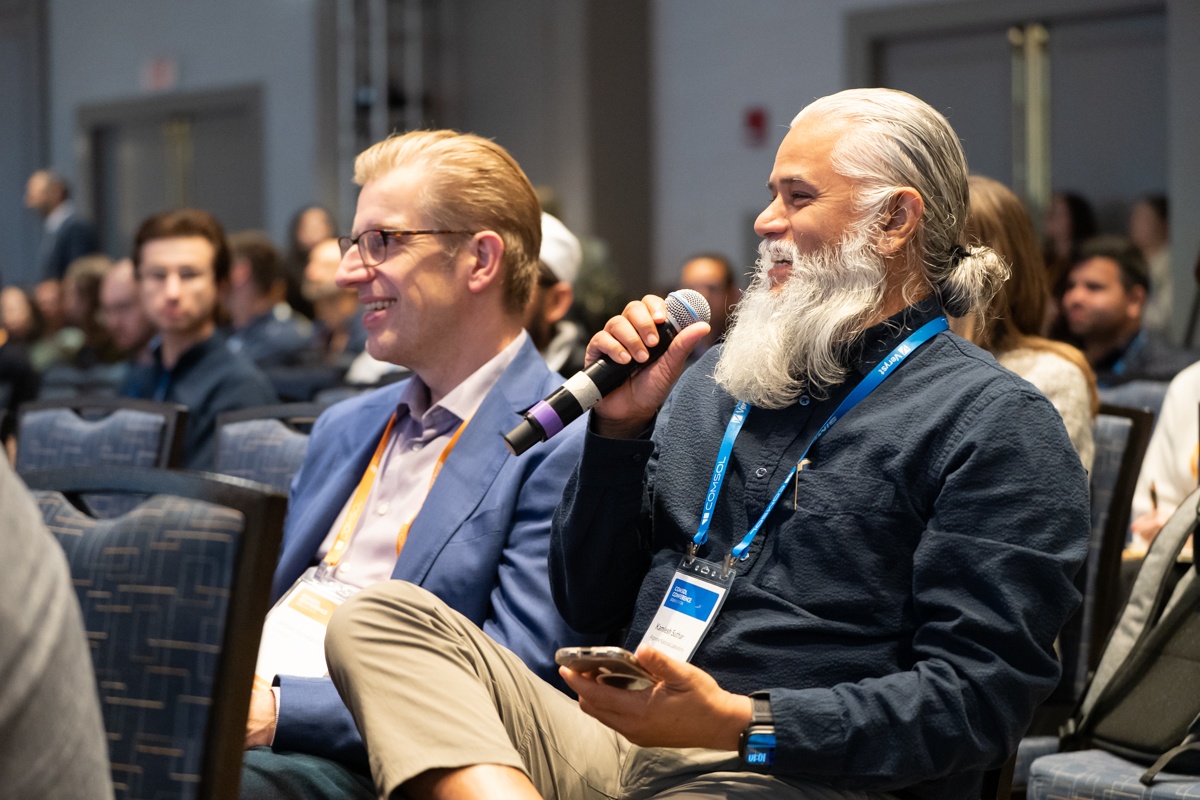 An attendee asks a question during a presentation.
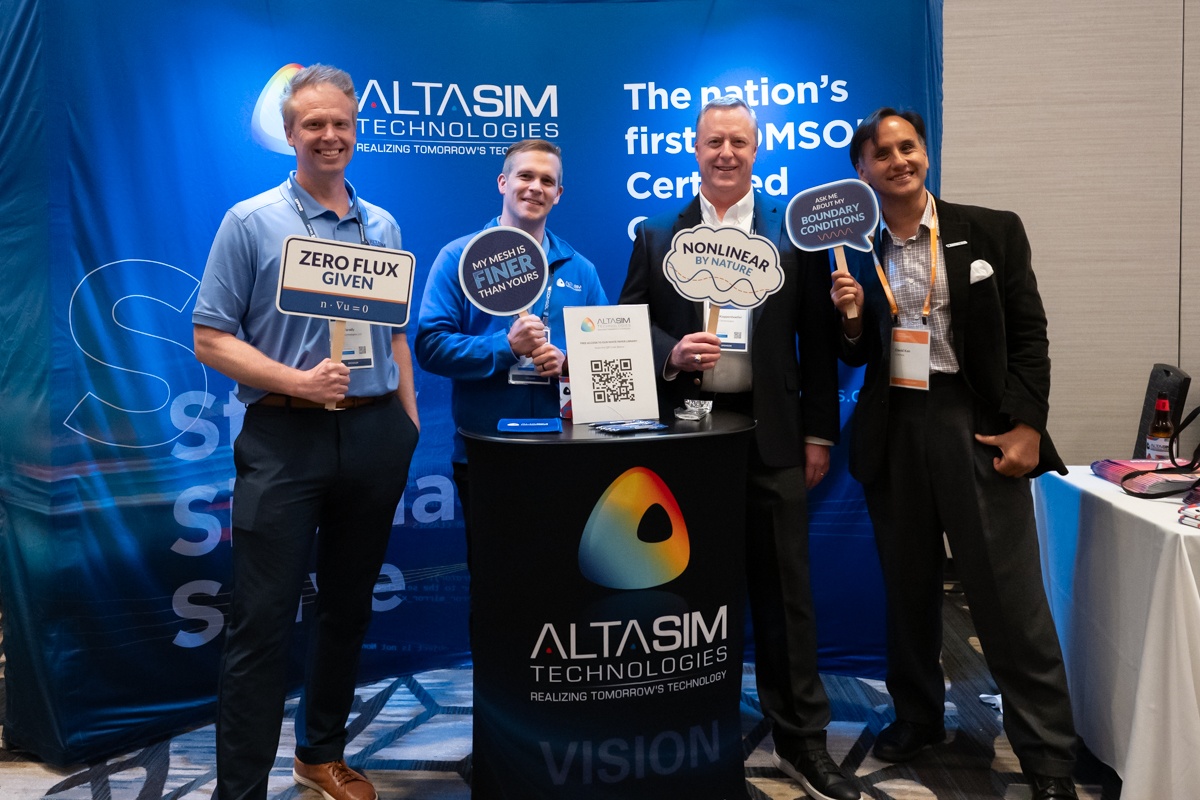 Exhibitors from AltaSim Technologies and David Kan of COMSOL pose for a picture.
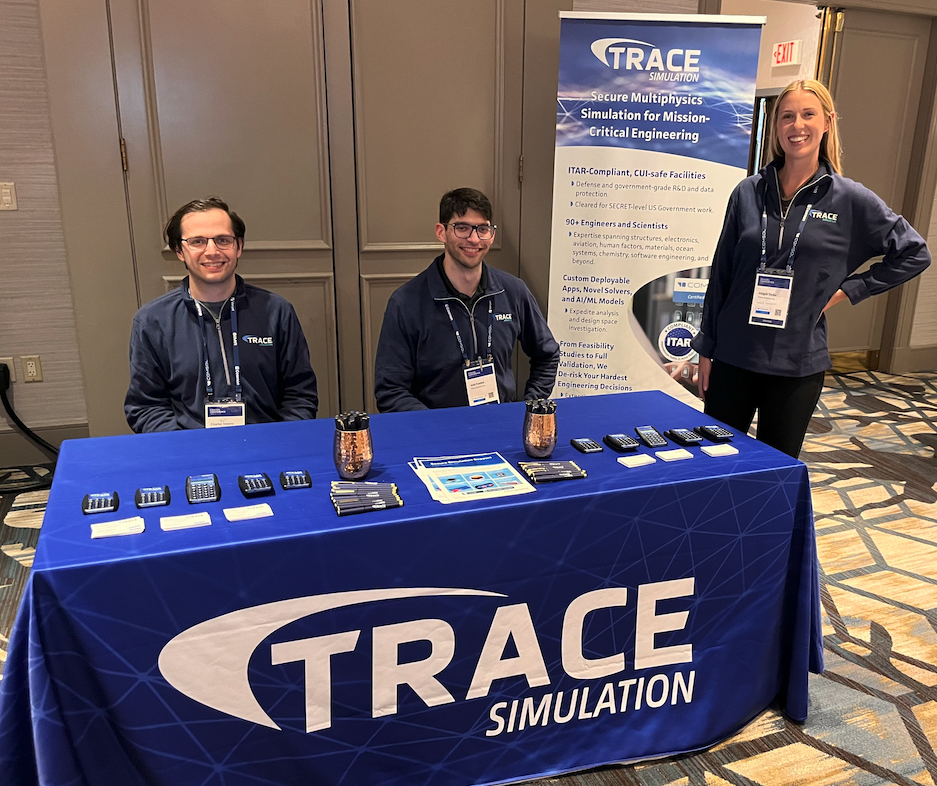 Exhibitors from TRACE Simulation pose for a picture.
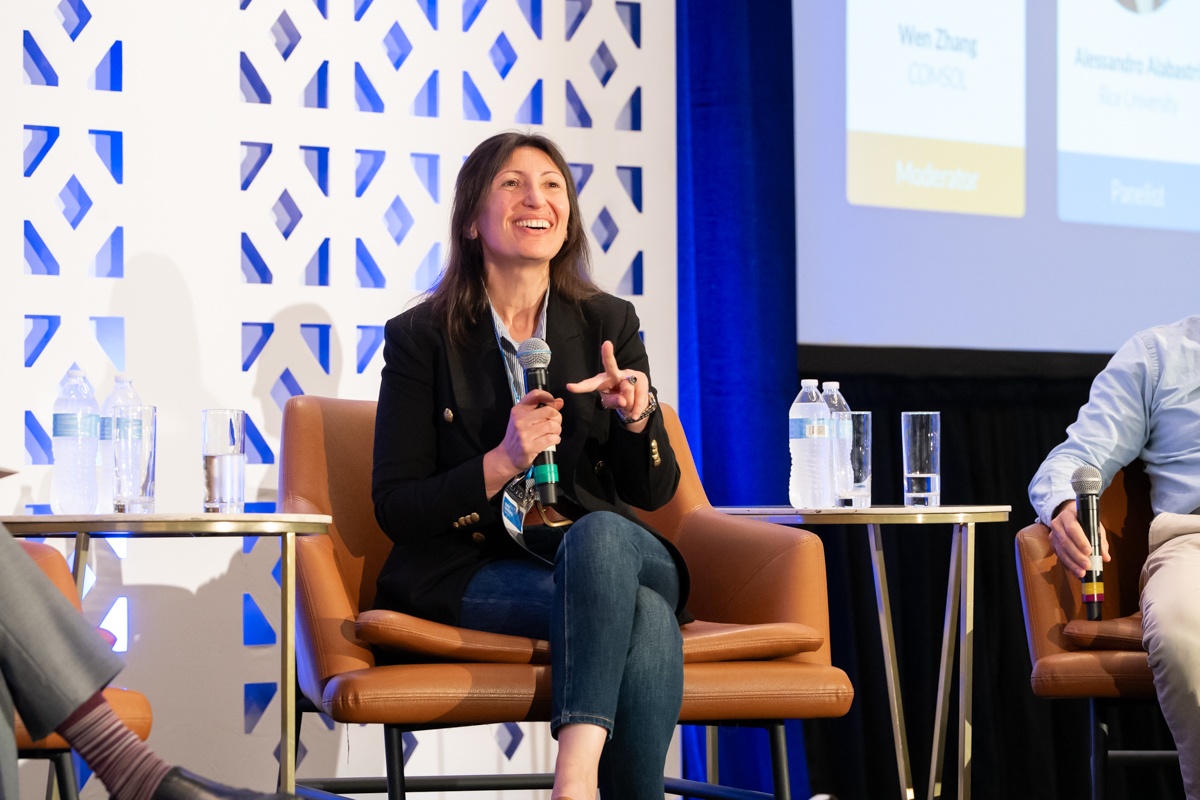 Panelist Canan Karakaya participates in the panel discussion.
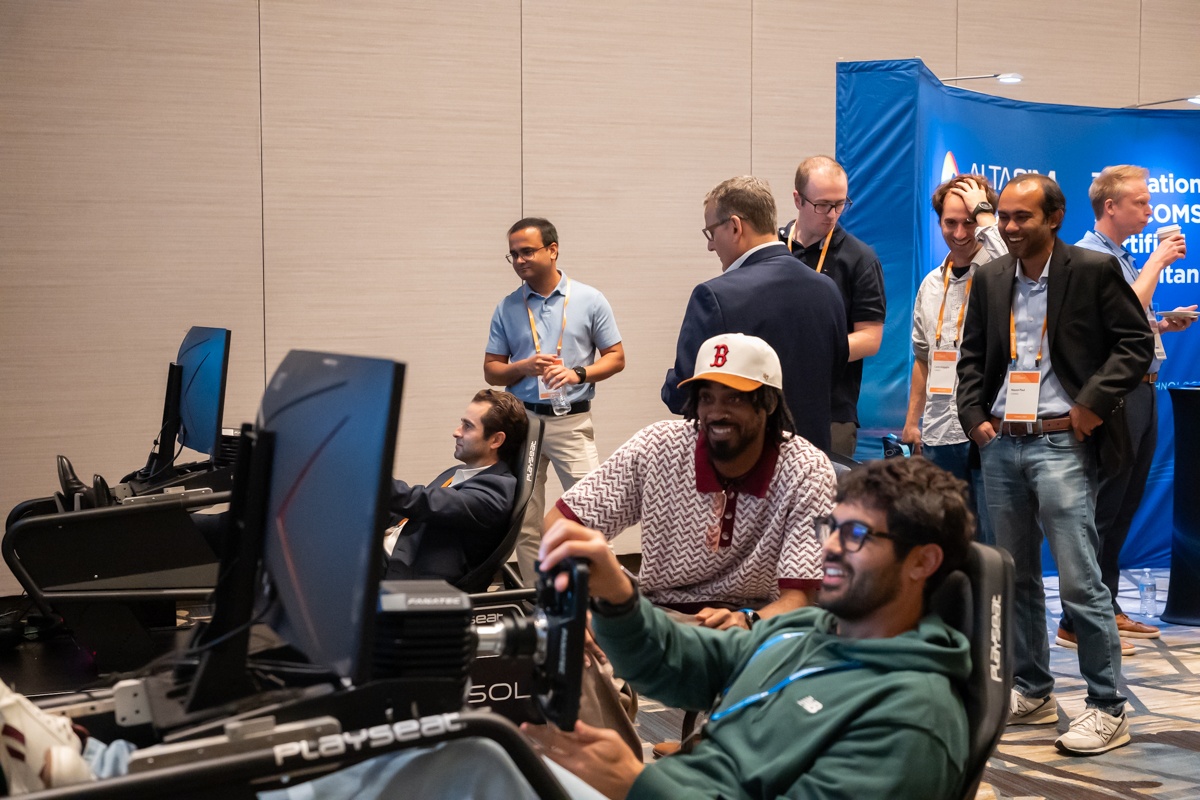 Attendees enjoy Formula E racing simulators during the conference.
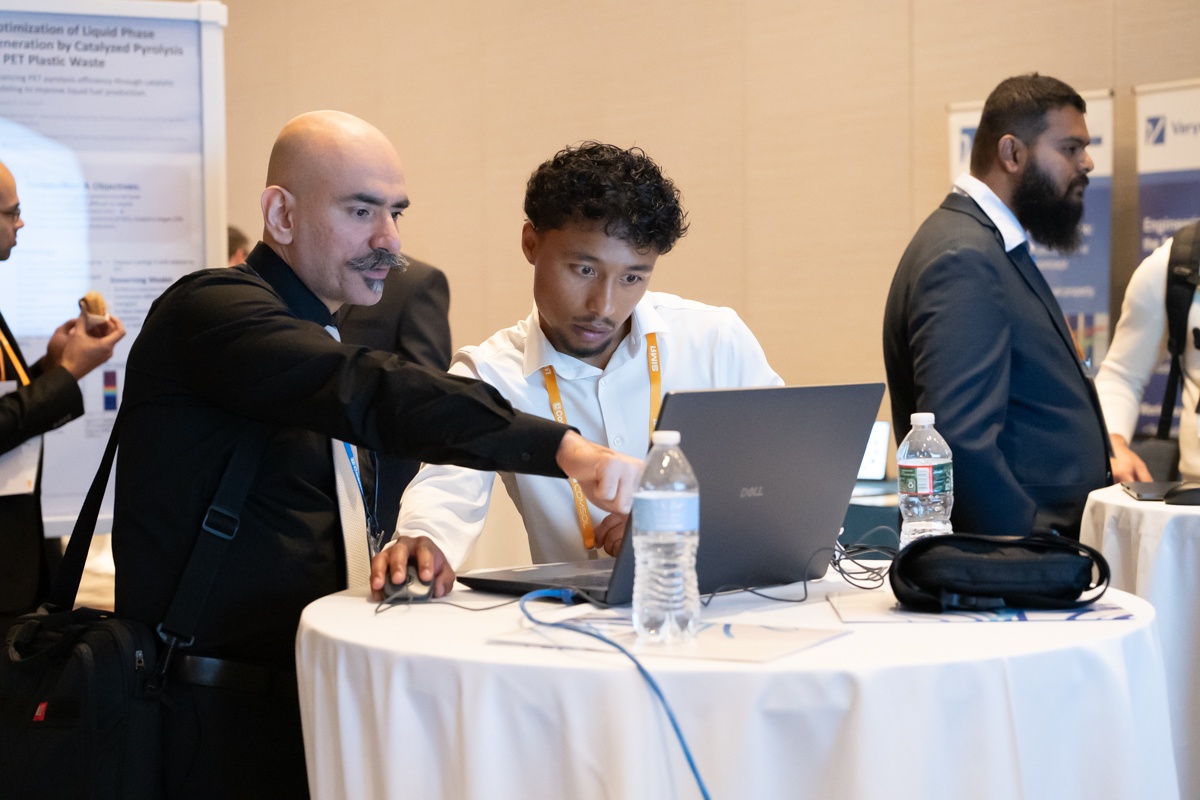 An applications engineer offers support at a demo station.
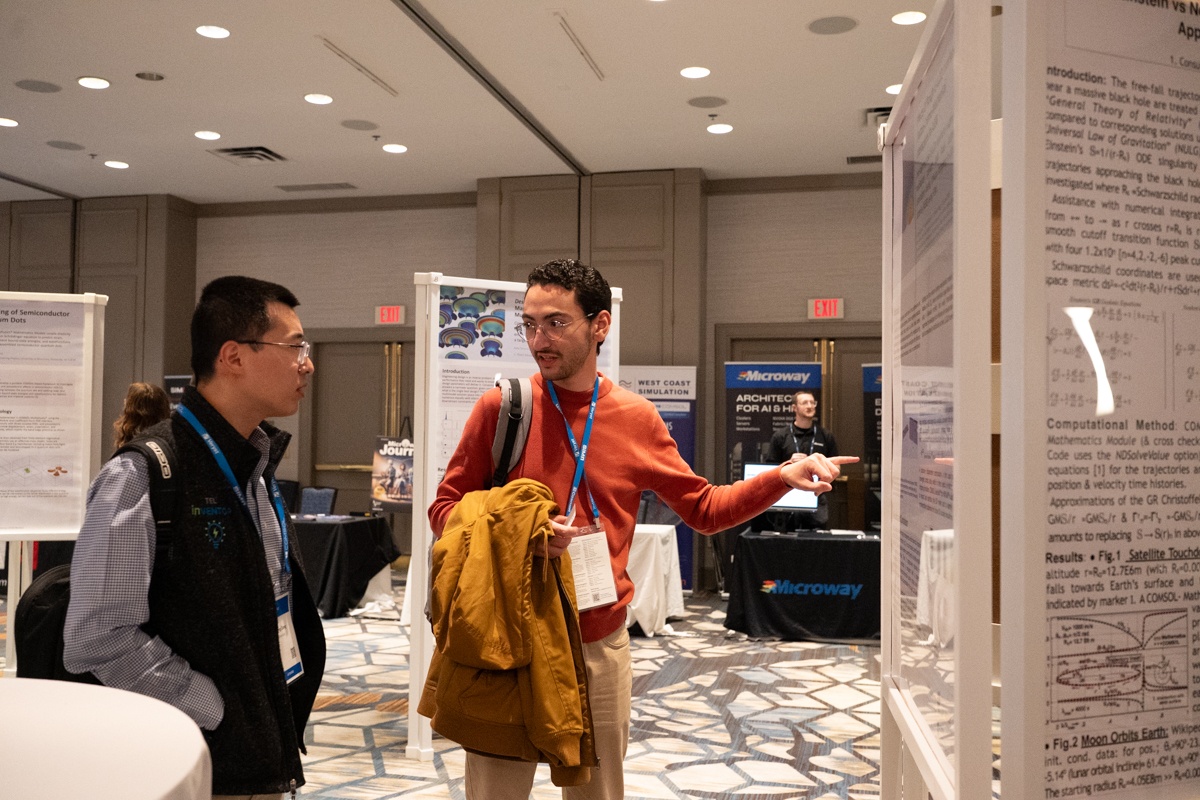 Attendees discuss a poster in the poster hall.
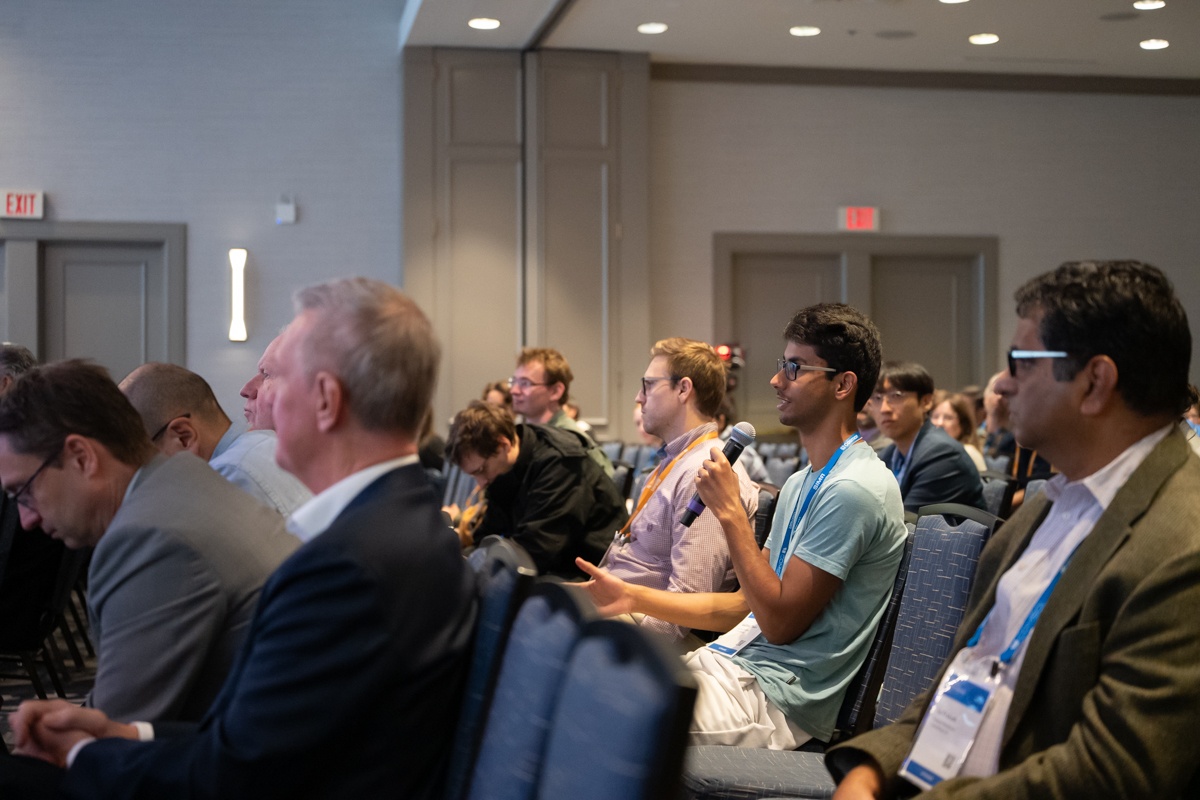 An attendee asks a question during a session.
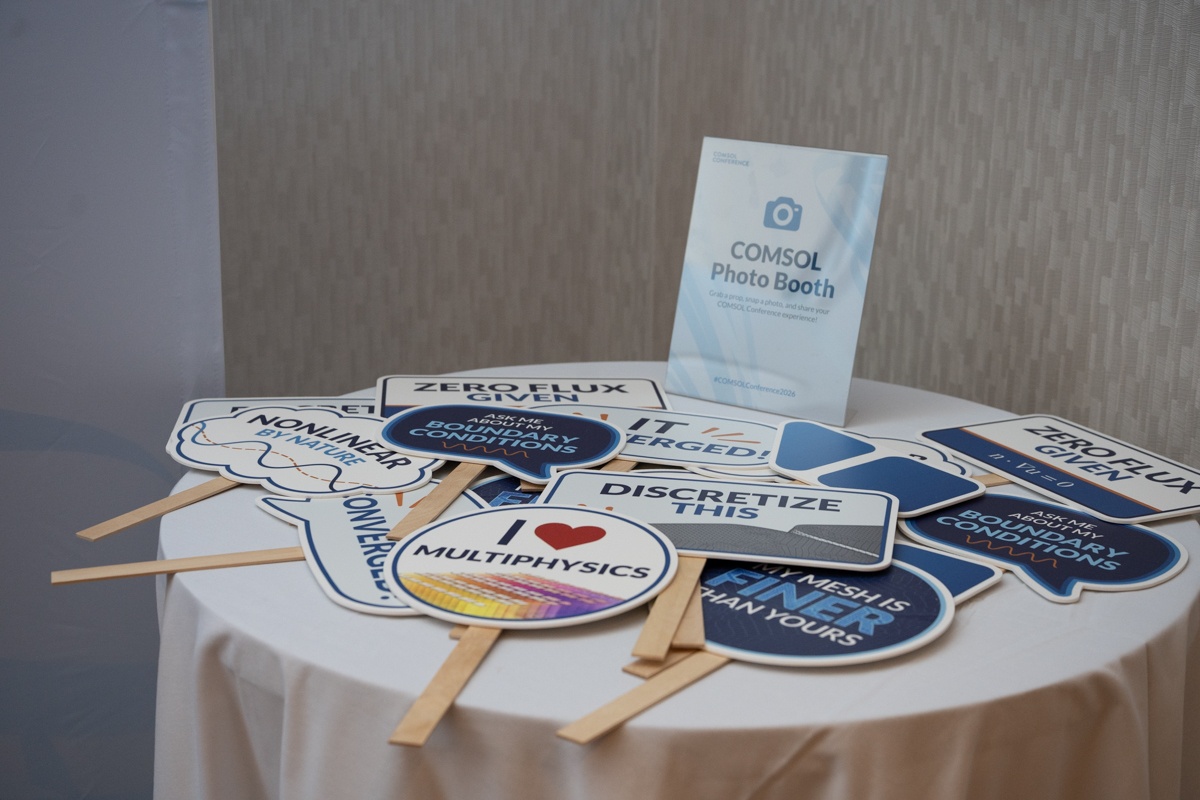 Props on a table at the COMSOL Photo Booth.
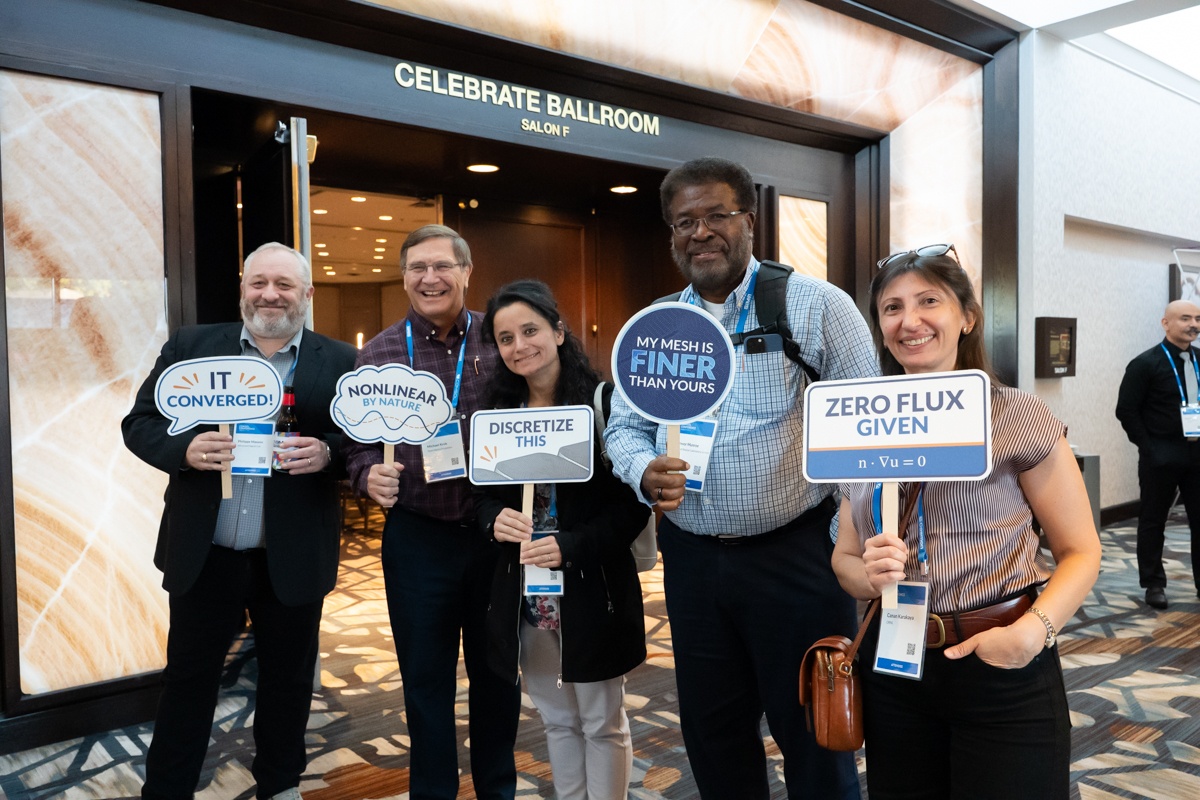 Conference-goers pose for pictures.
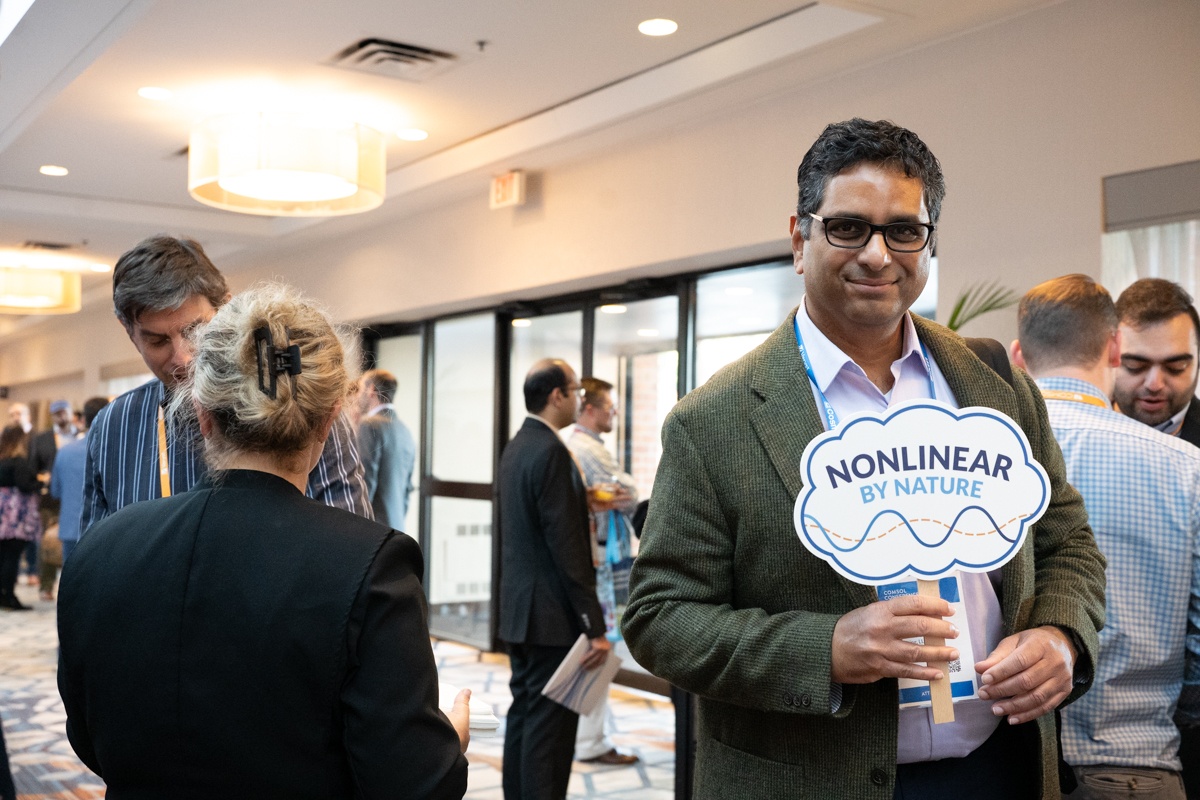 An attendee poses with a prop from the photo booth.
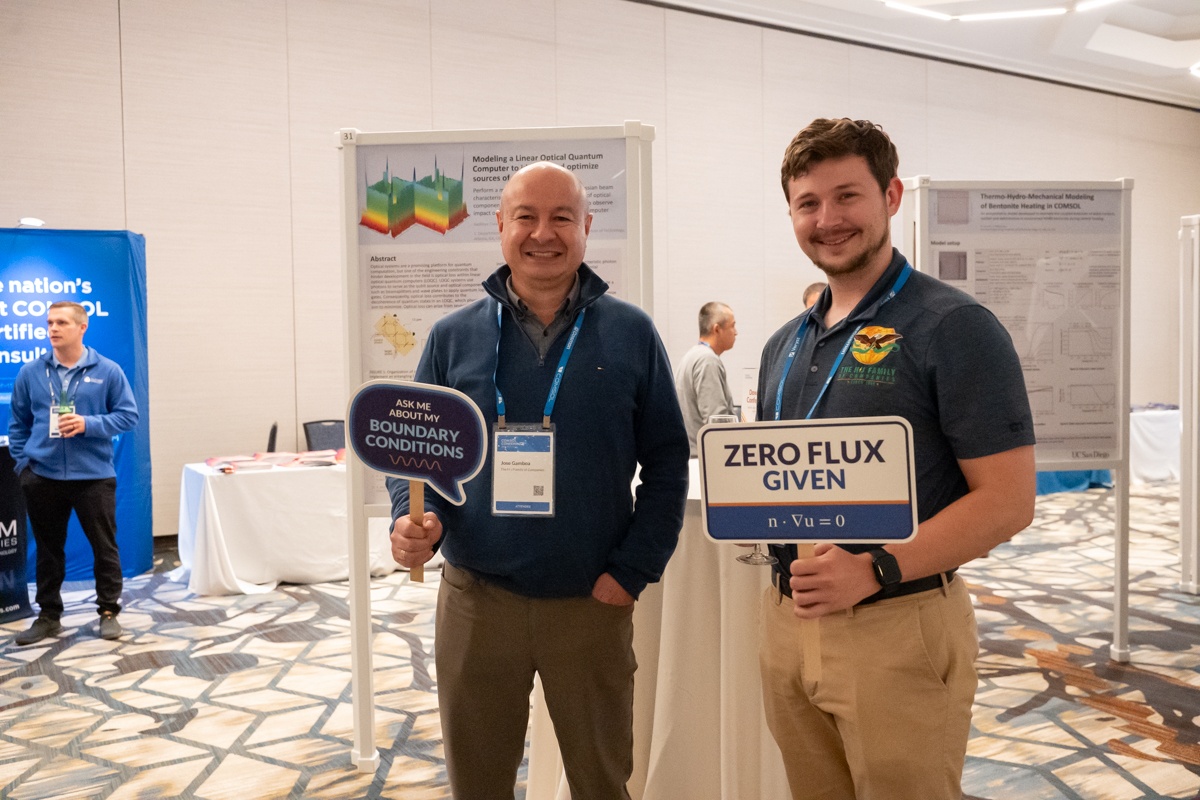 Attendees hold up props and pose for a picture.
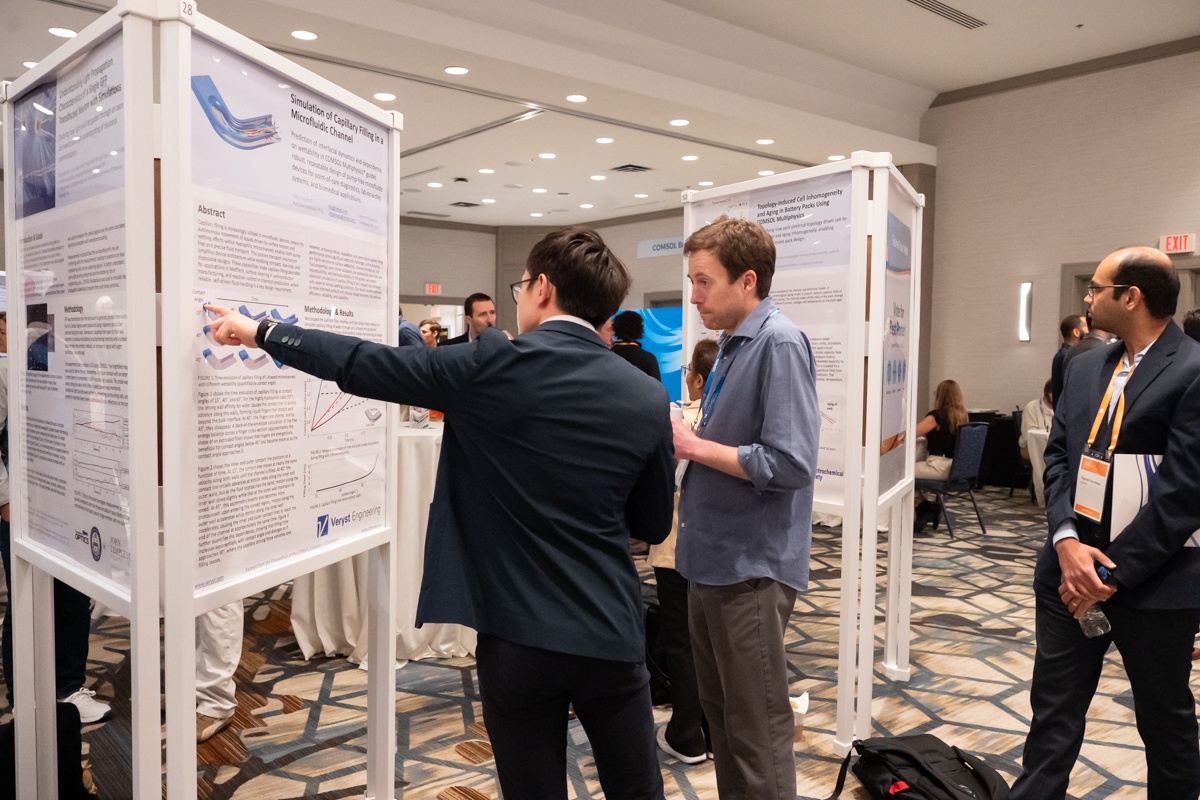 Attendees discuss a poster during the poster session.
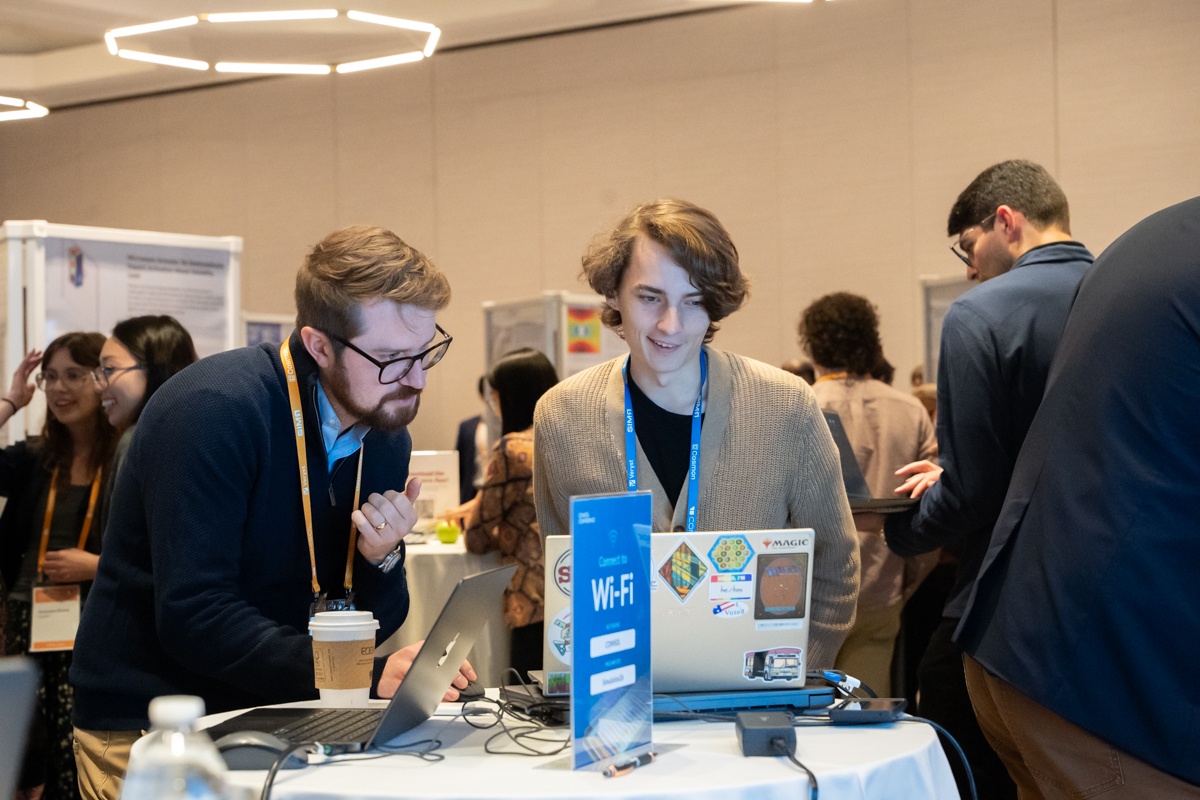 An attendee receives support at a demo station.
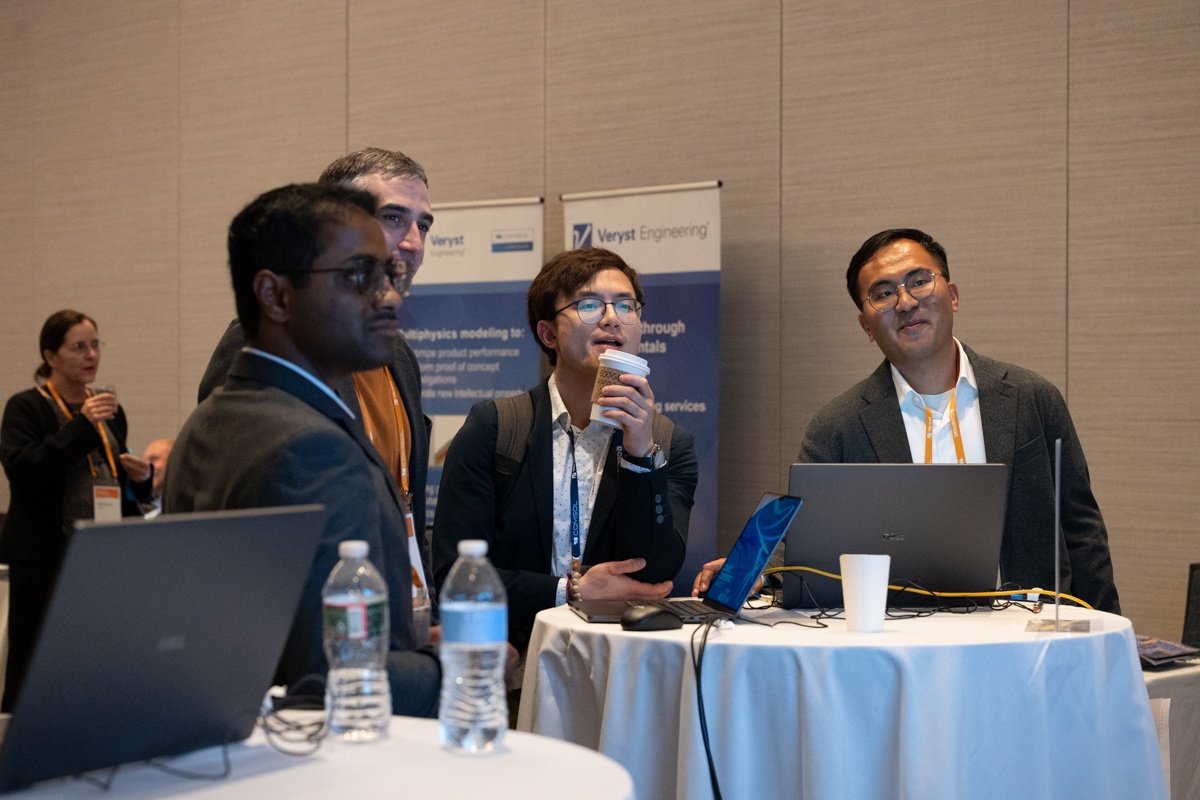 Attendees receive a sneak peek of the upcoming COMSOL Multiphysics v2027 at a demo station.
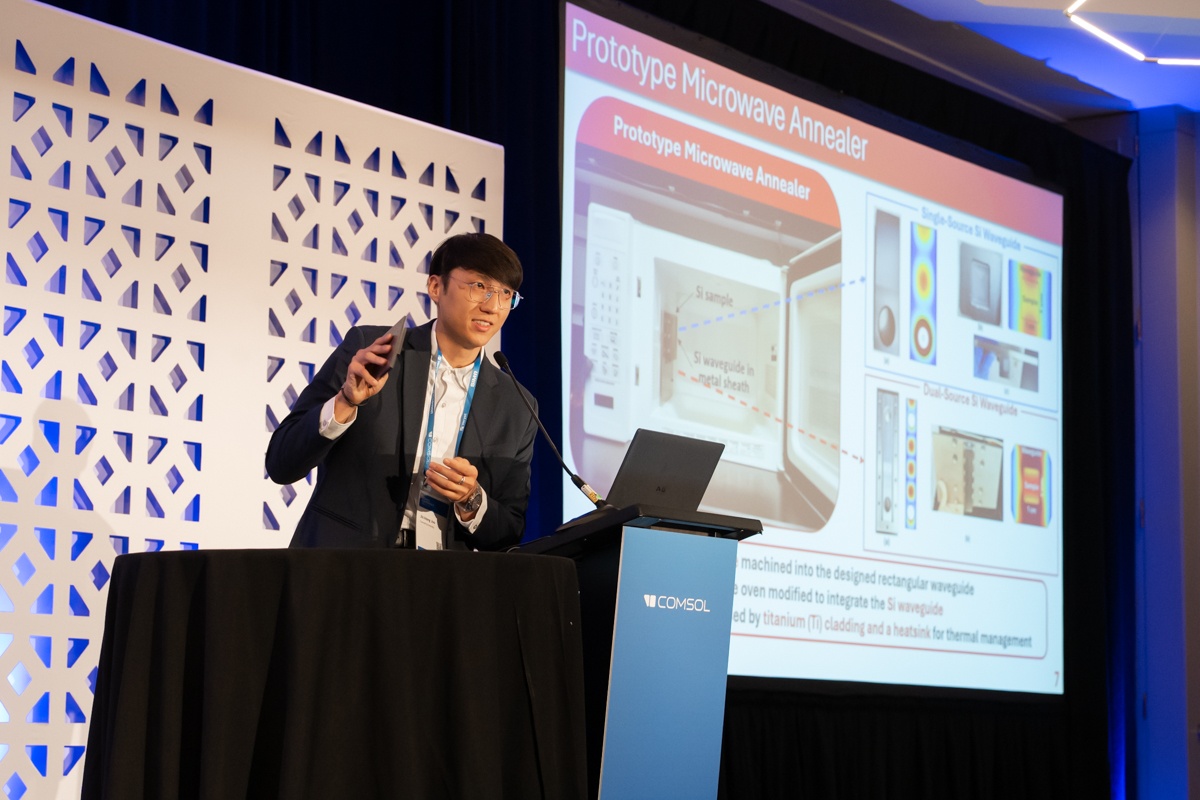 Innovation Contest finalist Jin Hong Joo shows his prototype microwave annealer during his presentation.
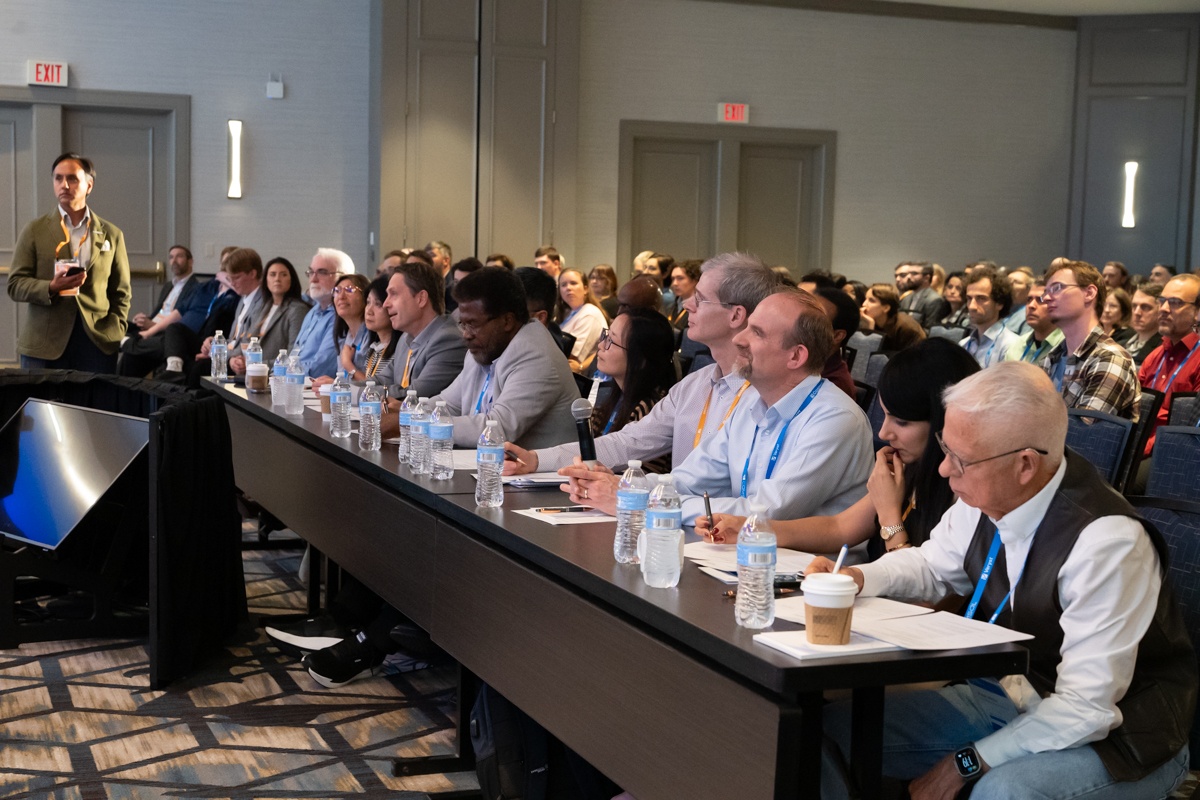 Judges listen to the Innovation Contest presentations.
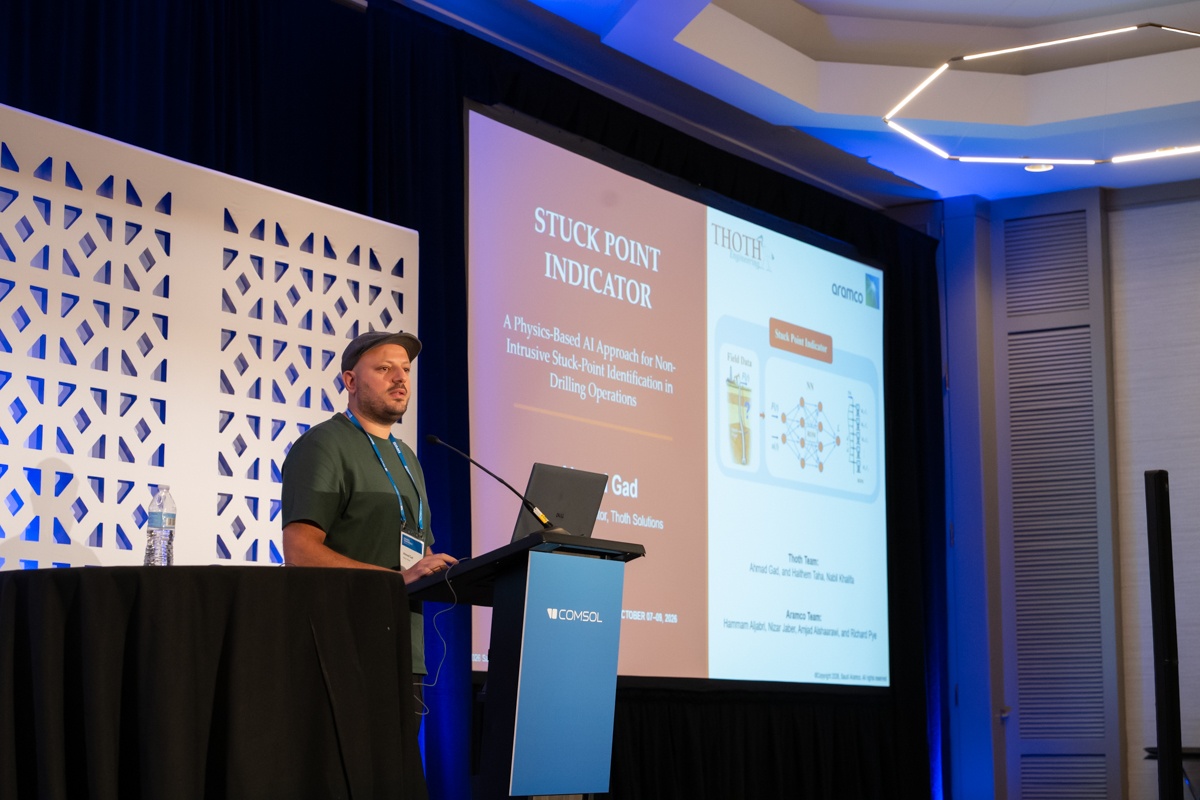 Innovation Contest finalist Ahmad Gad presents his work.
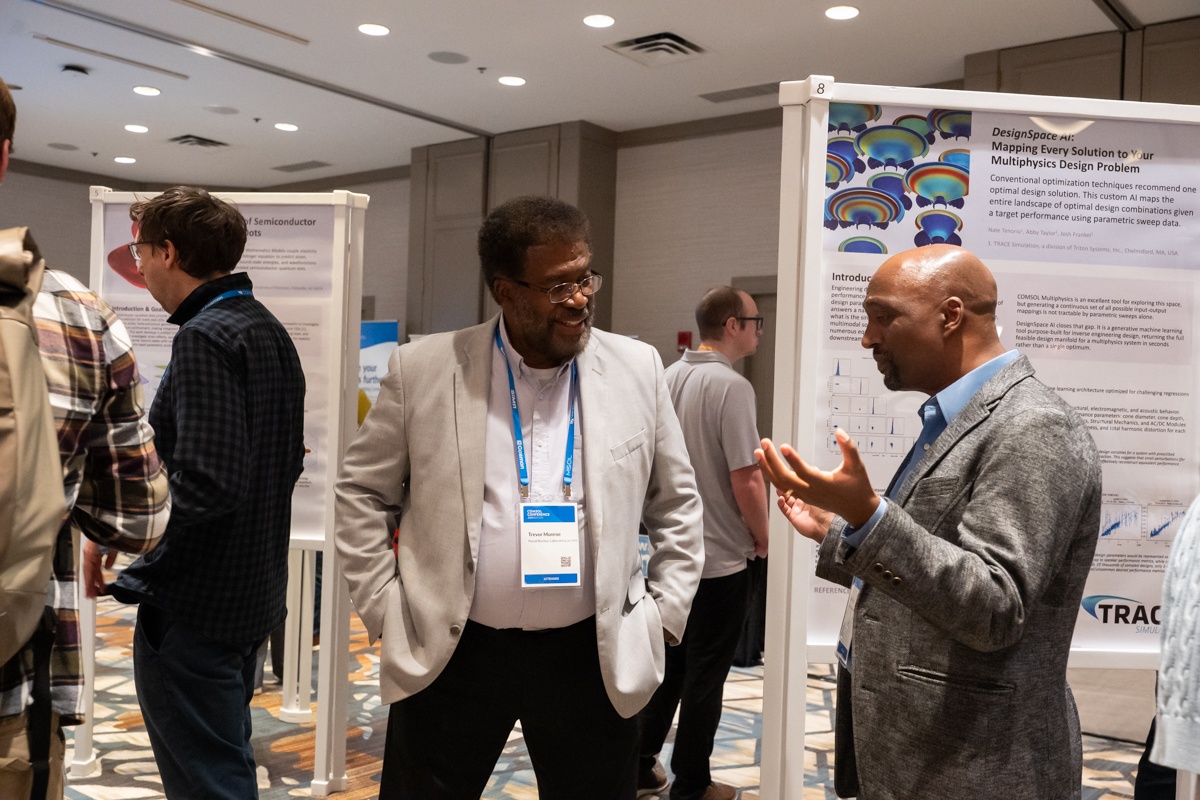 Attendees chat during a coffee break.
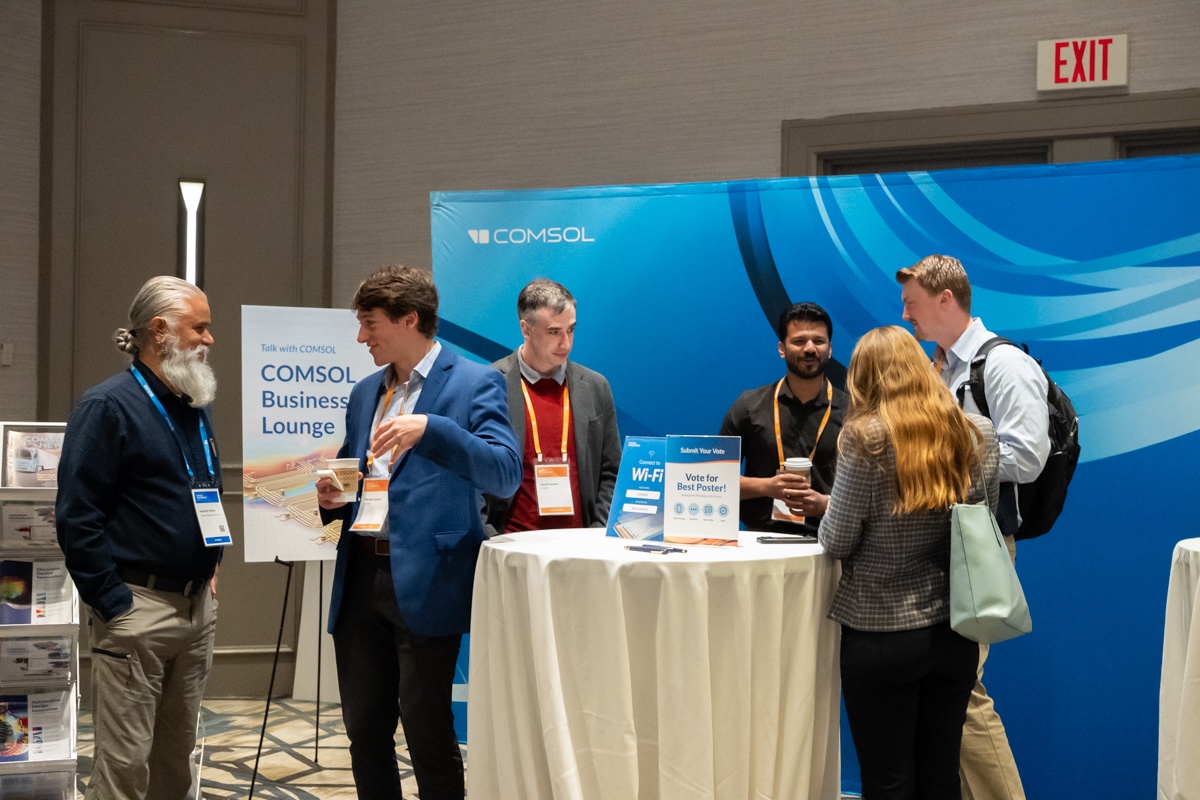 Attendees speak with COMSOL sales team members at the COMSOL Business Lounge.
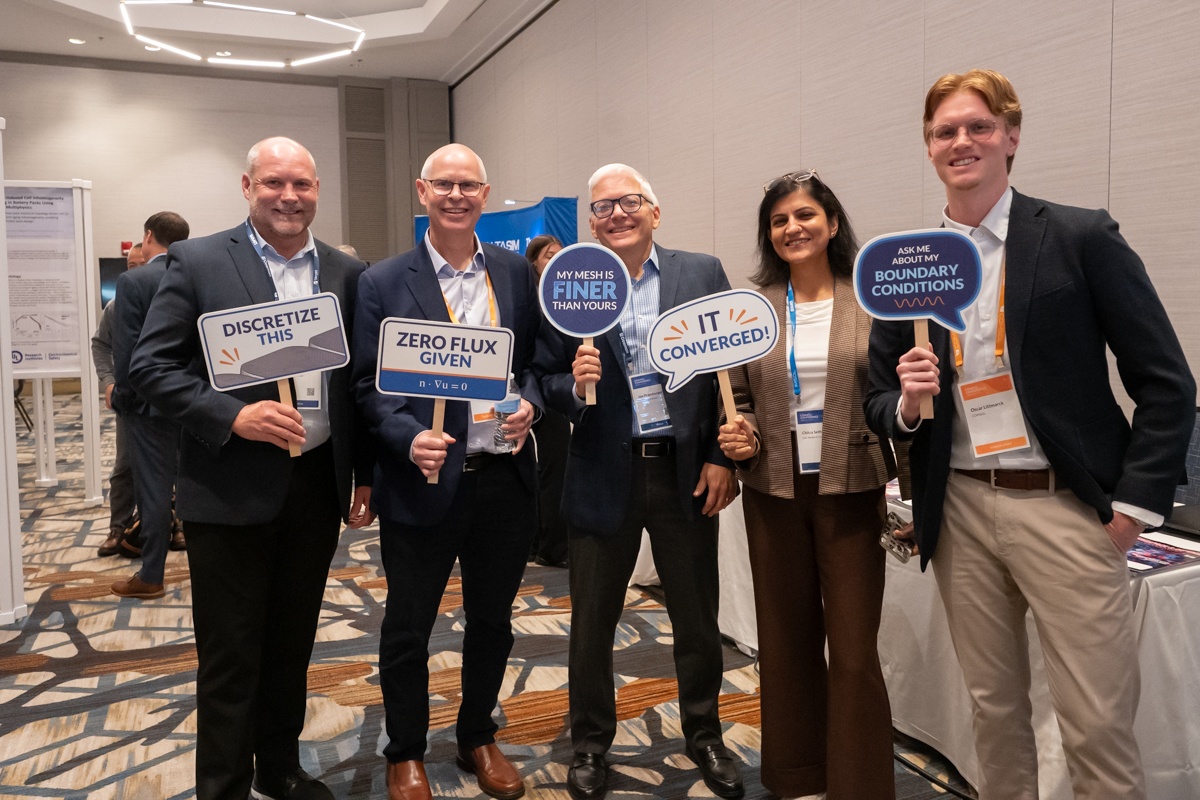 Attendees and COMSOL staff members pose for a picture in the exhibition hall.
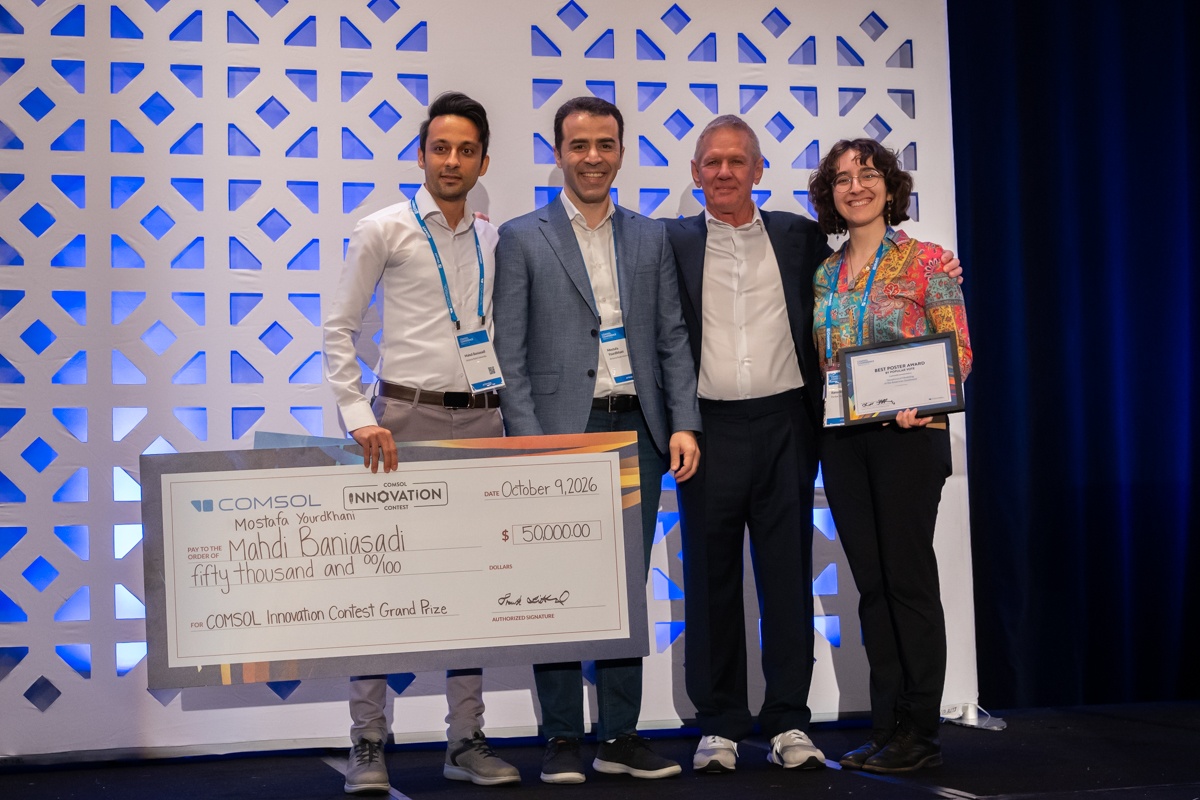 Awardees join Svante Littmarck for a celebratory photo.
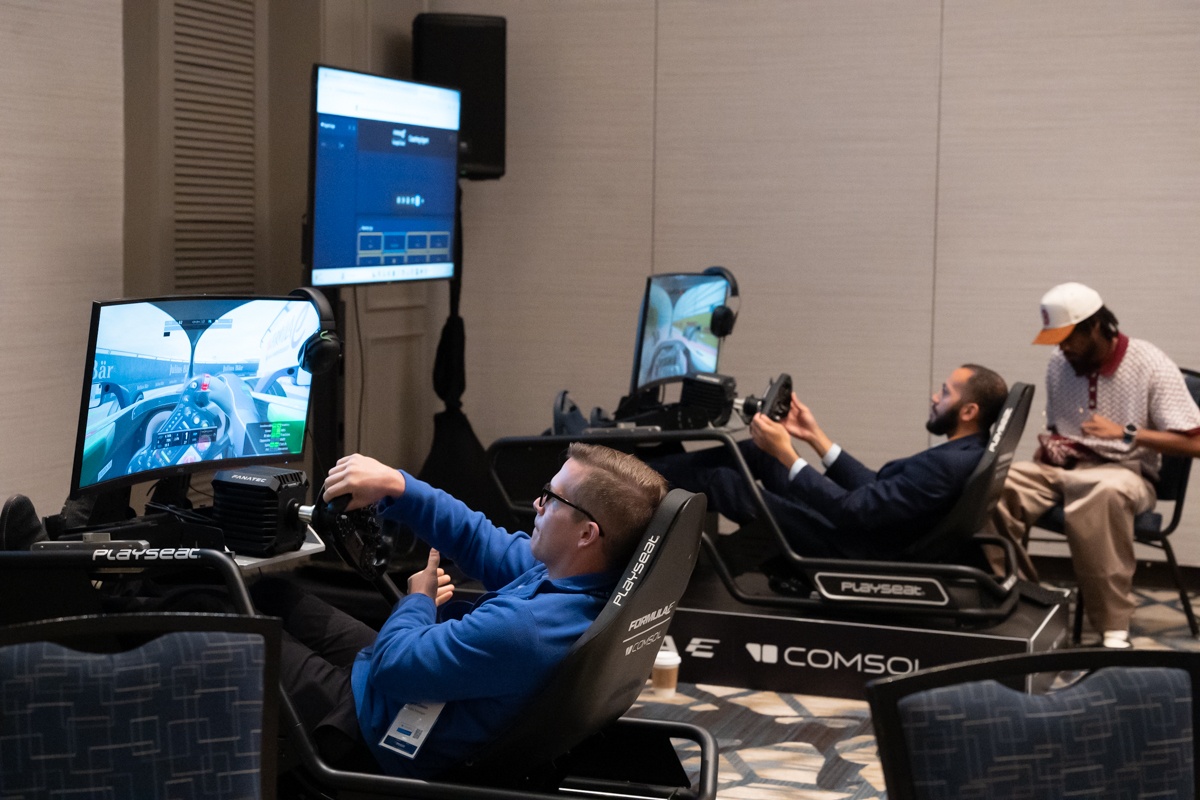 Attendees test-drive the Formula E simulators.




























Explore Further
Now that the annual meeting has come to a close, we invite you to continue connecting with the work of fellow researchers, scientists, and engineers by visiting the Technical Papers and Presentations gallery.
Thank you to all who joined and inspired us at COMSOL Conference 2026 Boston!
CUDA, CUDA-X, and Nemotron are trademarks and/or registered trademarks of NVIDIA Corporation in the U.S. and/or other countries. Intel is a trademark of Intel Corporation in the U.S. and/or other countries.



Comments (0)