

From September 23 to 25, the picturesque city of Cambridge, UK, served as the stage for COMSOL’s first conference of the year. Descending on Churchill College for the event, engineers and leaders across academia and industry connected over minicourses, keynote presentations, and more to consider the possibilities of modeling and simulation. Whether you attended and want to relive the experience or hope to join us at one of our upcoming conferences around the world, check out our recap of the events below.
Keynote Talks Showcase How Modeling and Simulation Drives Insights Across Industries
Aerospace, fusion, semiconductor, manufacturing, healthcare, and defense — the conference included keynote talks by technical and business leaders in each of these industries. Presenters discussed a variety of simulation topics across the research and development stages, including the identification of modeling opportunities, specific use cases, and model validation.
The opening keynote speaker, Douglas Herbert of Rolls-Royce Plc, launched the presentations with a discussion of his team’s work developing advanced electrical machines for integration in gas turbine products. These electric motors or generators aim to replace mechanical, hydraulic, and pneumatic power sources with electrical equivalents. As machinery operating in challenging conditions (for example, an extreme case of -55°C), he shared that simulation plays an instrumental role in addressing integration challenges by supporting detailed analysis and design.
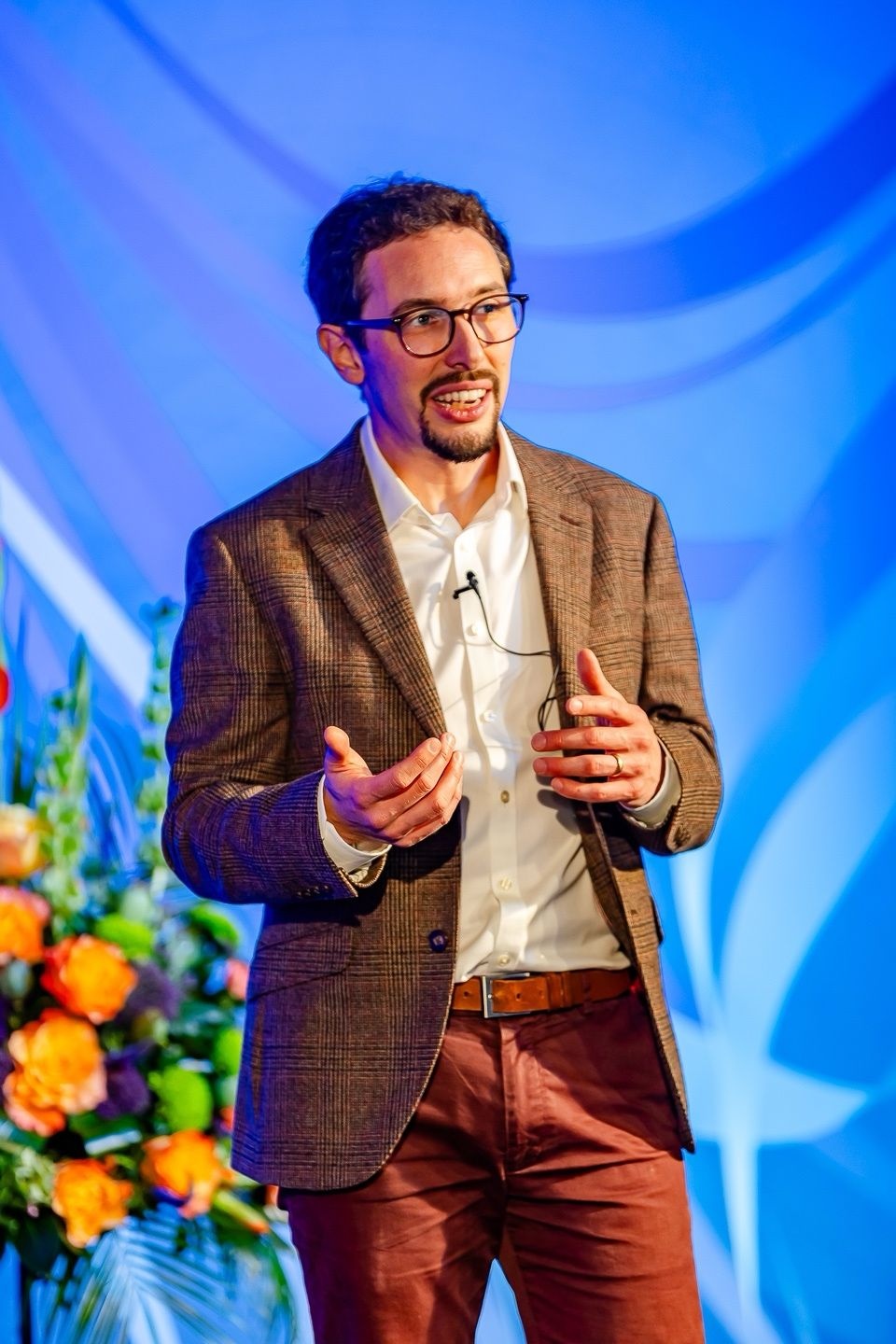
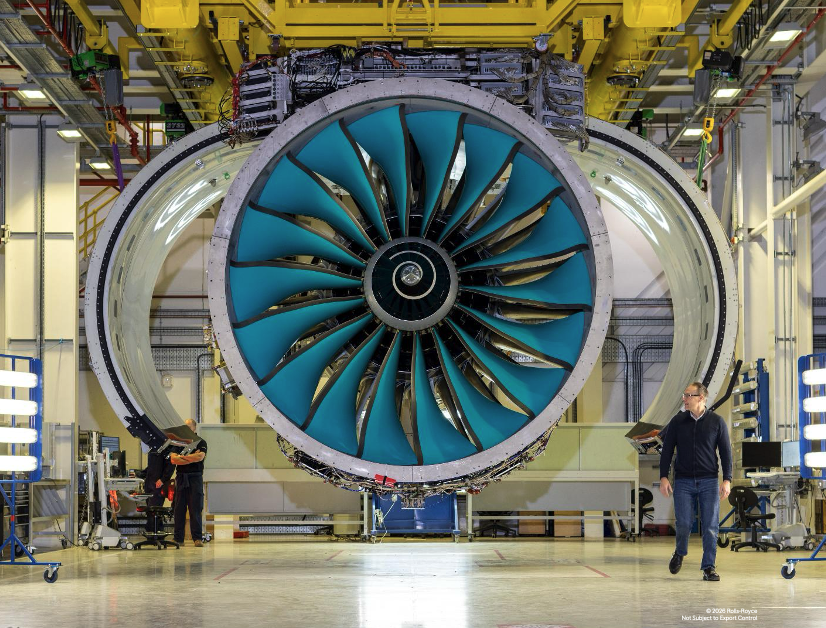
Douglas Herbert of Rolls-Royce plc presenting his keynote talk (left) and an image from his presentation showing a next generation Rolls-Royce Ultrafan engine (right).
Then, Jonathan Horne-Jones of the UK Atomic Energy Authority (UKAEA) presented his approach to identifying and evaluating simulation capabilities for representing the physical phenomena in fusion components, something he says helps the fusion industry compensate for a lack of representative physical testing environments. His talk described the challenges of building confidence in fusion engineering simulation and offered solutions to those challenges, including the creation of relevant software benchmarking case studies. The talk illustrated two example case studies and concluded with an overview of UKAEA’s validation framework.
Editor’s note: UKAEA subsidiary, UK Fusion Energy Ltd., also employs the COMSOL Multiphysics software to investigate AC losses within a tokamak’s coils as part of the Spherical Tokamak for Energy Production (STEP) program. Learn about the program’s work and research insights generated with simulation tools in the STEP Fusion and Demcon Multiphysics Design a High-Performance Tokamak feature.
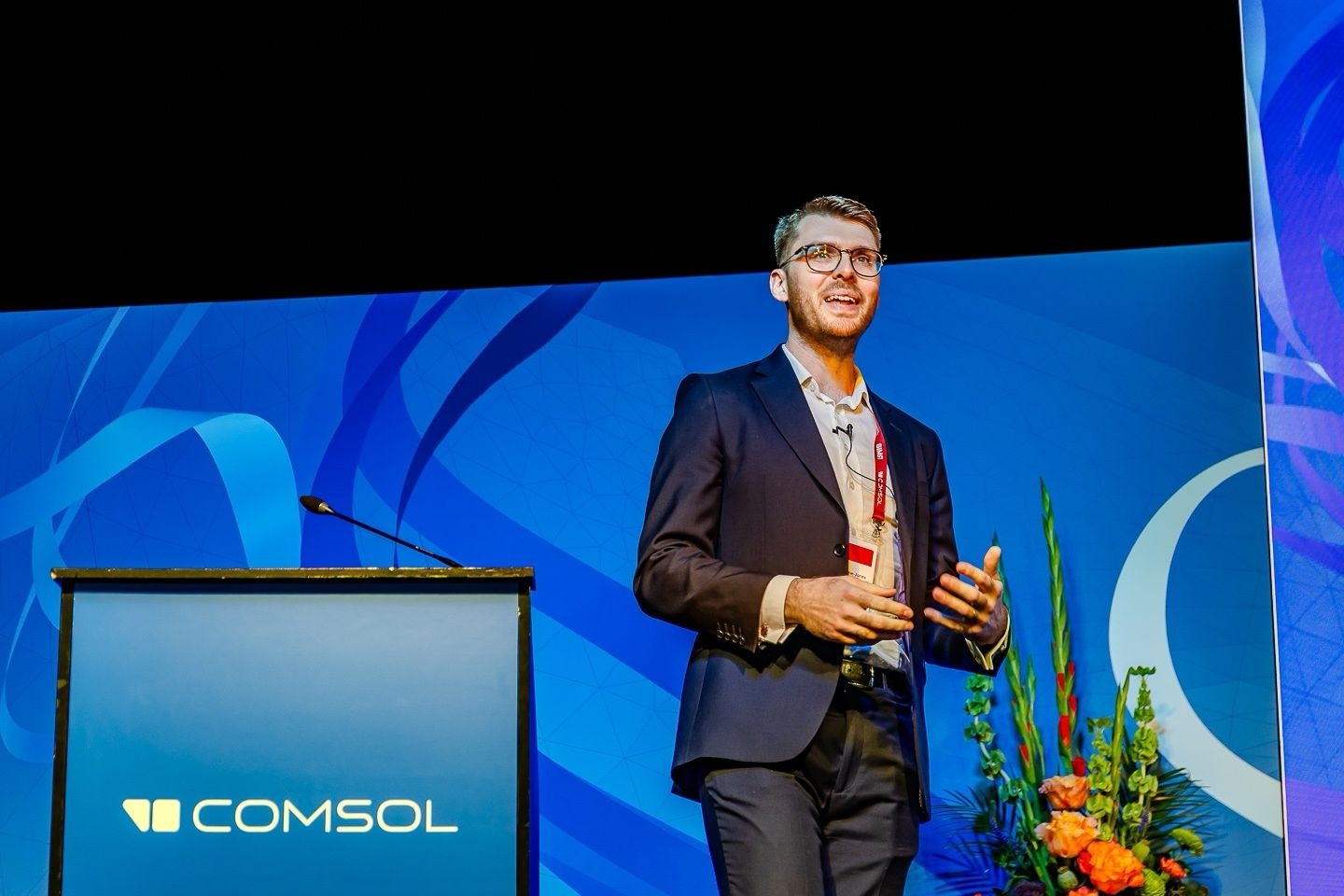
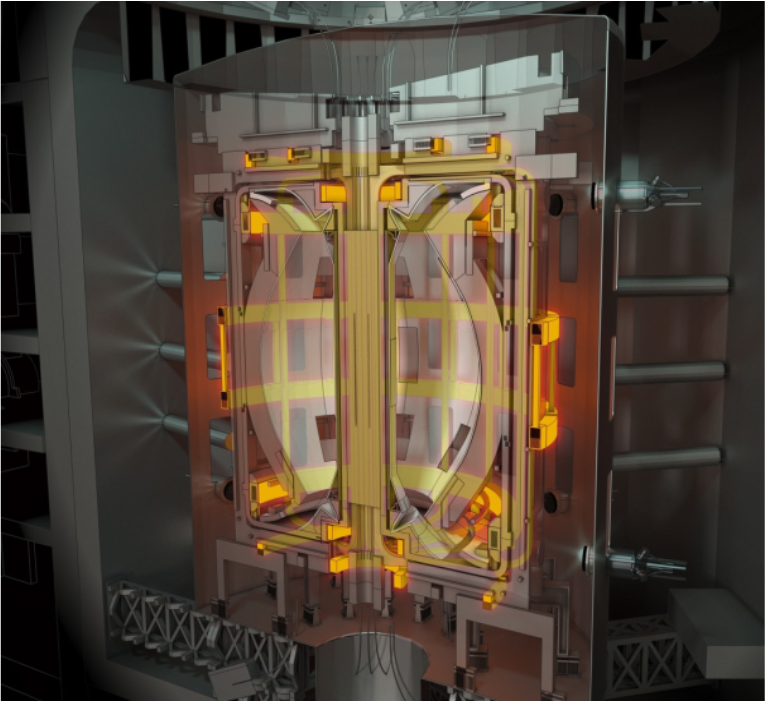
Jonathan Horne-Jones of UKAEA presents his keynote talk (left) and an illustration of a tokamak (right).
Thursday’s keynotes featured presentations by Raju Yalagada of Airbus, James Ellis of Oxford Instruments Plasma Technology (OIPT), and Christian Geitner of Fraunhofer Institute for Environmental, Safety, and Energy Technology (UMSICHT).
In his keynote, Raju discussed the development of advanced surface inspection methods in the aerospace industry. His talk proposed integrating simulation tools early on in the development cycle of electromagnetic alternatives to penetrant testing — an approach that would allow for model validation through comparison with experimental data.
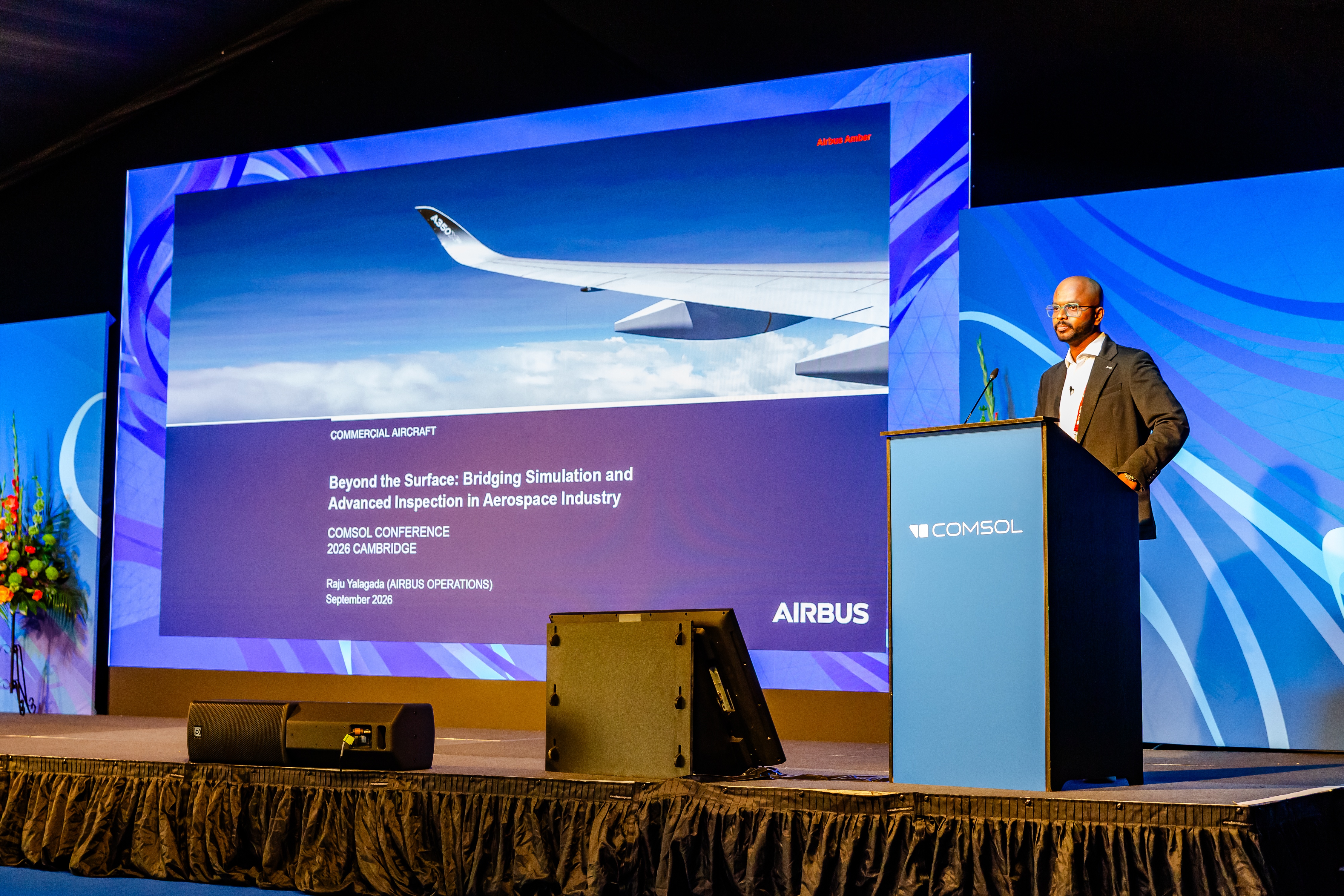
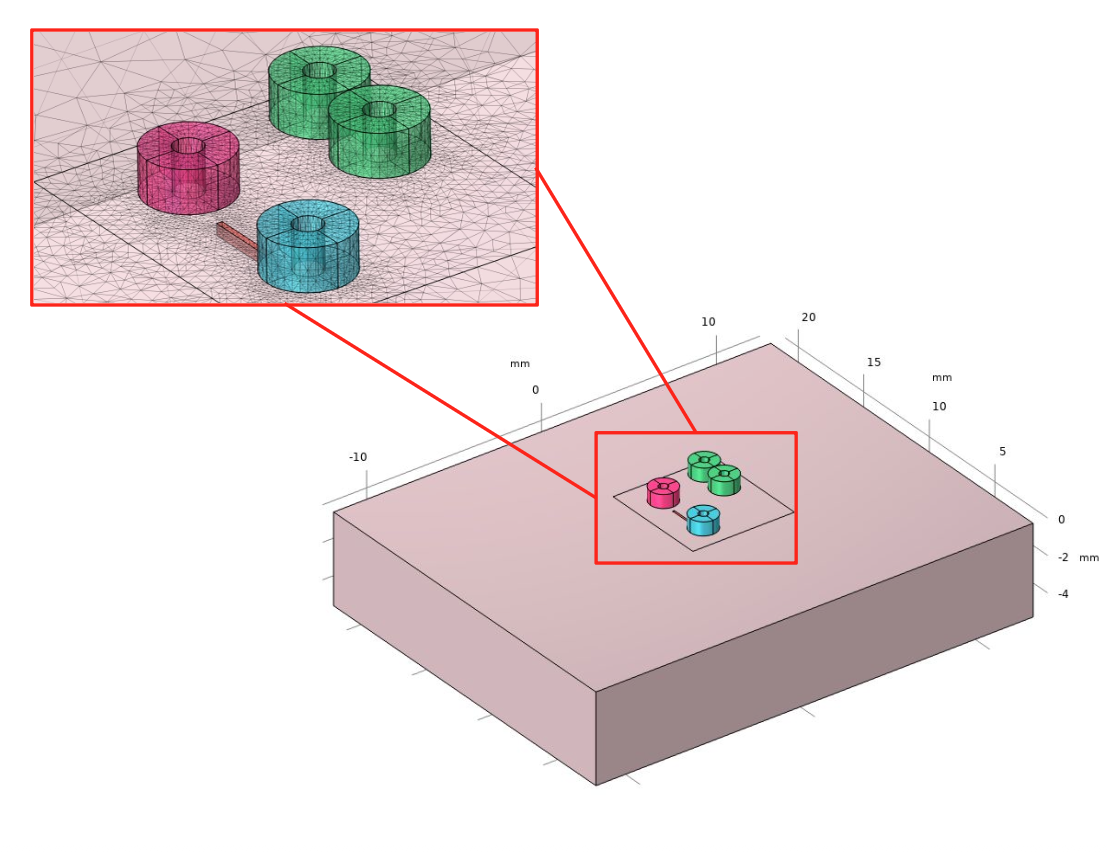
Raju Yalagada of Airbus presenting his keynote (left) and a slide of a case study demonstrating eddy current array (ECA) inspection (right).
Next, James Ellis’s keynote addressed how coupling multiphysics models with real-world plasma diagnostics and on-wafer metrology can transform theoretical insights into commercially relevant tools for plasma processing hardware. Continuing on the subject of validation, Geitner presented a multiscale COMSOL model for a direct reduction of iron (DRI) reactor for low carbon steelmaking. The talk described a three-scale validation framework that provides a physically consistent basis for process understanding, material development, and optimization of industrial DRI operation.
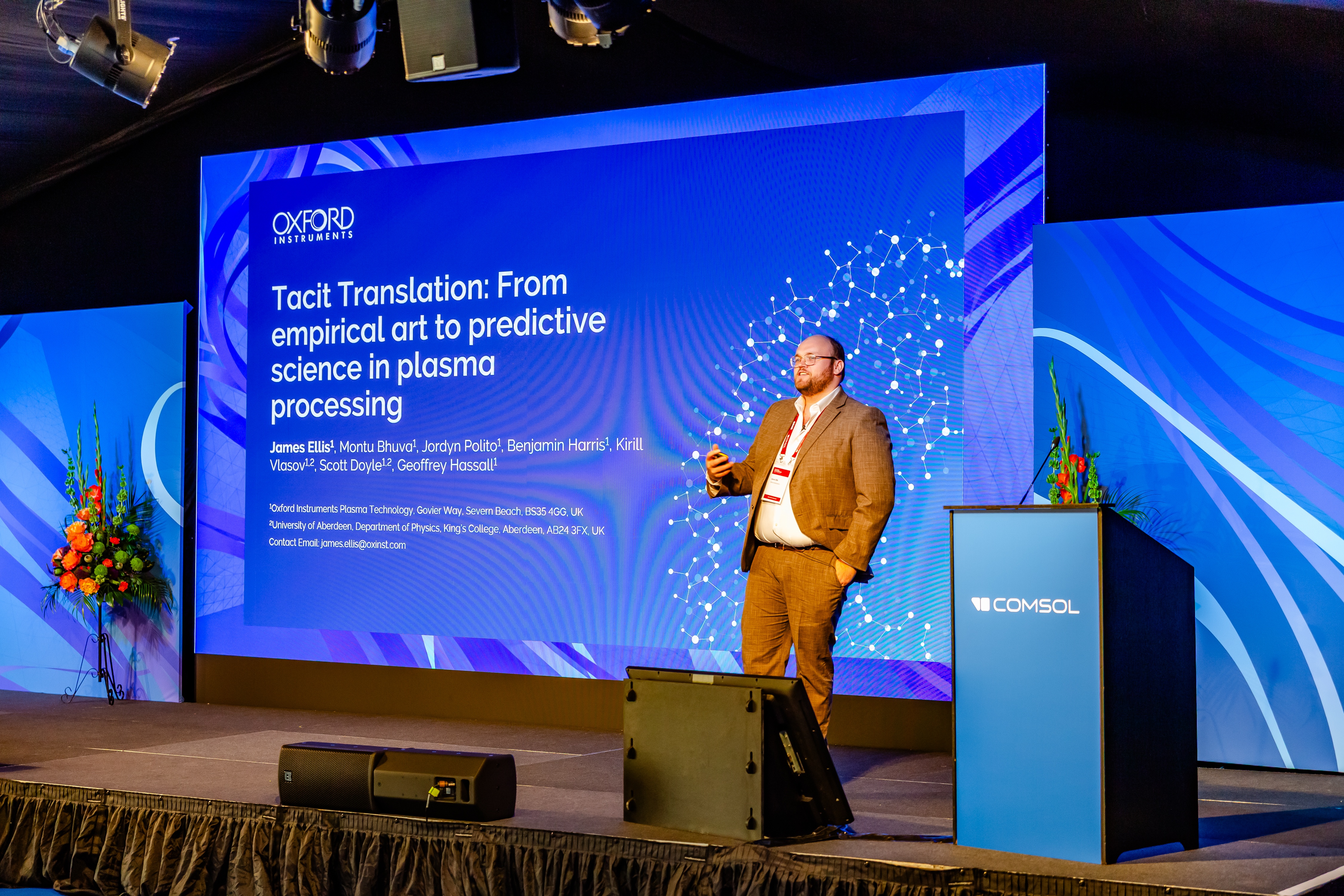
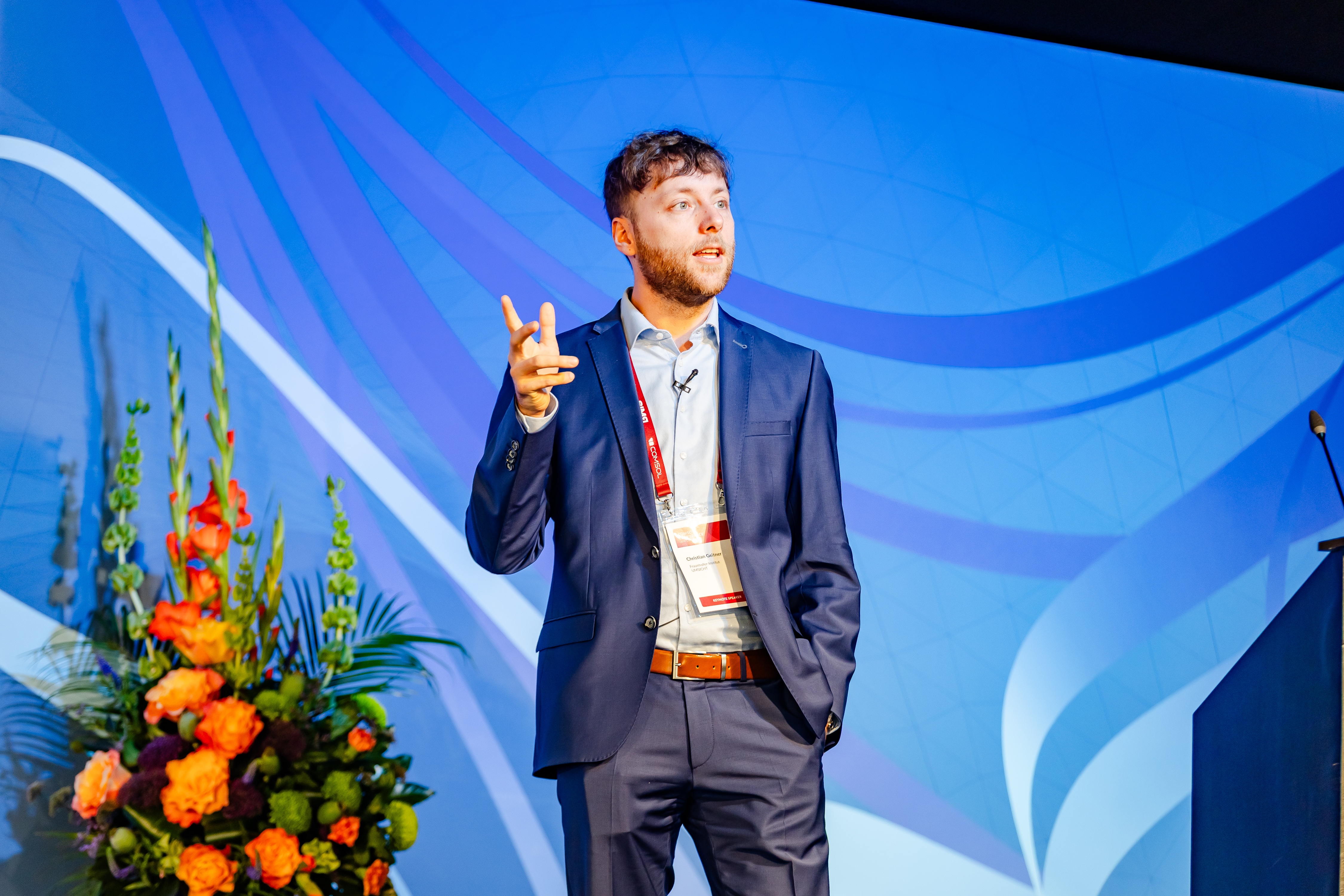
James Ellis of OIPT (left) and Christian Geitner of Fraunhofer UMSICHT (right).
On the final day of the conference, François Cornat of CorWave and Robert Mathershaw of Defence Science and Technology Laboratory (Dstl) took to the stage. Cornat’s talk focused on how numerical simulations accelerate the design and development of left ventricular assist devices (LVADs) and elaborated on the role of fluid–structure interaction (FSI), specifically. Mathershaw delivered the concluding invited keynote talks with a demonstration of four case studies that showcased the scope and benefits of multiphysics modeling in defense science and technology research.
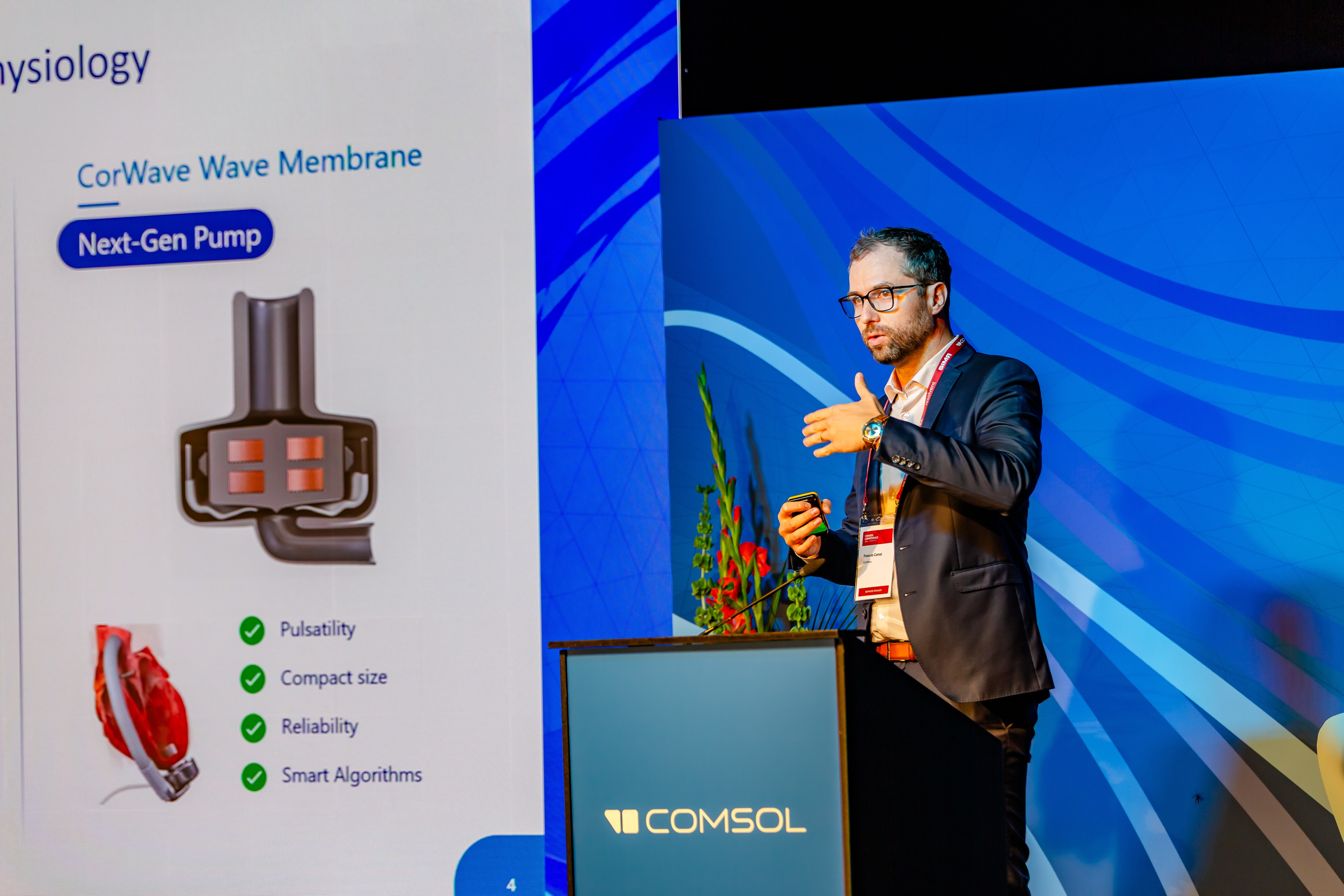
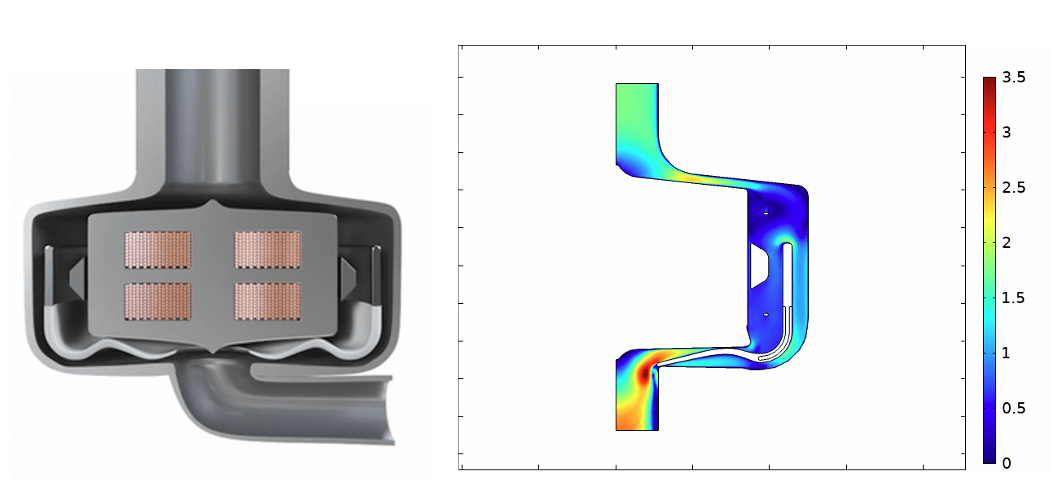
François Cornat of CorWave (left) and a simulation identifying areas at risk of blood stagnation in the design of a next-generation heart pump (right).
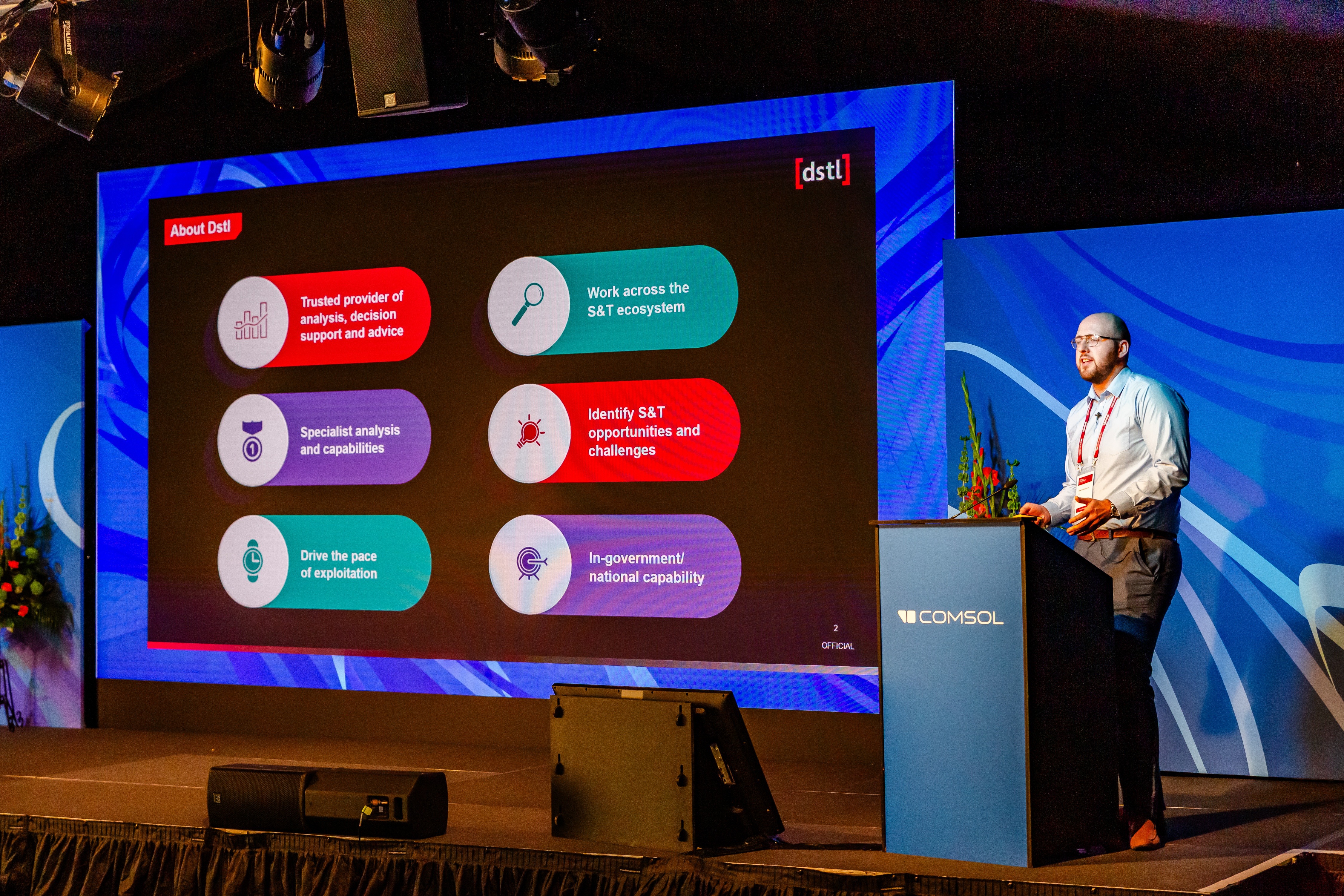 Robert Mathershaw of Dstl presents his keynote talk.
The COMSOL Conference wouldn’t be the same without a keynote dedicated to the next version of the COMSOL Multiphysics software. Ruud Börger of COMSOL spoke on the upcoming release — COMSOL Multiphysics v2027 — and offered attendees a first look at the software’s biggest product launch in years: COMSOL Systems. This new add-on product enables users to combine models with system-level design in a single user environment.
Börger also described other major release highlights like the new COMSOL MCP Server and the debut of the Electric Motor Module add-on product. The new COMSOL MCP Server enables direct interaction with AI assistants and agents within the COMSOL API, while the Electric Motor Module serves as a dedicated module for the design and analysis of electric motors and related products. To learn more about v2027, read our press release.
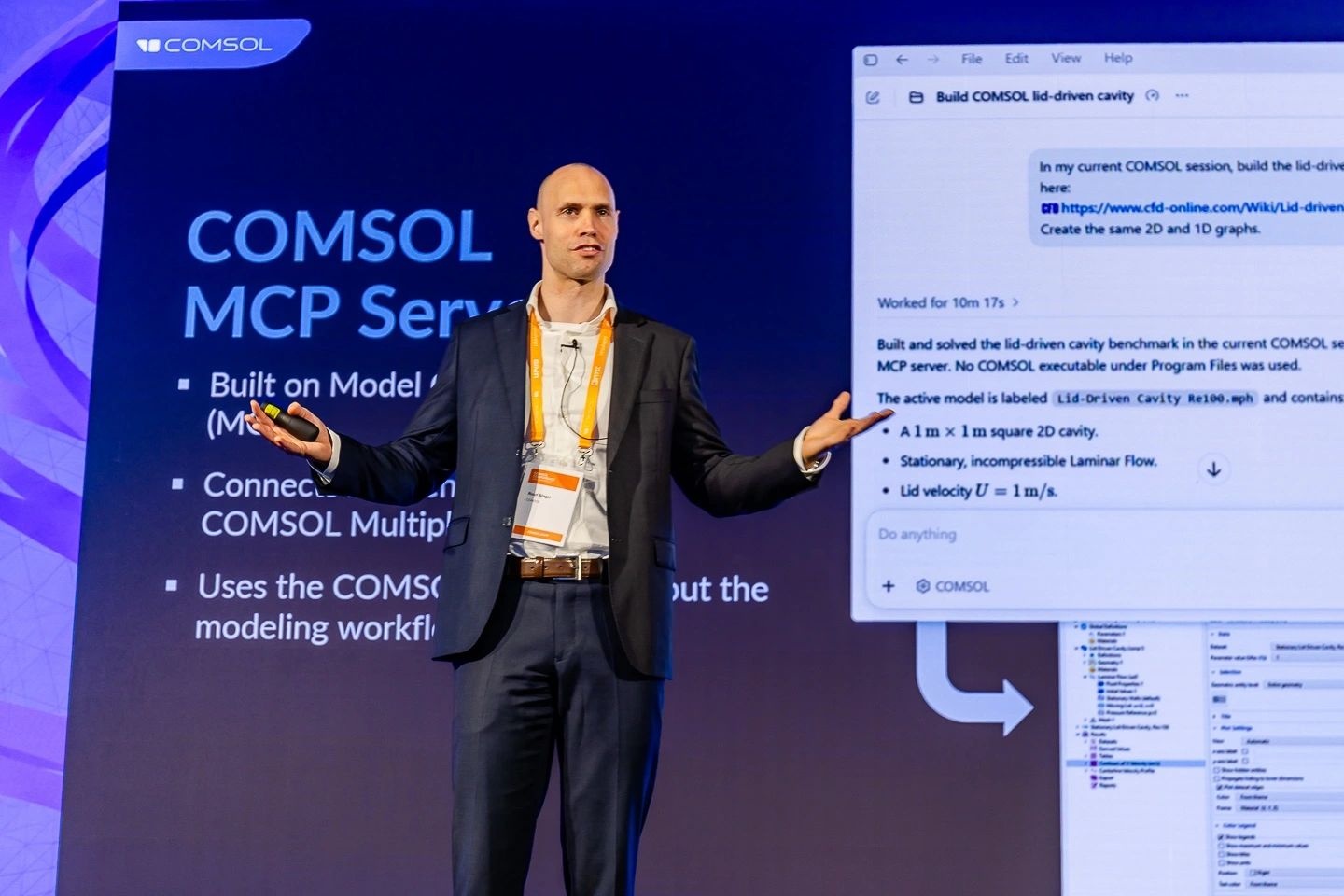
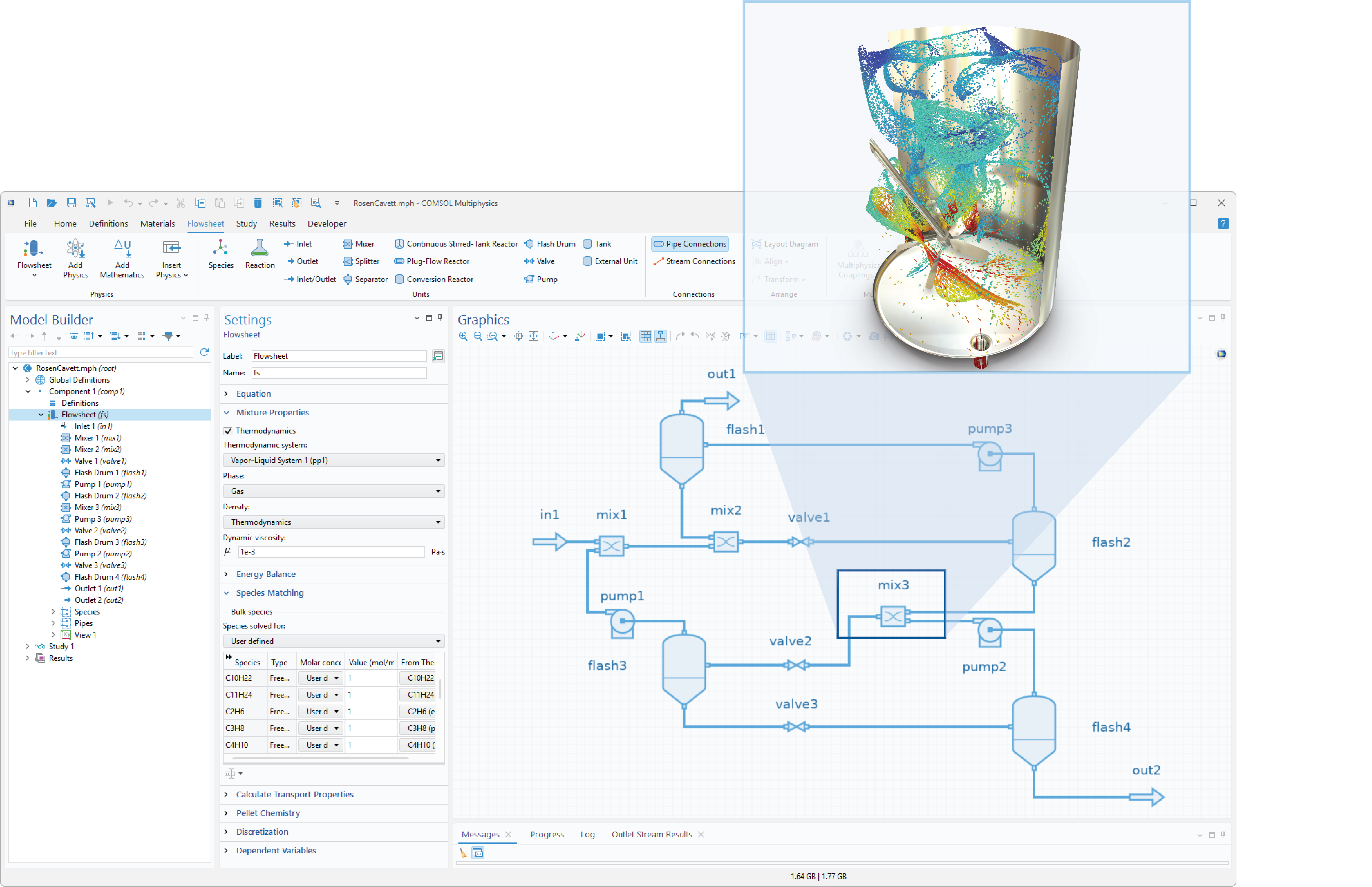
Ruud Börger of COMSOL details new features in the upcoming release of COMSOL Multiphysics v2027.
Featured Panelists Examine the Role of AI in the Present and Future of Simulation Research
This year’s featured panel convened experts in manufacturing, fusion, acoustics, and battery technology for a discussion examining opportunities for integrating AI and first-principles multiphysics simulation to change the way models are built, designs are explored, and engineering decisions are made.
The conversation, moderated by Edmund Dickinson of About:Energy, saw a large turnout as engineers, researchers, and businesses seek trusted avenues to enhance innovation. Commenting on specific modeling opportunities, the importance of validation and oversight, and computational advances, panelists included Bixente Artola of GREEN14, Jiabin Yang of UKAEA, Sanjit G. Shankar of Sonos Europe BV, Mark Yeoman of Continuum Blue (a COMSOL Certified Consultant), and Bjorn Sjodin of COMSOL.
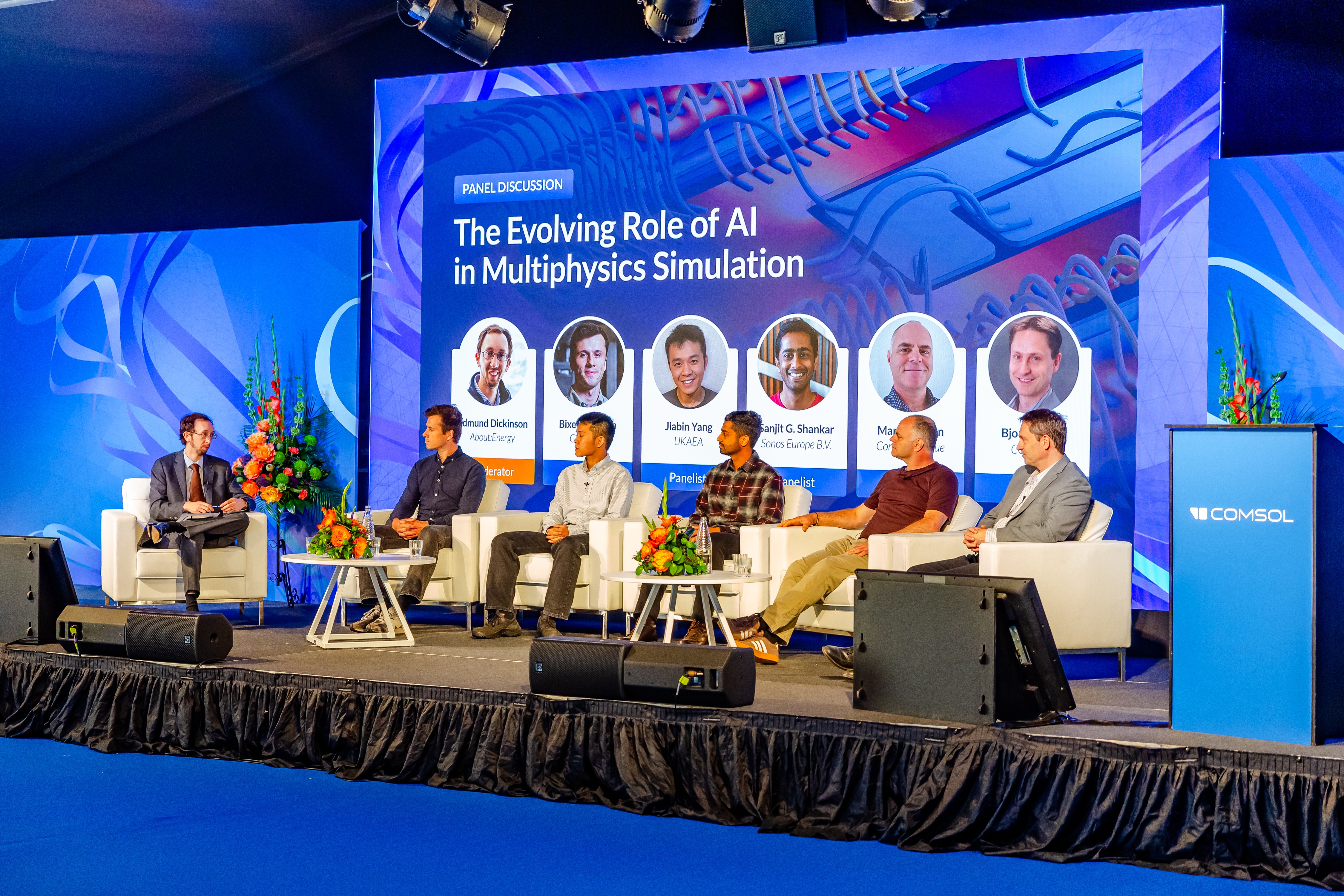 Panelists (left to right) Bixente Artola of GREEN14, Jiabin Yang of UKAEA, Sanjit G. Shankar of Sonos Europe BV, Mark Yeoman of Continuum Blue, and Bjorn Sjodin of COMSOL discuss AI and simulation. Edmund Dickinson of About:Energy (far left) moderates the conversation.
Minicourses and Demo Stations Offer Live Support
Attendees of the COMSOL Conference were presented with plenty of opportunities to learn about and collaborate on a host of technical and workflow topics in the COMSOL Multiphysics software. The 36 instructor-led minicourses offered instruction on subjects such as modeling techniques, software and add-on product functionality, and underlying theory. This year’s minicourse catalog included a new addition: Generative and Agentic AI with COMSOL.
Throughout the event, demo stations offered attendees further opportunities to connect with COMSOL applications engineers 1-on-1 and receive live support on their modeling and simulation questions.
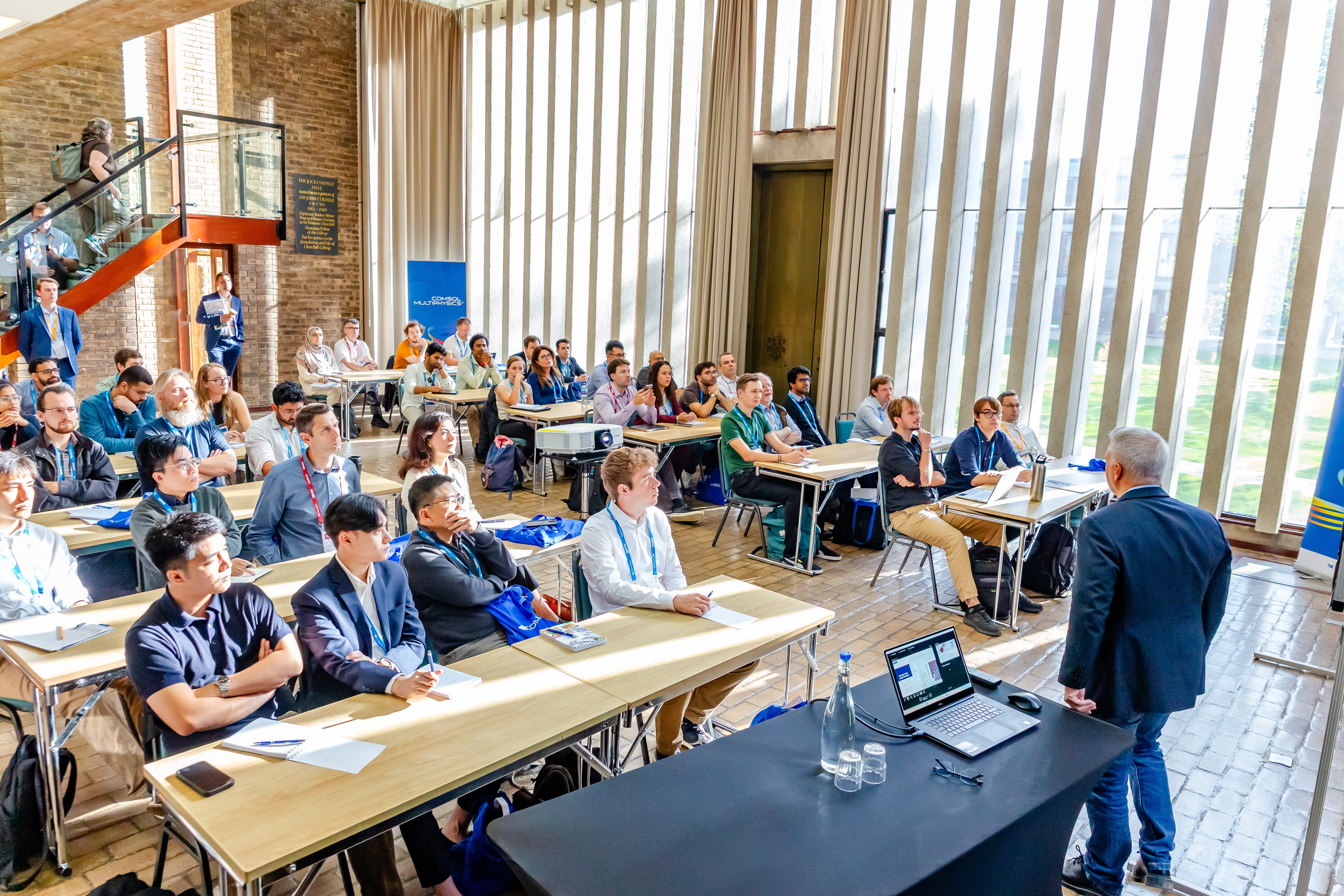
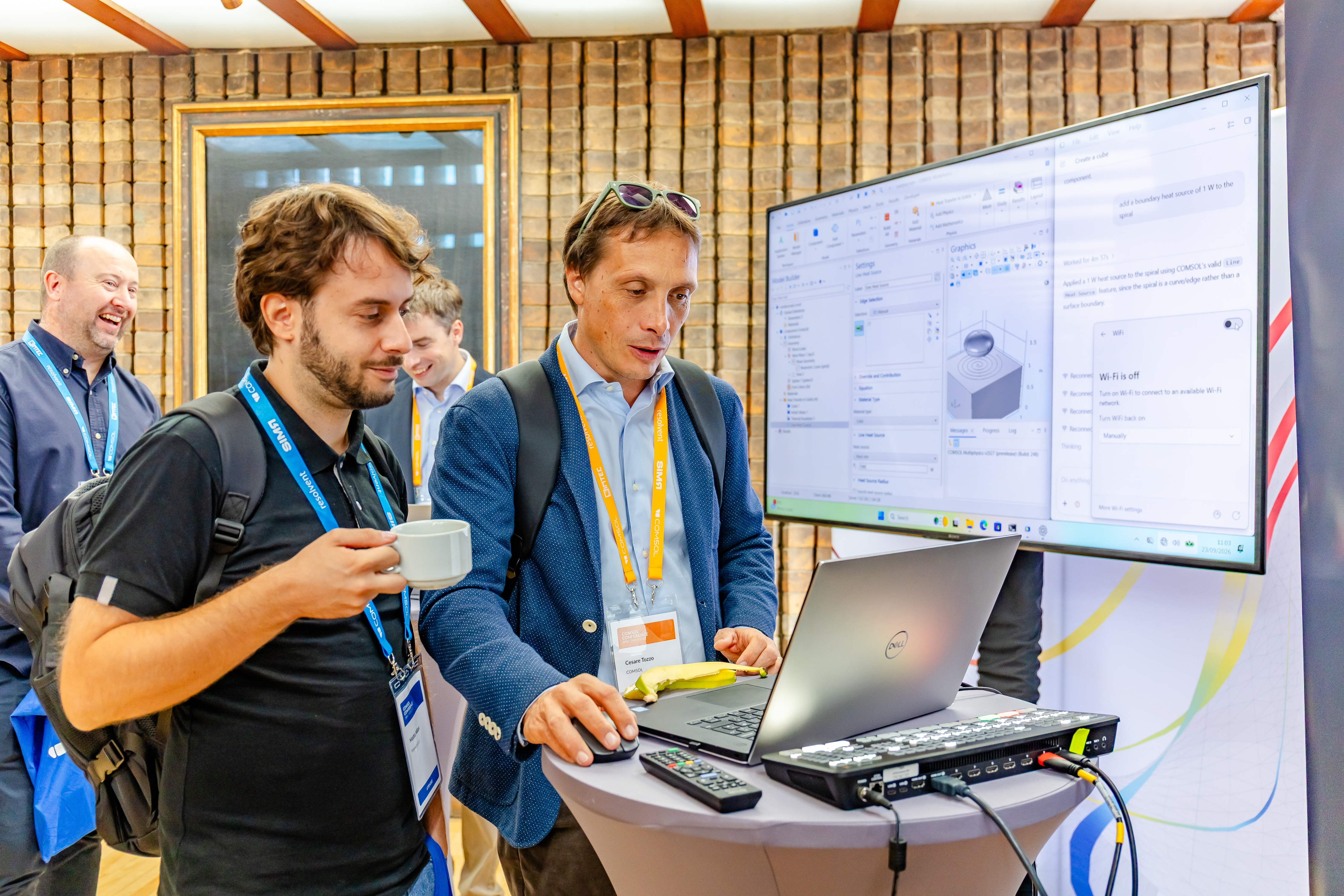
Attendees listen to a minicourse presentation (left) and an attendee discusses a model with a COMSOL engineer (right).
Recognizing the Top Papers and Posters of 2026
Seven innovative authors were presented with awards for best papers and best posters. The award-winners were selected by the program committee, with the exception of the best poster by popular vote, a recognition that was conferred to the winner by conference attendees who voted during the event.
Best Paper Awards
Daliya Aflyatunova and Carsten Welsch received the first Best Paper award for their work, “Synthetic X-Ray Radiograph Generation Using Ray Tracing in COMSOL Multiphysics.” The paper presented a physics-based framework for generating synthetic X-ray radiographs using deterministic ray tracing and Beer–Lambert attenuation. This computationally efficient approach addresses rapid prototyping needs in the design of radiographic imaging devices.
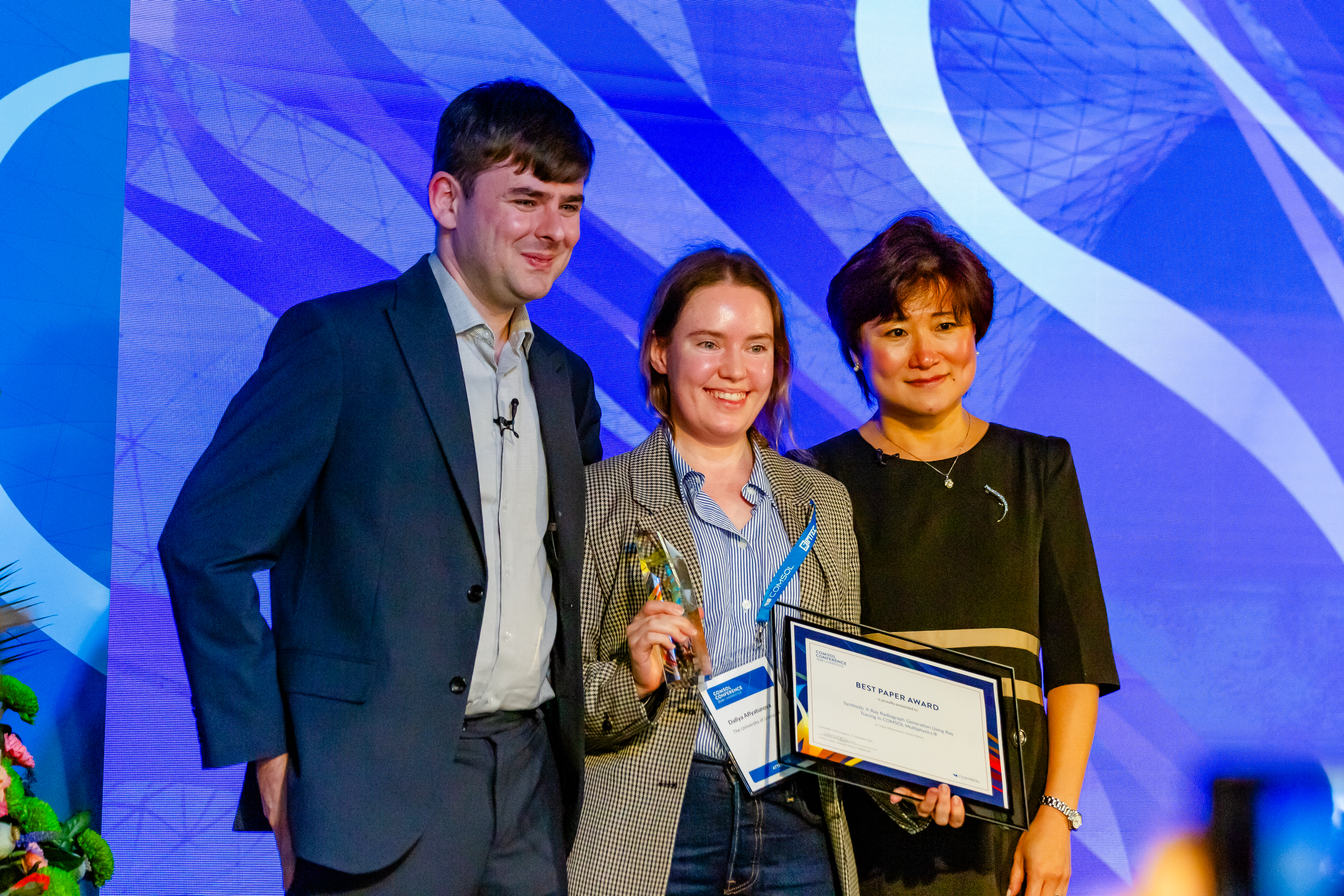 Daliya Aflyatunova accepts the Best Paper award from Wen Zhang.
Bixente Artola also won Best Paper for “Full Reactor Digital Twin with a Custom Phase-Change Particle Tracing Model for Ti-6Al-4V Powder.” The paper describes the creation of a high-fidelity digital twin in the COMSOL Multiphysics software. The twin is complemented with a physics AI surrogate loop toward the development of self-consistent optimization loops, in this case for the development of lower-impact additive manufacturing technology.
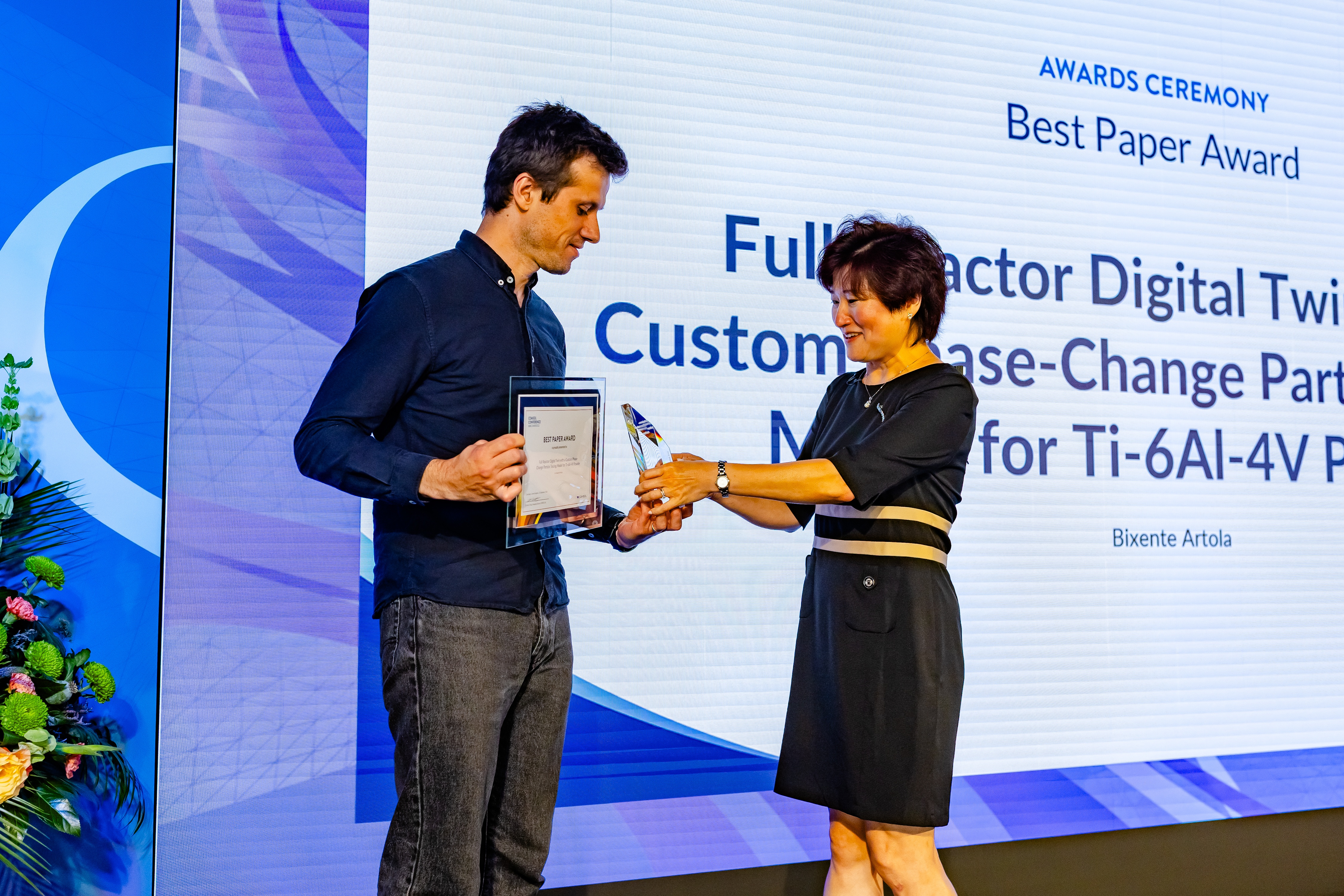 Bixente Artola receives the Best Paper award.
The final award for Best Paper went to Sparshita Dey, Alexander Antonakis, David Caratelli, Angela Fava, and Aidan Shim, who were recognized for their coauthored paper, “The Last Micrometer: Silicon Nanotips for Low-Threshold Neutrino Detection in Liquid Argon.” Dey et al.’s work investigated a geometric approach to lowering detection thresholds for low-energy events in particle physics.
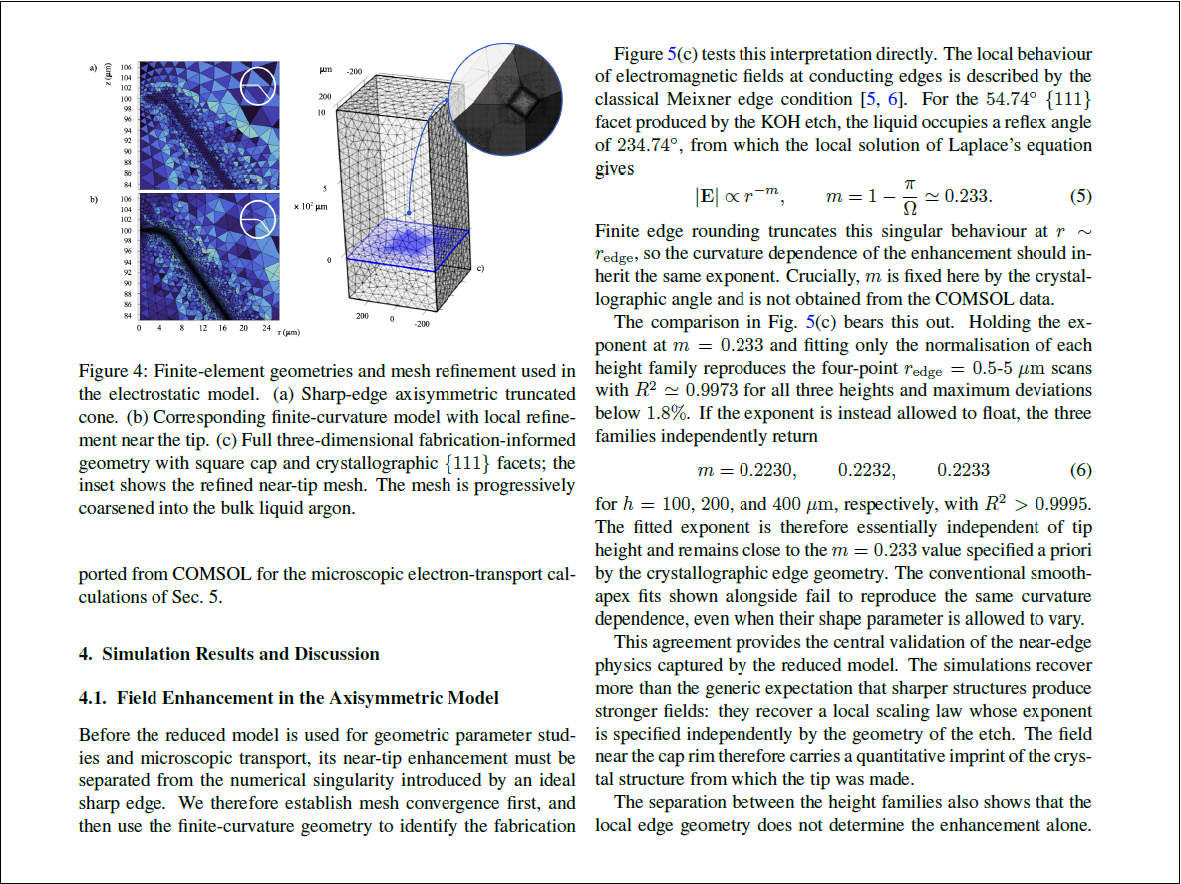 An excerpt from their winning paper showing a summary of the computational geometries used in their model.
Best Poster Awards
Ralph Eisenschmid and M. Lück’s poster presentation of FlowROM, a geometry-independent reduced-order modeling strategy for transforming CFD simulation data into a machine-learning-based surrogate model, received the first Best Poster award.
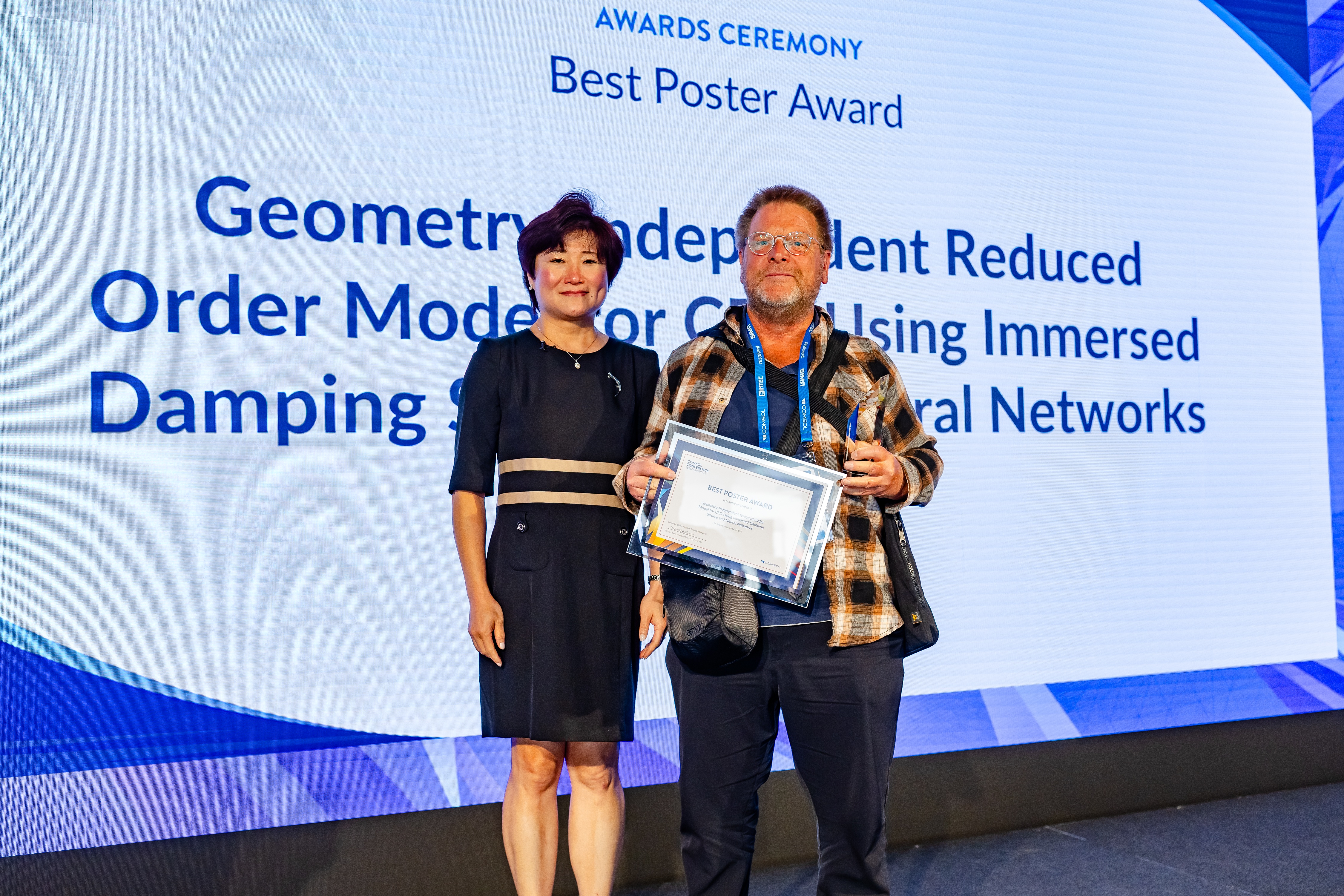
The winning poster by Ralph Eisenschmid and M. Lück (left) and Eisenschmid receiving the award (right).
The next Best Poster award was presented to Alex Korocencev. This winning poster brings exoplanetary research into the virtual laboratory and uses simulation to investigate the viability of a new acoustic levitator for the research of magmatic planet formation.
 The winning poster by Alex Korocencev.
Haixiao Wang received the third Best Poster award for his poster demonstration of parameterization optimization. The work showcased the automated design process through a demonstration optimization run of an axial flux motor.
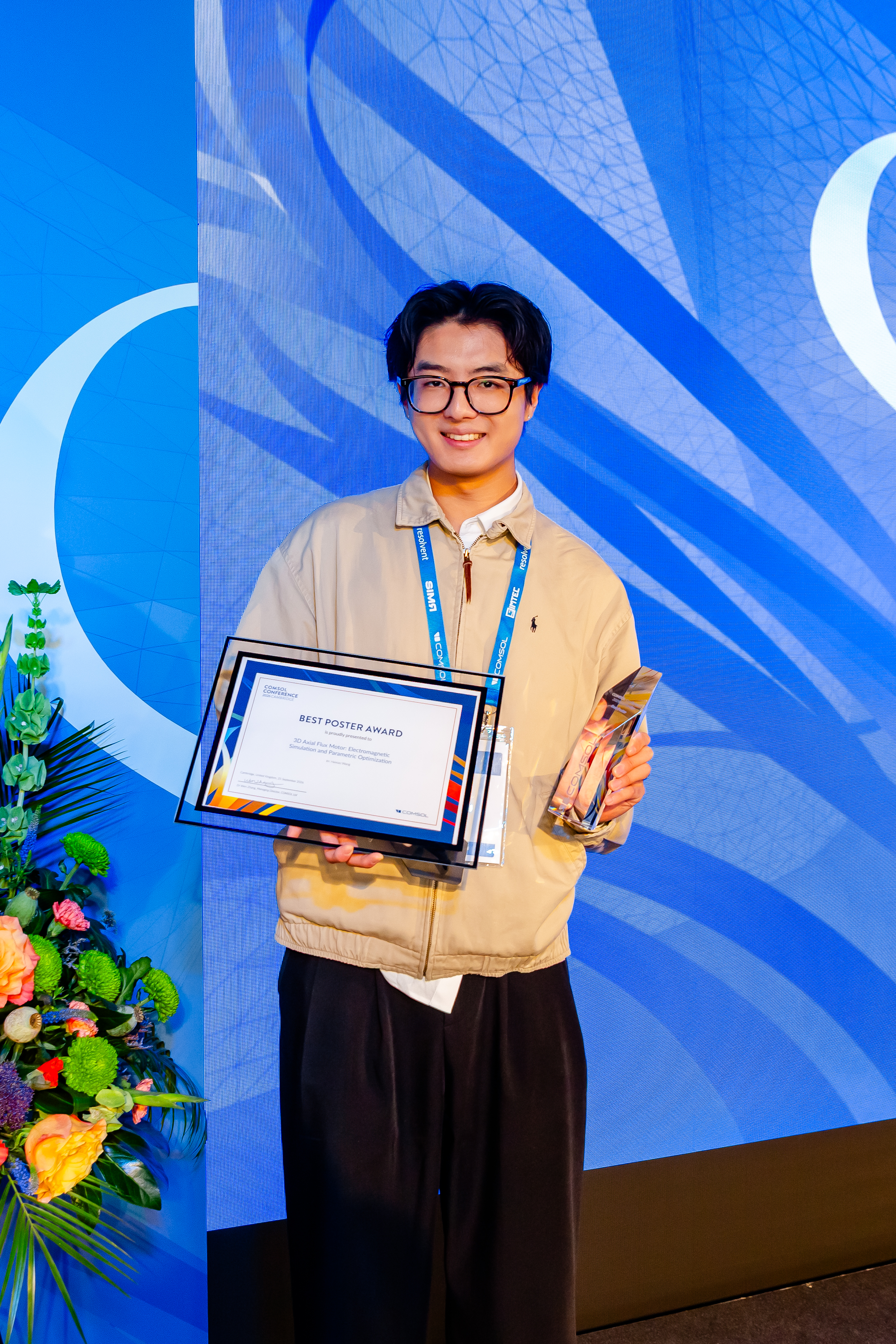
The winning poster by Haixiao Wang (left) and Wang accepting the Best Poster award (right).
This year’s Best Poster by Popular Vote award was won by Giuseppe Petrone, Salvone Cagliari, Angelo Barbagallo, Luca Barrano, and Roberta Sinatra. The poster, pictured below, presents a simulation workflow for the numerical analysis of a granular-material mixer using the Granular Flow Module add-on product.
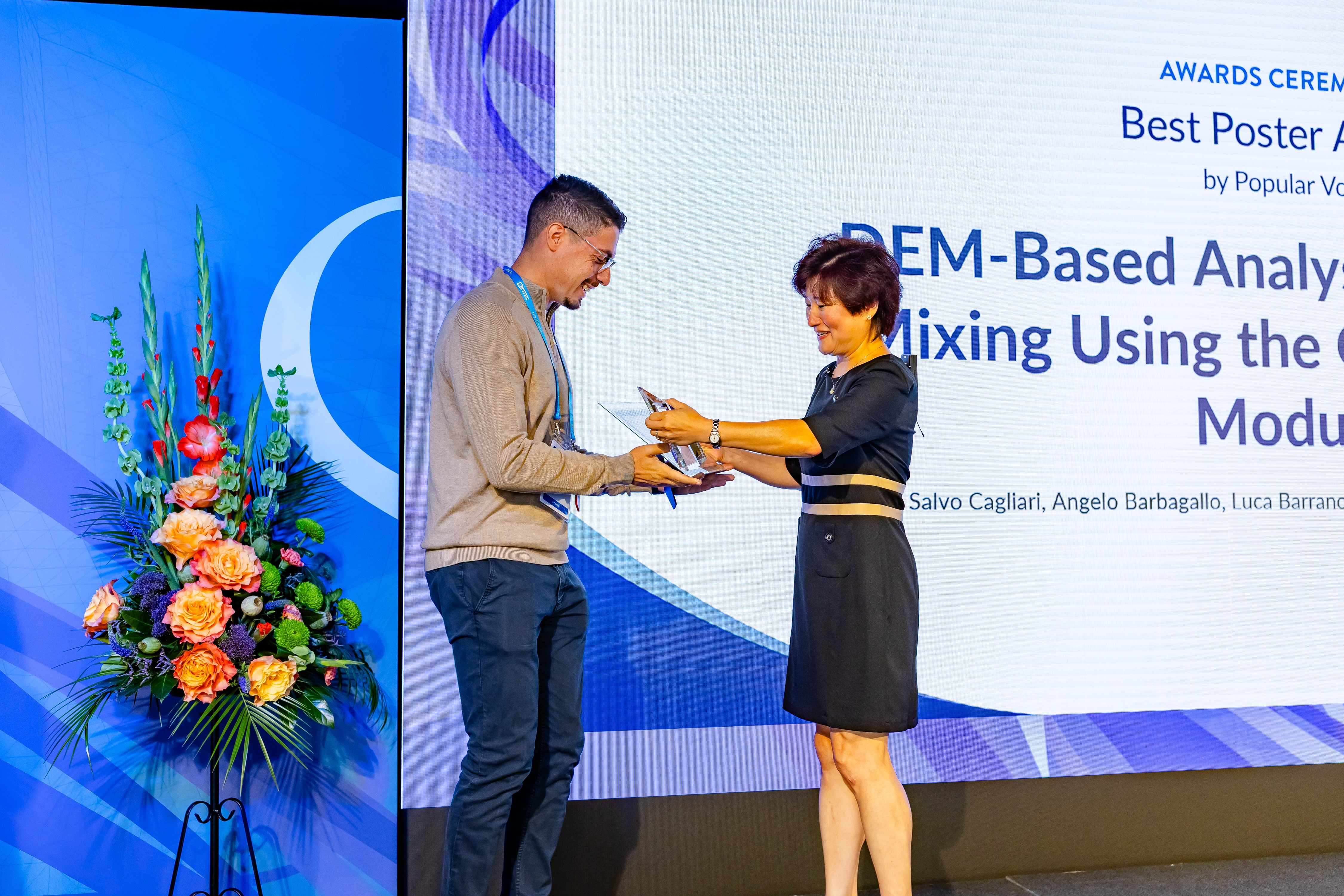
Salvone Cagliari accepting the Best Poster by Popular Vote award (left) and the winning poster (right).
Thank You to Our Users
COMSOL has come a long way since 1986. In the Welcoming Remarks session that kicked off the conference, Wen Zhang, managing director of COMSOL UK, attributes this evolution and success to a clarity of vision that continues to drive the company and COMSOL Multiphysics 40 years later.
“Over the last 40 years, we have developed a lot in terms of the company and our technology. We have grown to 16 offices worldwide with more [than] 650 colleagues. Throughout these years, our vision has remained exactly the same: to empower users with the tools they need to improve their designs and processes and bring their ideas to life.
I would like to take this opportunity to thank you all for all of your amazing support over the years and we will continue to develop and optimize our simulation tools together working with you.”
— Wen Zhang, managing director of COMSOL UK
Photo Slideshow from the COMSOL Conference 2026 Cambridge
 Attendees chat during a coffee break.
 Churchill College in Cambridge, UK, where attendees gathered for the event.
 Engineers and researchers arrive at the conference.
 Colleagues from COMSOL Certified Consultant SIMTEC at the event.
 A discussion at COMSOL's Learning Center station.
 Attendees chat with peers in one of the conference lounges.
 Participants explore St. John's College over food and beverages during the Explore Cambridge activity.
 A presenter describes research on temperature change analysis during a poster session.
 Attendees discuss a poster.
 A web workshop draws a full classroom.
 The team from BE CAE & TEST, a COMSOL Certified Consultant, in the exhibit hall.
 COMSOL colleagues welcome attendees.
 A poster being discussed during the poster session.
 Wen Zhang, managing director of COMSOL UK, kicks off the conference.
 A minicourse presentation.
 An attendee grabs a magazine at the conference.
 A question from an audience member.
 A discussion in the poster hall.
 Conference attendees taking a photo.
 A conversation during the poster session.
 At the closing talk, attendees learn the location of next year’s conference.


Invite Further Inspiration
We hope attendees are feeling as energized as we are after an eventful week in Cambridge. To continue exploring conference offerings and attendee contributions, including the award-winning papers and posters, be sure to visit the Technical Papers and Presentations gallery, which will soon be updated with the event proceedings.
Thank you to all who participated in the COMSOL Conference 2026 Cambridge!



Comments (0)