

Formula E and COMSOL have announced a multiyear partnership, bringing multiphysics simulation software to the all-electric racing series and making COMSOL the Official Multiphysics Partner of the ABB FIA Formula E World Championship.
With Formula E debuting the revolutionary GEN4 race car for its 2026–2027 season and COMSOL Multiphysics® v2027 set to be released later this fall, the agreement comes at a time of major technological advancement for both organizations.
What will this partnership mean for the future of electric racing and simulation-led development? Let’s take a look under the hood at each industry leader’s latest innovations to find out.
Formula E’s New Era: GEN4
Formula E’s 2026–27 season (Season 13) ushers in GEN4, setting new benchmarks for speed and innovation in motorsport. Capable of hitting speeds of 208 mph (335 km/h) and reaching 124 mph (200 km/h) in just 4.4 seconds, the GEN4 car represents a huge technical leap for the world’s leading all-electric motorsport series.
GEN4 also sets a new global benchmark as the world’s most sustainable race car, becoming the first to be 100% recyclable or reusable, with a minimum of 20% of recycled materials used for the tires, batteries, chassis, and front powertrain kit (FPK).
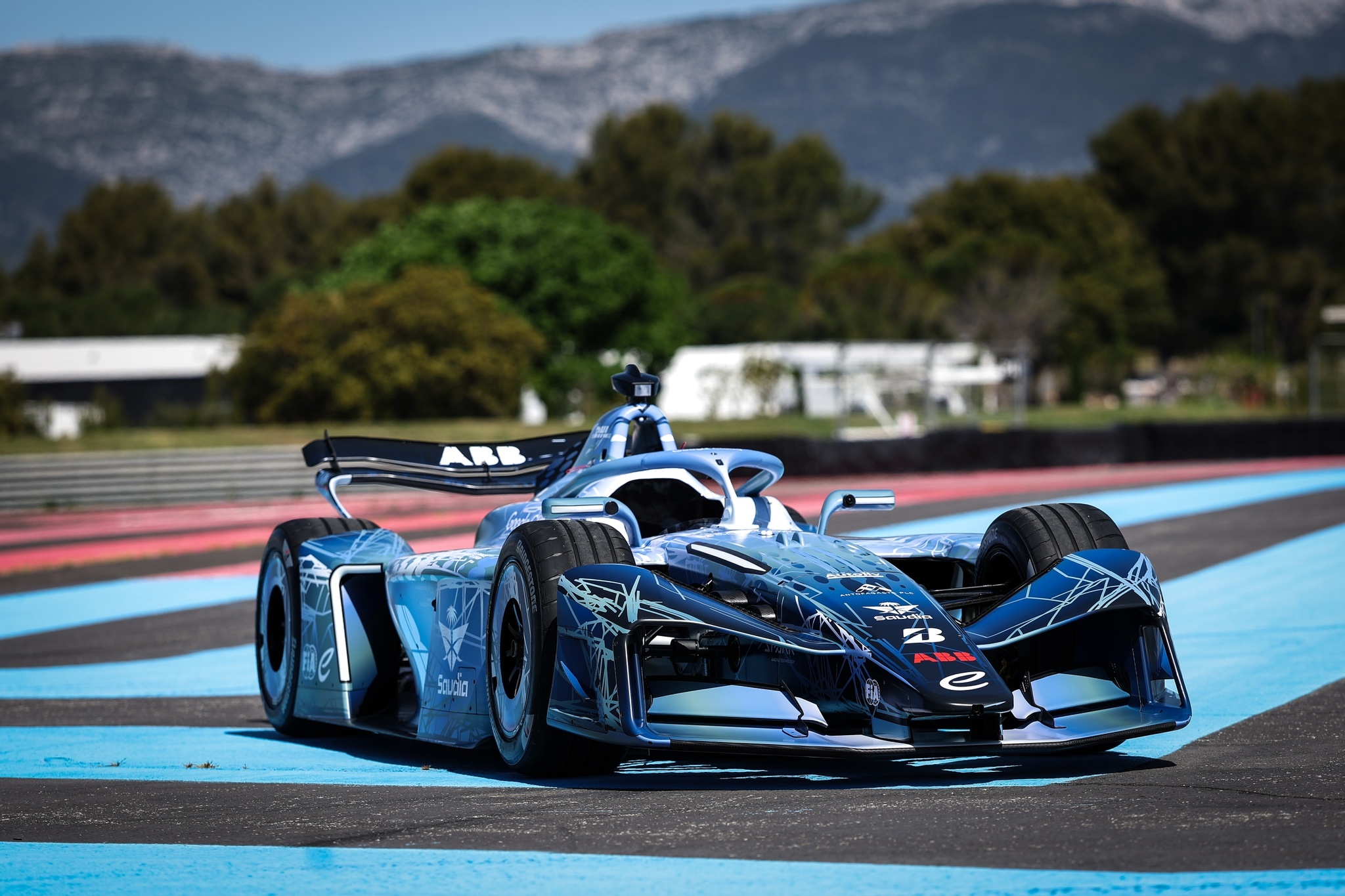 The GEN4 Formula E car seen during the GEN4 Unleashed launch event held April 21–22, 2026, at Circuit Paul Ricard, Le Castellet, France. (Photo by Simon Galloway/LAT Images)
A Performance Jump
The leap to GEN4 starts with a major performance improvement over previous generations. Redefining high-performance electric motorsport, the GEN4 race car will deliver 50% more power in race mode than the GEN3 Evo. With a power output of 600 kW in ATTACK MODE, GEN4 represents a 71% increase in base power output compared to GEN3 Evo.
GEN4 cars also feature permanently active all-wheel drive (AWD), which improves traction and torque management and helps them accelerate from 0 to 100 km/h (0 to 62 mph) in around 1.8 seconds. Teams, drivers, and fans will see a marked difference in performance between these cars and any from previous seasons.
Energy Management and Efficiency Remain Key
The GEN4 championship fight will continue Formula E’s traditional challenge to competitors: to find the most energy-efficient way to be the fastest over the course of a lap, a race, and a season.
The race energy available to each GEN4 car has increased by 43% compared to the GEN3 Evo (to 55kWh). However, this additional energy capacity comes alongside the increase in power and performance, making how efficiently teams deploy and recover energy more important than ever. These changes will lead to faster races without compromising on Formula E’s emphasis on energy efficiency.
The GEN4 car will showcase its speed across two major race formats: the E-Prix and the E-PrixUnleashed. The former maintains the racing series’ customary focus, challenging competitors to manage their energy better than the rest of the field. However, the latter will show off the car being driven at its ultimate limit, highlighting the raw speed of the GEN4 as it laps some of the world’s most recognizable circuits.
COMSOL Multiphysics® v2027: Innovating with Speed, Efficiency, and Accuracy
With each generation of the ABB FIA Formula E World Championship, greater performance is unlocked by solving complex engineering challenges. Similarly, COMSOL Multiphysics® was designed to help users tackle a wide variety of engineering challenges quickly and accurately. The software provides built-in functionality for analyzing how the interactions between different physical phenomena affect the way individual parts and the system perform. This fall, the software will become even more capable with its own leap forward: v2027. The new version will introduce faster computation, system-level modeling, and expanded tools for building and deploying simulations.
Unveiling the Electric Motor Module
The Electric Motor Module, a new add-on product to the software, will provide a streamlined environment for modeling electric motors and generators in a wide variety of commercial or industrial applications, including road cars. Using the module’s dedicated functionality for evaluating performance, operating ranges, losses, material effects, and faults in both 2D and 3D, engineers can optimize the performance, efficiency, and material utilization of machine designs. Just as GEN4 capabilities like permanently active AWD and greater energy capacity have already begun to do, electric motor designs developed using this new module will pave the way for future commercial vehicle technologies.
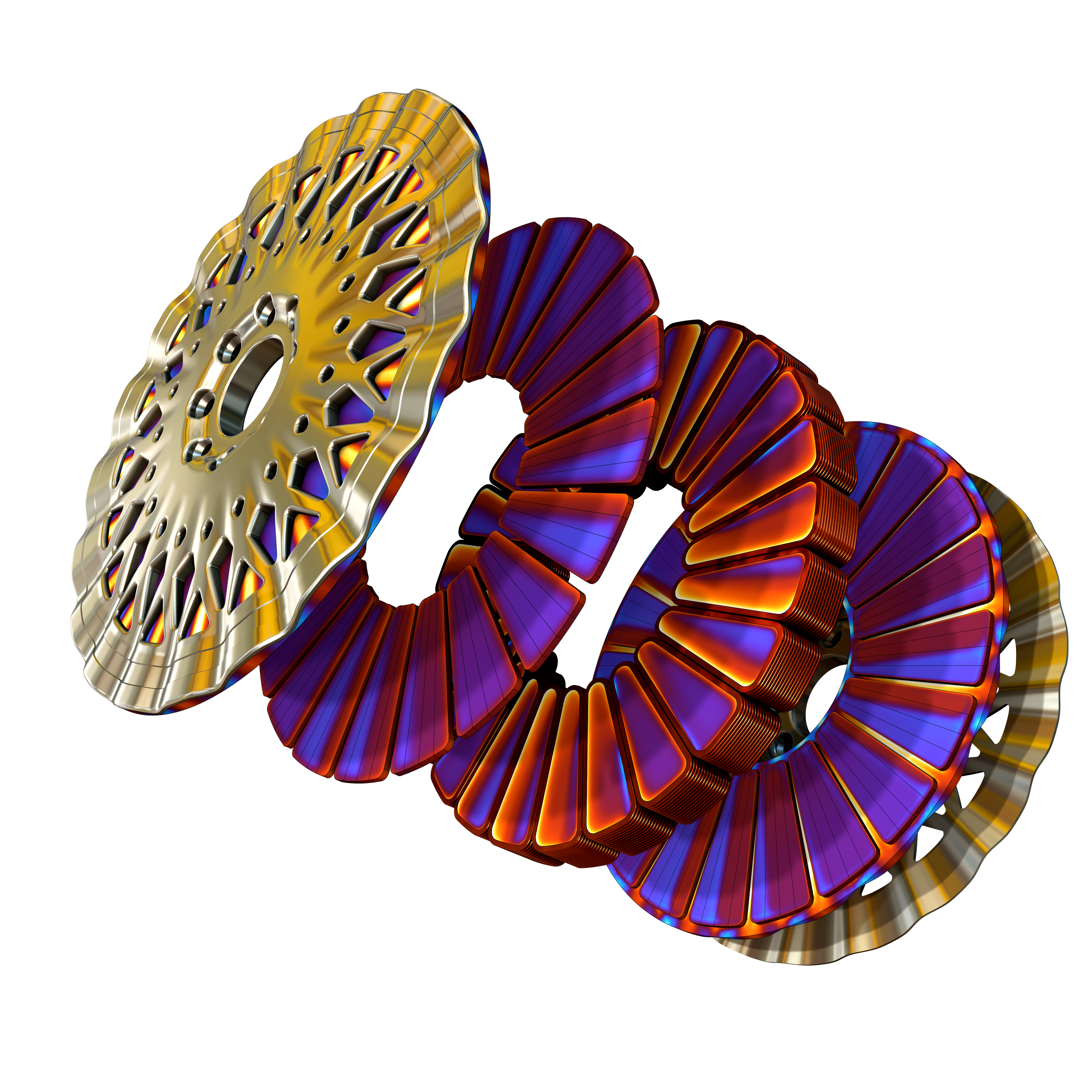 A 3D model of an axial-flux motor for an electric vehicle, illustrating the detailed electric machine modeling capabilities of the Electric Motor Module.
Connecting Models Through COMSOL Systems™
COMSOL Multiphysics® v2027 will also expand the scale at which engineers can approach complex systems with the introduction of COMSOL Systems™. This add-on product provides a new modeling environment for analyzing complete systems while retaining access to detailed multiphysics modeling wherever local physical effects need to be resolved.
Using a library of nearly 5000 ready-to-use components, engineers can build electrical circuit diagrams, process flowsheets, and custom equation-based system models. These system-level representations can then be directly connected to 1D, 2D, or 3D multiphysics models created in COMSOL Multiphysics®.
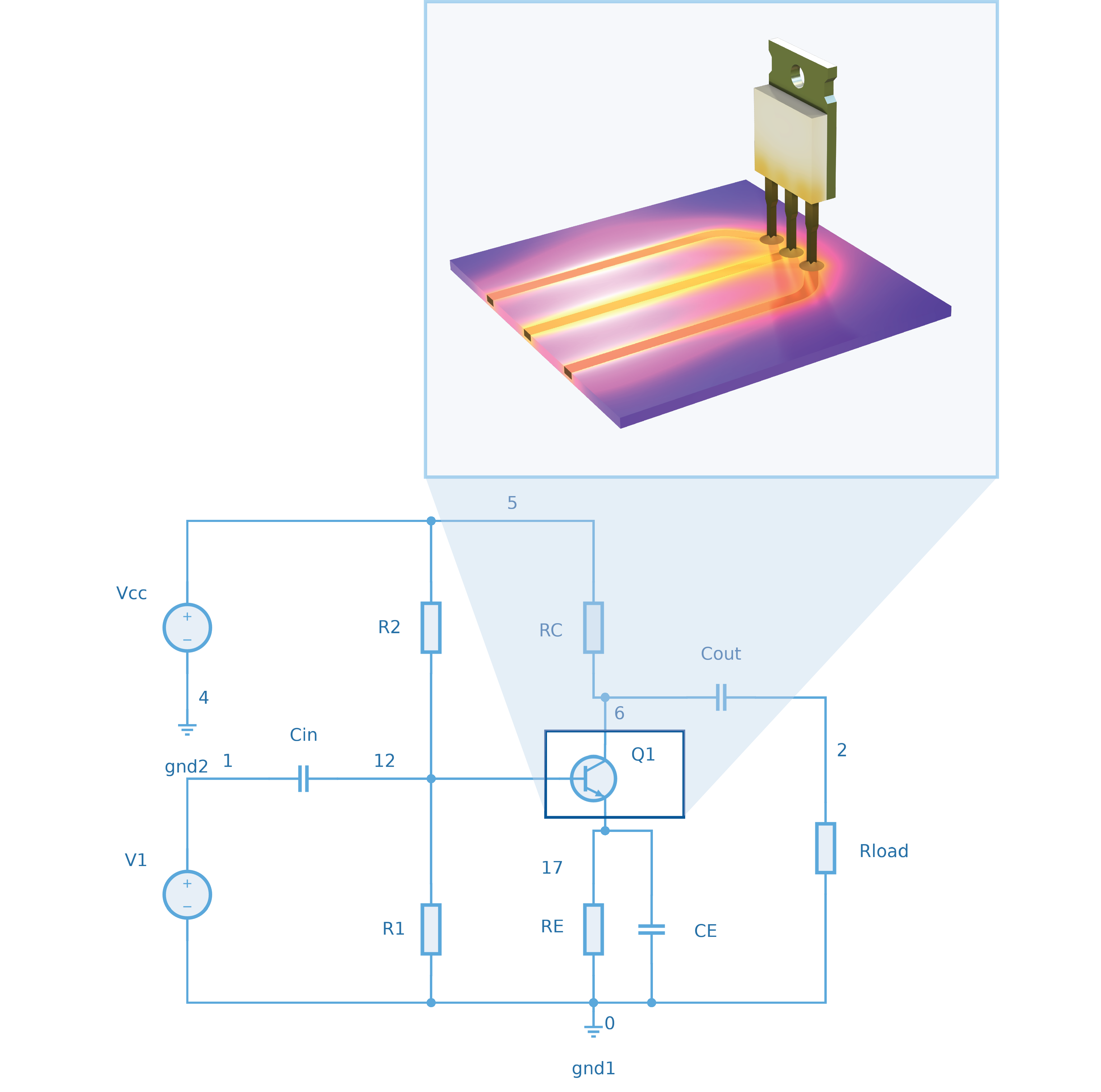 An electrical circuit model created in COMSOL Systems™ coupled to a detailed 3D multiphysics model created in COMSOL Multiphysics®, enabling circuit-level and component-level physics to be analyzed together.
Such technologies could also be used in the context of an electric race car, like Formula E’s GEN4. Important aspects of the electric powertrain could be modeled at the system level using COMSOL Server™ while incorporating detailed multiphysics models of components such as the motor, battery, or regenerative braking system. This multilevel approach would enable them to zoom in on, for example, the electric motor to capture the effects of electromagnetic losses, heat generation, and temperature on motor operation as needed while efficiently analyzing the behavior of the vehicle as a whole.
Engineering a Faster Future, Together
Being at the forefront of electric motorsport competition and engineering a successful product both require an emphasis on optimization and efficiency. This synergistic intention makes the partnership between Formula E and COMSOL mutually beneficial as each party reaches pivotal milestones in its technological journey.
With GEN4, Formula E is introducing its fastest car yet while maintaining the focus on efficiency and energy management that has defined the Championship. At the same time, COMSOL Multiphysics® version 2027 will offer engineers powerful new capabilities for modeling electric machines, analyzing interconnected systems, and investigating the multiphysics interactions that influence real-world performance across many industries.
Separately, these two technology leaders are driving innovation. Through this partnership, they can accelerate it.
Accelerating Electric Racing with Simulation
To learn more about COMSOL Multiphysics®, the upcoming release of v2027, and how the software is used in motorsport, check out the links below:





Comments (0)