
Simulation Turns Up the Heat and Energy Efficiency at Whirlpool Corporation
N. Garcia-Polanco
Whirlpool Corporation, Italy
Engineers working on a joint research project between Whirlpool Corporation and the European initiative GREENKITCHEN project are using simulation to improve the energy efficiency of domestic ovens. Since only ten to twelve percent of the total energy expended by an oven is actually used to heat the food, the researchers had plenty to investigate. Using COMSOL Multiphysics® software and the Heat Transfer Module, the team created a model of Whirlpool’s Minerva oven to study the heat transfer processes of convection, conduction, and radiation. The resulting model, which simulates the standard test for energy consumption in the European Union (known as the “brick test”), analyzes the energy, temperature profile, and moisture concentration over different heating cycles. The results of this study will help with future initiatives at Whirlpool and GREENKITCHEN to reduce national energy consumption and improve energy efficiency in Europe.
Suggested Stories
Harmonizing Sound and Style in Open-Plan Offices
Open-plan offices offer a collaborative workspace environment. However, they also allow for frequent noise ...
Bringing Multiphysics Simulation to Construction Sites
Time, temperature, material selections, weather conditions, and casting technique can all affect the early-age ...
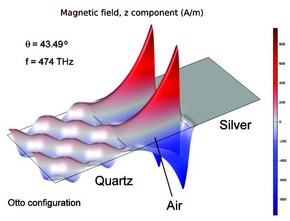
Surface Plasmon Resonance
Surface Plasmon Resonance (SPR) is created by surface plasmons, coherent electron oscillations existing between any ...
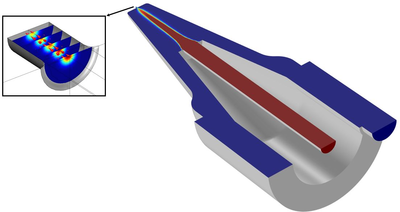
Optimizing Hematology Analysis: When Physical Prototypes Fail, Simulation Provides the Answers
Hematology analysis, the analysis of a blood sample to determine a variety of hematological parameters, is a major ...


