
Ivana Milanovic, University of Hartford, USA
While covering the required fundamental material in undergraduate academic programs is the top priority, students require an extra set of knowledge and skills to flourish in the workforce. This is especially true in science, technology, engineering, and mathematics (STEM) fields, where there is rarely an abundance of time for inquiry-based learning and the development of field-specific skills. To address this issue, the University of Hartford integrated multiphysics modeling into their curricula. Using the Application Builder in the COMSOL Multiphysics® software, the university created simulation-based laboratory assignments through apps, which enhanced students’ physical intuition and their ability to visualize physical concepts.
Suggested Stories
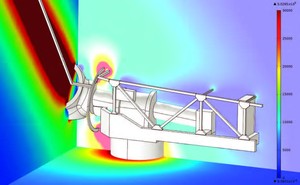
Lightning-Proof Wind Turbines
Søren Find Madsen, Global Lightning Protection Services A/S, Lejre, Denmark Global Lightning Protection Services A ...
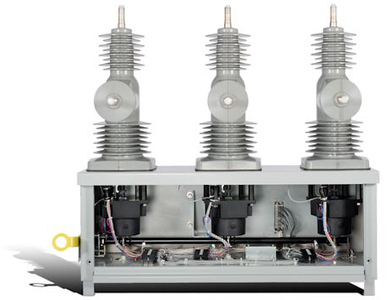
How Reclosers Ensure a Steady Supply of Power: It’s All in the Magnet
When a tree branch touches overhead cables and causes a momentary short circuit, your lights may flicker. A device ...
Modeling Scar Effects in Electrical Spinal Cord Stimulation
The Neuromodulation Group at Lahey Clinic conducted a study based upon spinal cord stimulation (SCS). SCS involves ...

Cluster Simulation of Refrigeration Systems
Sunwell Technologies Inc. produces and distributes the slurry ice (Deepchill™) that is an environmentally-friendly way ...


