
Ivana Milanovic, University of Hartford, USA
While covering the required fundamental material in undergraduate academic programs is the top priority, students require an extra set of knowledge and skills to flourish in the workforce. This is especially true in science, technology, engineering, and mathematics (STEM) fields, where there is rarely an abundance of time for inquiry-based learning and the development of field-specific skills. To address this issue, the University of Hartford integrated multiphysics modeling into their curricula. Using the Application Builder in the COMSOL Multiphysics® software, the university created simulation-based laboratory assignments through apps, which enhanced students’ physical intuition and their ability to visualize physical concepts.
Suggested Stories
Keynote: Electrochemical Modeling for Optimized Operating Strategies and Development of Automotive Cells
In this keynote talk from COMSOL Day: Battery Design, Nikolaos Papadopoulos of Porsche discusses how he is using ...
Giving Furniture Testing a Leg Up
Chairs must meet quality standards, which requires lengthy and costly testing. To reduce the burden on manufacturers, ...
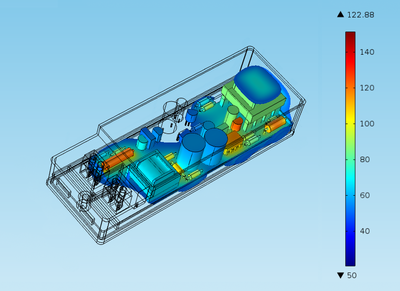
Keeping LEDs Cool Gets More Manageable Through Simulation
Light-emitting diodes (LEDs) offer many benefits over incandescent lighting, such as long life spans and high luminous ...
Simulation Applications Help Shape the Design of Car Audio Systems
Audio entertainment systems for luxury cars must provide end users with the highest quality of in-car listening ...


