
Toyota Improves Electronic Component Cooling with Simulation
Toyota Research Institute of North America, MI, USA
The Toyota Research Institute in Ann Arbor drives cutting-edge research in energy efficiency, mobility infrastructure, and safety. Here, Ercan Dede and his team are designing heat sinks (or cold plates), which are affixed to fragile electrical systems and other applications in Toyota’s hybrid vehicles.
Their simulations simulate the cold plate’s topology for improved cooling efficiency while minimizing pressure drop. Previous designs provided good heat transfer, but at the cost of significant pressure drops across the plate. Making use of branching channels, the heat sinks provide the same heat transfer but with an optimized flow path. Using LiveLinkTM for SolidWorks®, they were able to create fast and accurate design iterations, leading to an optimal cold plate topology.
SolidWorks is a registered trademark of Dassault Systèmes SolidWorks Corp.
Suggested Stories
Fine Tuning for Water Purification
Amsterdam Water Supply (AWS) of the Netherlands produces some of the cleanest drinking water in the world using an ...
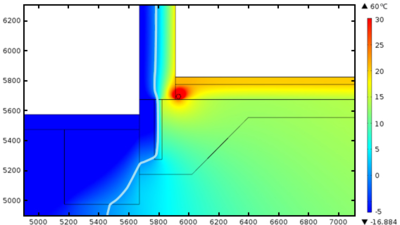
Using Multiphysics Simulation to Prevent Building Damage
In addition to surviving normal winters, a strong building must be able to survive the worst winters expected in a 50 ...
Graphene Paves the Way for Next-Generation Plasmonics
Alexander V. Kildishev, associate professor of electrical and computer engineering, is leading computational ...
Compressing the Timeline to a Fusion Future
General Fusion has successfully designed and optimized a fusion demonstration machine with the help of multiphysics ...


