
Duke University Models Metamaterial Structures for Acoustic Cloaking
Steve Cummer, Electrical and Computer Engineering Department, Duke University, USA
Researchers at Duke University are using numerical modeling to develop metamaterial structures for acoustic cloaking. Steve Cummer, professor of electrical and computer engineering, explained that the acoustic metamaterial designs are optimized through numerical simulations, which are then translated into modern fabrication techniques and experimentally tested. The COMSOL Multiphysics® software enabled Cummer and his team to iterate designs more quickly and identify factors that can be adjusted to hit specific targets.
Suggested Stories
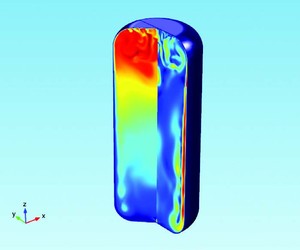
Modeling Helps Improve Safety in the Production of Teflon
BAM German Federal Institute for Materials Research & Testing in Berlin promotes industrial development by ...
Investigating Vibroacoustic Properties in Moth Wings for Acoustic Camouflage
Researchers at the University of Bristol modeled the acoustic camouflaging properties of moth wing scales to gain a ...
Prototyping Antennas for Mobile Recording of TV Sports Events with Simulation
Researchers at Radiotelevisione Italiana (RAI) are optimizing circularly polarized antenna designs for recording live ...
Manipulate and Control Sound: How Mathematical Modeling Supports Cutting-Edge Acoustic Metamaterials Research
Researchers at Duke University are using numerical modeling to develop metamaterial structures for acoustic cloaking. ...


