
General Atomics Designs Helicon Antenna for Tokamak with Simulation
Humberto Torreblanca, General Atomics, USA
Built by engineers at General Atomics, the DIII-D tokamak needs to achieve temperatures that are 10 times hotter than the core of the Sun to achieve nuclear fusion. To accomplish this, a novel heating system using a helicon antenna that can inject 1 megawatt of RF power is being designed and built. Humberto Torreblanca, the DIII-D tokamak chief operator, and his team are using multiphysics simulation to model all aspects of the design, such as the magnetic field distribution inside and outside the tokamak vessel as well as the electric field distribution and RF losses of the helicon antenna.
Suggested Stories
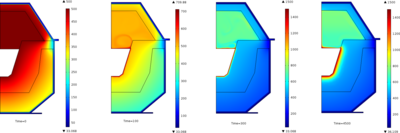
When it’s Impossible to Take Actual Measurements, Multiphysics Provides the Answers
To contain splashes and provide protection at plants where metal is fabricated, blast furnace runners need a roof made ...
Pushing the Limits of Chip Density
Chip manufacturers have been adhering to Moore’s law, a law stating that the number of transistors that can be ...
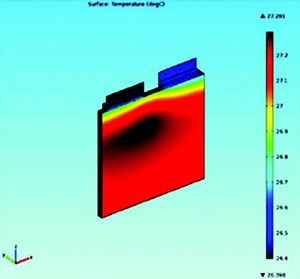
The Thermal Management of Li-ion Battery Packs
At the Fiat Research Center in Italy, Michele Gosso and Antonio Fiumara are working on the development of providing ...
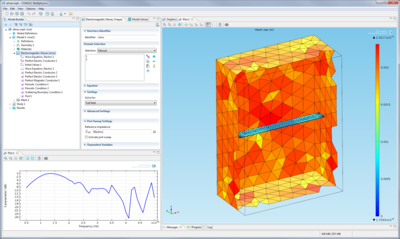
Picking the Pattern for a Stealth Antenna
Stealth airplanes and ships avoid radar detection by optimizing the shape of surfaces to reflect away from the radar ...


