
Intel Optimizes an Electronic Device Component with Simulation
Juan C. Cervantes-Gonzalez, Intel Guadalajara Design Center, Mexico
As the demand grows for faster electronic devices in smaller packages, we need to develop optimized high-speed interconnects, which transfer the signal between components in electronic devices. Found in printed circuit boards (PCB), this integral design element in electronics packaging carries signals laterally and through the depth of PCBs, traversing many layers of metal and dielectric material. To satisfy these growing technology demands, interconnects must be designed smaller, more closely packed, and able to operate at higher frequencies.
To reduce the number of prototypes required to test new interconnect designs, engineers at the Intel Guadalajara Design Center developed an efficient computational design optimization method, combining full-wave electromagnetic simulation in COMSOL Multiphysics® software with a space-mapping (SM) algorithm implemented in MATLAB® software. Through their approach, an interconnect design can be quickly optimized, streamlining the design cycle and time to market of the latest high-speed interconnect technology.
Suggested Stories
Keynote: Electroacoustics and FEA: A Long and Successful Relationship
In the world of electroacoustics, finite element analysis (FEA) has been in use for decades. The COMSOL ...
Keynote: Modeling Nanoscale Gas Behavior in Wafer Fabrication Systems
In this keynote talk from the COMSOL Conference 2025 Boston, Hanna Paddubrouskaya of Tokyo Electron US discusses how ...
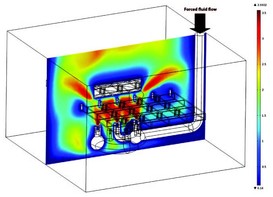
Conjugate Heat Transfer
This is an application brief describing the concept of Conjugate Heat Transfer, which is important in many industrial ...
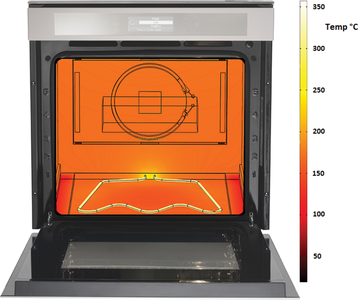
Simulation Turns Up the Heat and Energy Efficiency at Whirlpool Corporation
Engineers working on a joint research project between Whirlpool Corporation and the European initiative GREENKITCHEN ...


