
P. Lazarou, C. Rotinat
CEA LIST, France
Robotic devices for minimally invasive surgery procedures require flexible tools and careful actuation. But most robotic surgery devices are bulky, expensive, and physically draining for surgeons to operate for long periods of time. At the French Atomic and Alternative Energies Commission (CEA LIST), researchers are investigating miniature phase-change actuators that will reduce the strain placed on surgeons during long procedures. Using COMSOL Multiphysics, Christine Rotinat and Panagiotis Lazarou have simulated a phase-change microactuator that can deliver high loads and ranges of movement that are safe for both patient and surgeon. Their design is based on one by Goldschmidbӧing et al. and relies on the volume expansion of a conductive paraffin composite. They used their simulation of the coupled physics–including nonlinear electrical conductivity, changing viscosity, density, and specific heat capacity–to optimize their design for the best actuation and electrical consumption. Eventually, their microactuator will be integrated into a robotic surgical tool used in the operating room.
Suggested Stories
The Unseen Wonders of Radiant Heating, Cooling, and Snowmelting
Viega designs residential and commercial radiant heating and cooling systems. By building simulation applications and ...
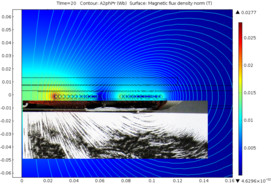
Multiphysics Simulation Helps Miele to Optimize Induction Stove Designs
The induction stove was designed to meet a consumer need for better precision and speed than traditional stoves. ...
Addressing Oil Spill Cleanup Using Hydrophobic Meshes
Engineers at Amphos 21 tested a new solution for different oil spill scenarios, hydrophobic meshes, with numerical ...
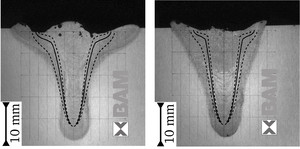
Magnets Improve Quality of High-Power Laser Beam Welding
High-power laser beam welding uses a localized heat source to achieve narrow deep welds and high welding rates. ...


