
La Galleria delle Applicazioni raccoglie un'ampia varietà di tutorial e di app dimostrative realizzati con COMSOL Multiphysics in diversi ambiti applicativi, inclusi quelli elettrico, meccanico, fluidico e chimico. E' possibile scaricare i file dei modelli e delle app demo pronti all'uso e le istruzioni step-by-step per costruirli, e utilizzarli come punto di partenza per le proprie simulazioni.
Lo strumento di Ricerca Rapida permette di trovare i modelli che si riferiscono alla propria area di interesse.
Si noti che molti degli esempi qui presentati sono accessibili anche tramite le Librerie delle Applicazioni incorporate nel software COMSOL Multiphysics® e disponibili dal menu File.
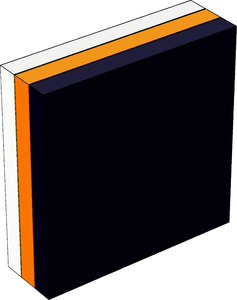
When radiation occurs across a very narrow gap this is often well-approximated as radiation between infinite parallel plates. This model considers three aluminum plates separated by narrow air gaps. The model compares the classical approach, based on the Surface-to-Surface Radiation ... Per saperne di più
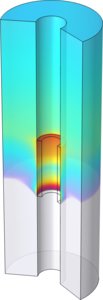
Nucleate boiling occurs when a liquid is heated by a source hotter than the saturated fluid temperature but with a heat flux below the critical heat flux. In this regime, high heat flux are possible due to the evaporation of the liquid. This model aims to demonstrate the calculation of ... Per saperne di più
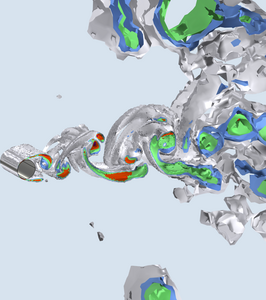
The model compare the two RANS models SST and SST-SAS for turbulent flow around a cylinder. The SST-SAS model resolve more transversal turbulent structures compared to the SST model. Per saperne di più
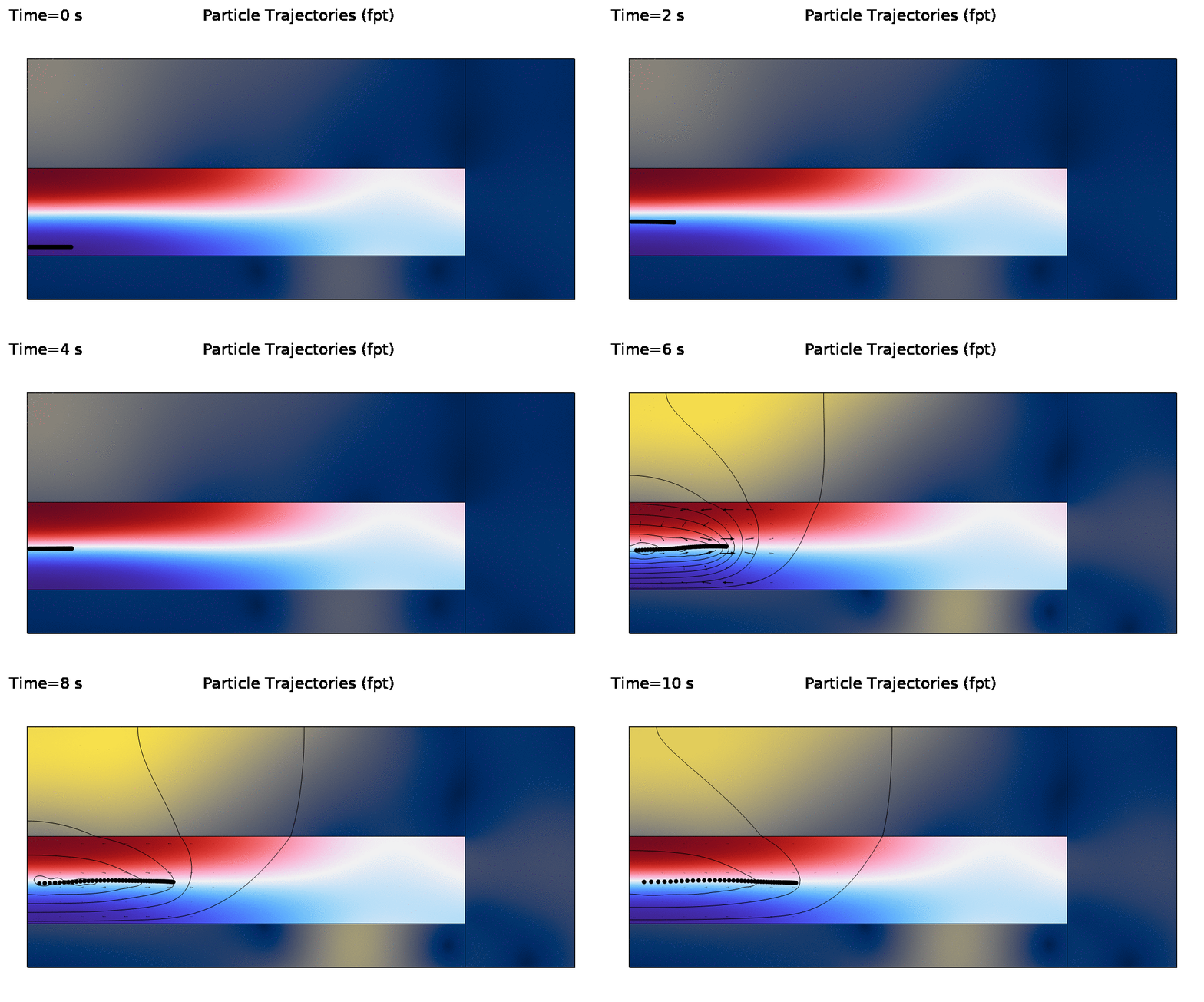
Opto-acoustophoresis is a term used to describe the interplay between acoustics and optical fields. In most cases (including this) the optical field is heating up the material and therefore affecting the acoustic field. In this example of an acoustic trap a set of particle are trapped ... Per saperne di più
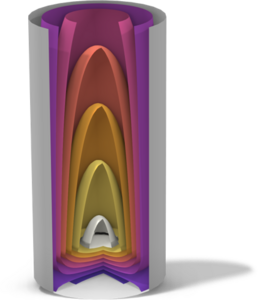
Inside of a combustion chamber, the gas mix behaves as a non-gray medium. Such media require a lot of data and computational resources to get results across the whole spectrum. The Weighted Sum of Gray Gases Model (WSGG) proposes an approach to model the non-gray gas mix as a sum of ... Per saperne di più
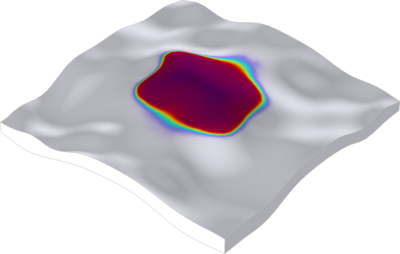
Modeling and simulation is useful for evaluating the feasibility of storing hydrogen underground. In this example of a geological formation, hydrogen is injected through an injection well at a rate of 1 kg/s over a period of 2 years, until it is ready to be extracted and discharged ... Per saperne di più
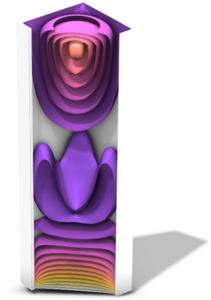
A smoke exhaust duct in a building is analyzed. Radiation of a non-gray gas is accounted for with a Radiation in Participating Media interface and the Weighted Sum of Gray Gases Model (WSGG). The smoke exhaust duct consists of 25 mm plaster walls. Building codes require that the walls ... Per saperne di più
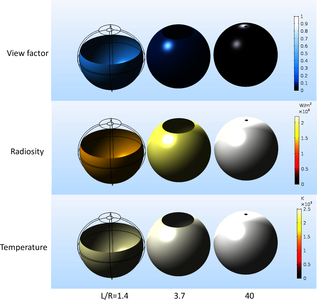
A gray body with a spherical cavity with various opening areas is simulated using the Heat Transfer, Surface-to-Surface Radiation interface. The emissivity for each case is computed and compared with the classical gray body theory. The COMSOL Multiphysics® result agrees very ... Per saperne di più
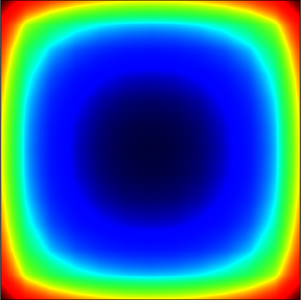
This model is used on "Heat Transfer with Radiation in Participating Media and the Discrete Ordinates Method" to compare quadrature sets used in the method of discrete ordinates. The reference analytical solution of incident irradiation is obtained with 256 discrete directions. Errors in ... Per saperne di più
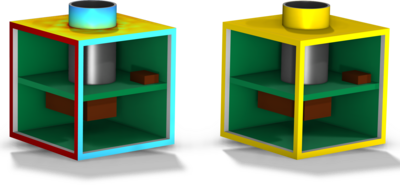
This model aims to demonstrate how a multilayer insulation can affect the temperature distribution of a satellite orbiting around the Earth. It is based on the Spacecraft Thermal Analysis model available in the Application Library. Per saperne di più


