
M. Bechis
Prysmian, Italy
The design and testing of high-voltage cables for terrestrial and submarine applications is paramount to Prysmian's business model. A fundamental challenge in designing power transmission systems is optimizing the cables so that they can reliably deliver the required steady-state current while remaining at, or preferably below, the maximum permissible operating temperature. Incorporating multiphysics simulation into the R&D workflow at Prysmian has allowed engineers to design and test cables before constructing prototypes, while also considering unfavorable thermal environments that can be difficult to control in actual experiments. Multiphysics models with transient analysis allowed for evaluating thermal performance of parameterized cable geometries, while incorporating factors such as daily variations in solar irradiation and even current load changes instead of the usual constant current condition. The expanded simulation capabilities at Prysmian have led to improved procedures for cable design and better service to both customers and colleagues.
Suggested Stories
Tiptoeing Through the Tulips to Protect Power Plants
ABB, a multinational leader in electrification products and power grid technology, develops generator circuit ...
Designing Next-Generation CO2 Removal Technology for Better Life in Space
NASA combines thermal modeling and experimental testing to find the best compressor design for the system that keeps ...
Bringing Glucose Monitoring to New Levels Through Integrated Sensor Design
The test strips in glucose monitors, widely used by people with diabetes to maintain good health, are sensitive to ...
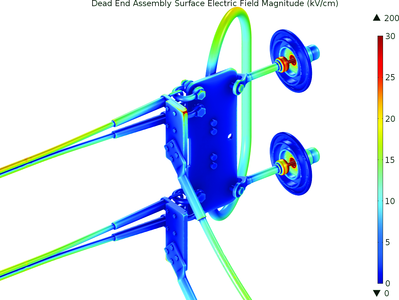
Enhancing Transmission Line Performance: Using Simulation to Optimize Design
Designing power transmission lines requires accounting for many factors: mechanical stress due to environmental ...


