
The Colorado School of Mines Uses Simulation to Track Fluid Movement
A. Haas, H. Mahardika, M. Karaoulis, and A. Revil
Colorado School of Mines, USA
Combining acoustic and electromagnetic analyses helps scientists to more efficiently measure and survey subterranean regions. Acoustic waves can travel long distances, but have limitations when it comes to providing details about formation properties, and cannot be used to identify the liquids flowing through them. Electromagnetic waves do not propagate as far as acoustic waves, but can identify and track the flow of pore water. Combining these methods makes the process easier in particular for scientists who track fracking fluids underground.
The Colorado School of Mines has created a system for locating fracking fluids by finding subsurface electromagnetic disturbances that occur based on the kinds of formations the water passes through. They wanted to simulate fracking events and produce synthetic seismograms and electrograms with the help of simulation. By linking COMSOL Multiphysics and MATLAB®, they designed a laboratory experiment in which they repeatedly hydraulically-fractured a porous cement cube by pumping in saline water under high pressure.
Suggested Stories
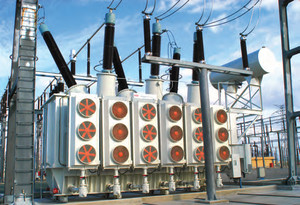
Upgrading the Nuts and Bolts of the Electrical Grid for a New Generation
Migrating the electrical grid to a “smart grid” is usually discussed in terms of IT issues or embedded systems. Yet, ...
Optimizing Wireless Test Systems and Antennas for High-Speed Communication
To design reverberation systems for measuring the performance of wireless devices and wideband antennas, engineers at ...
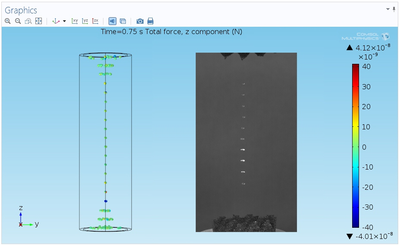
Floating on Sound Waves with Acoustic Levitation
As part of an industry that saves lives on a regular basis, pharmaceutical companies are in need of systems that can ...
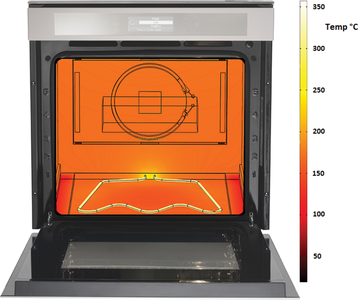
Simulation Turns Up the Heat and Energy Efficiency at Whirlpool Corporation
Engineers working on a joint research project between Whirlpool Corporation and the European initiative GREENKITCHEN ...


