
Luke T. Gritter, Sergei Yushanov, Jeffrey S. Crompton, and Kyle C. Koppenhoefer
AltaSim Technologies, Columbus, Ohio
Using COMSOL Multiphysics, AltaSim Technologies were able to predict the temperature distribution and flow pattern of a burning flame during steady state candle burning.
In a burning candle, local temperatures in the flame exceed 1400 °C. The heat transfer would include radiation, conduction, and convection components while the low melting point of the candle wax would cause a local phase change to occur close to the wick, allowing mass transport via capillary flow prior to combustion in the flame.
Modeling this behavior has shown that the temperature and flow patterns are considerably influenced by the spatial location of the flame in a container, the geometry of the container, and the height of the candle within the container.
Suggested Stories
Addressing Oil Spill Cleanup Using Hydrophobic Meshes
Engineers at Amphos 21 tested a new solution for different oil spill scenarios, hydrophobic meshes, with numerical ...
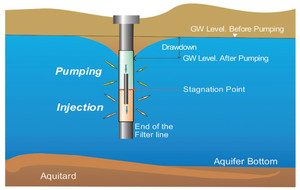
Pumping and Injecting from a Single Borehole
Professor Dr. Martin Sauter leads a group at the University of Göttingen in research on hydrogeology. Cooperating with ...
Manipulate and Control Sound: How Mathematical Modeling Supports Cutting-Edge Acoustic Metamaterials Research
Researchers at Duke University are using numerical modeling to develop metamaterial structures for acoustic cloaking. ...
How Decaying Shells Help Preserve the Alkalinity of the Seas
Decaying seashells can release calcium carbonates, which help neutralize carbon dioxide in seawater. But ocean ...


