
General Atomics Designs Helicon Antenna for Tokamak with Simulation
Humberto Torreblanca, General Atomics, USA
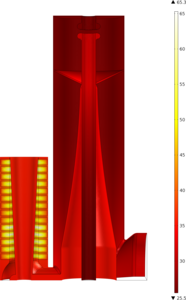
Built by engineers at General Atomics, the DIII-D tokamak needs to achieve temperatures that are 10 times hotter than the core of the Sun to achieve nuclear fusion. To accomplish this, a novel heating system using a helicon antenna that can inject 1 megawatt of RF power is being designed and built. Humberto Torreblanca, the DIII-D tokamak chief operator, and his team are using multiphysics simulation to model all aspects of the design, such as the magnetic field distribution inside and outside the tokamak vessel as well as the electric field distribution and RF losses of the helicon antenna.
Suggested Stories
Complex Fenestration System for Energy Efficiency
Fenestration systems can greatly impact the energy efficiency of buildings. Eurac Research is using simulation to ...
Keynote: Leveraging Acoustics Simulation for Better Alexa® Devices
Watch this keynote talk to see how Amazon Lab126 uses the COMSOL Multiphysics® software to simulate and ...

Simulation Enables the Next Generation of Power Transformers and Shunt Reactors
From power generation to its distribution to end users, power transformers and shunt reactors are used throughout the ...
Doubling Beam Intensity Unlocks Rare Opportunities for Discovery at Fermi National Accelerator Laboratory
Behind the discovery of the most fundamental and rare physical processes within our universe is powerful technology, ...


