
J. Leman
POWER Engineers, ID, USA
Designing power transmission lines requires accounting for many factors: mechanical stress due to environmental conditions and hardware loads, performance testing, and--of course--electrical analysis. Transmission line hardware contains both insulating and conducting assemblies. One common electrical phenomenon is called corona discharge, which occurs when electric fields near the surfaces of insulating assemblies and high-voltage conductors cause the surrounding air molecules to ionize. This can cause electromagnetic interference, visible light, energy losses, and audible noise. In a project to reduce corona discharge in transmission lines, Jon Leman, a senior project engineer at the consulting firm POWER Engineers, Inc. used COMSOL Multiphysics to model an insulator assembly. His team used their simulation to determine the electric field strength and electric potential around different surfaces of the transmission line hardware. They used their results to predict which areas were most susceptible to corona discharge, and gained valuable knowledge about how insulator assembly designs can be modified for better performance.
Suggested Stories
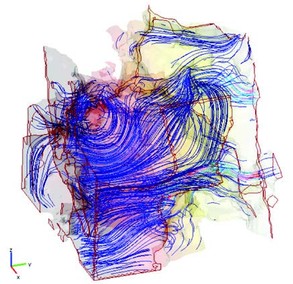
Analysis and Simulation of Rock Properties
VSG provides high-performance 3D visualization toolkits and software for a number of industries, including materials ...
Understanding Brillouin Optomechanical Interaction with Multiphysics Modeling
Researchers from the University of Campinas and Corning wanted to see how photoelastics and moving boundary effects ...
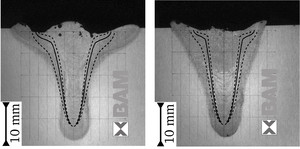
Magnets Improve Quality of High-Power Laser Beam Welding
High-power laser beam welding uses a localized heat source to achieve narrow deep welds and high welding rates. ...
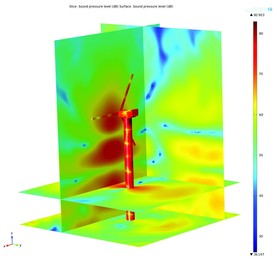
Wind Turbine Noise Reduction
Xi Engineering Consultants Ltd specializes in complex vibration issues, like those caused by wind turbines. The ...


