
W. Lee, K. Jensen
MIT, MA, USA
The chemical reactions used to generate solvents and certain pharmaceuticals rely on organic synthesis, a process of combining individual chemicals that can be accelerated through microwave heating. A microreactor system facilitates the direct, localized, and efficient temperature change necessary for successful synthesis. However, a uniform temperature distribution is crucial to the chemical process, and these reactions can be inhibited by unwanted temperature changes or heating that occurs too slowly. Wen-Hsuan Lee, a researcher at the Massachusetts Institute of Technology (MIT), fabricated a borosilicate glass microreactor to conduct this microwave organic synthesis, but when she tested her design in a microwave system, she discovered that the heating was uneven and below the desired temperature. Using COMSOL Multiphysics, she modeled the microreactor to investigate the effects of its geometry and orientation on the heating process. From her simulation results, she was able to redesign the microreactor and optimize its location and orientation in the microwave system to achieve successful organic synthesis.
Suggested Stories
Producing Power, Protecting Fish with a Darrieus Water Turbine
Physixfactor used simulation to design a water turbine for use in coastal flood control structures in the Netherlands. ...
Optimizing a GIS for High-Voltage Distribution with Multiphysics Simulation
To speed up the development process for a gas-insulated, metal-enclosed switchgear (GIS), while significantly reducing ...

Lightning-Proof Wind Turbines
Søren Find Madsen, Global Lightning Protection Services A/S, Lejre, Denmark Global Lightning Protection Services A ...
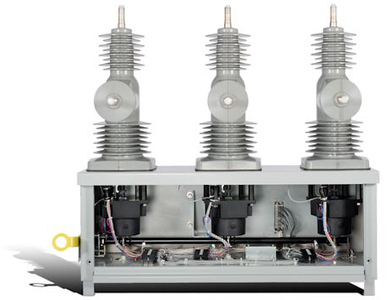
How Reclosers Ensure a Steady Supply of Power: It’s All in the Magnet
When a tree branch touches overhead cables and causes a momentary short circuit, your lights may flicker. A device ...


