
La Galleria delle Applicazioni raccoglie un'ampia varietà di tutorial e di app dimostrative realizzati con COMSOL Multiphysics in diversi ambiti applicativi, inclusi quelli elettrico, meccanico, fluidico e chimico. E' possibile scaricare i file dei modelli e delle app demo pronti all'uso e le istruzioni step-by-step per costruirli, e utilizzarli come punto di partenza per le proprie simulazioni.
Lo strumento di Ricerca Rapida permette di trovare i modelli che si riferiscono alla propria area di interesse.
Si noti che molti degli esempi qui presentati sono accessibili anche tramite le Librerie delle Applicazioni incorporate nel software COMSOL Multiphysics® e disponibili dal menu File.
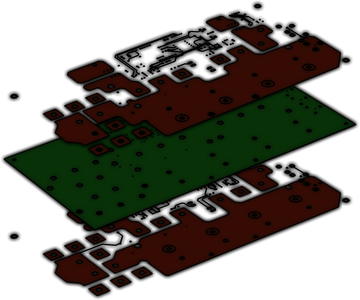
This tutorial model shows how to import data from an ODB++® archive to generate a geometry of a printed circuit board (PCB). Follow the instructions to learn how to remove small details from the geometry, create a mesh, and use automatically generated selections to define physics and ... Per saperne di più
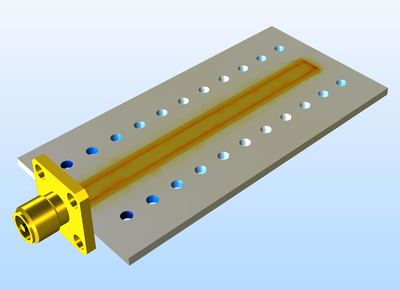
SMA connectors are popularly used on printed circuit boards (PCB) for testing. This model shows how to excite an SMA connector on a microwave substrate and how to terminate a grounded coplanar waveguide (GCPW) with 50 ohm using a lumped port and an air-bridge. Per saperne di più
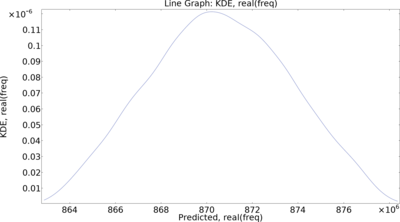
Uncertainty quantification is used to study the effect of manufacturing variation on the performance of a 2D solidly mounted resonator (2D SMR). This tutorial shows how the resonant frequency is affected by thickness variations of the piezoelectric layer and the Bragg reflector layers. ... Per saperne di più
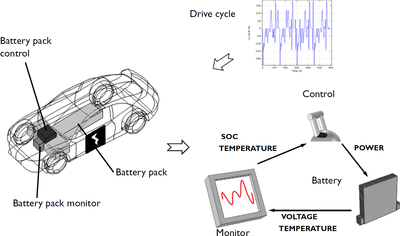
This application shows how a battery cell exposed to a hybrid electric vehicle drive cycle can be investigated with the Lithium-Ion Battery interface in COMSOL. This model predicts the battery behavior to make comparisons of the monitored properties. They can be used to understand the ... Per saperne di più
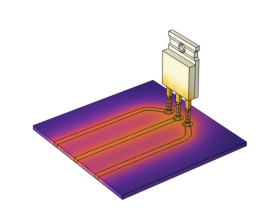
In every system where there is conduction of electric current, and where the conductivity of the material is finite, there will be electric heating. Electric heating, also referred to as Joule heating, is in many cases an undesired by-product of current conduction. This model simulates a ... Per saperne di più
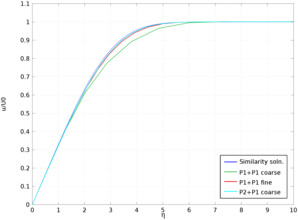
The incompressible boundary layer on a flat plate in the absence of a pressure gradient is usually referred to as the Blasius boundary layer. The steady, laminar boundary layer developing downstream of the leading edge eventually becomes unstable to Tollmien-Schlichting waves and finally ... Per saperne di più
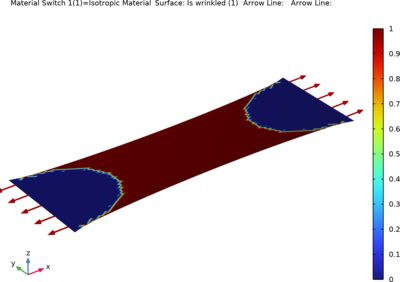
This example demonstrates the wrinkling phenomenon in a thin sheet stretched uniaxially. The modified membrane theory, which incorporates the wrinkling model, ensures noncompressive principal stresses in the wrinkled region. The analytical results are compared to the numerical results. Per saperne di più
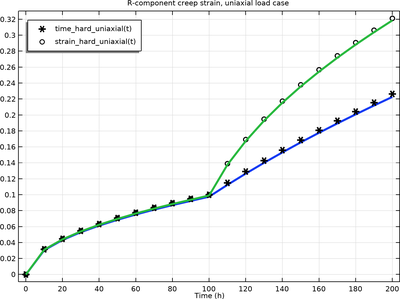
In this model example, you will study the creep behavior of a material under non-constant loading. You will model primary creep using a Norton–Bailey law and study the difference between the time-hardening and strain-hardening methods available in COMSOL Multiphysics. The model is taken ... Per saperne di più
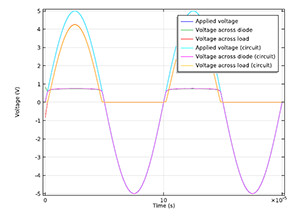
This model extracts spice parameters for a silicon p-n junction diode. The spice parameters are used to create a lumped-element equivalent circuit model of a half-wave rectifier that is compared to a full device level simulation. In this example, a device model is made by connecting a 2D ... Per saperne di più
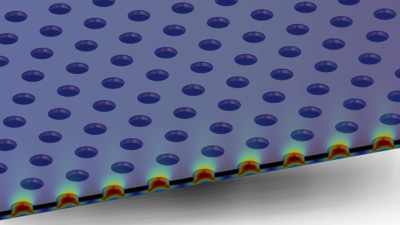
This tutorial model is of a micro perforated plate (also known as MPP) backed by a vibrating structure. This is a typical configuration in, for example, a MEMS microphone. The vibrating structure is not modeled explicitly, but just assigned a vibration velocity. The vibrating structure ... Per saperne di più


